 Save to Pinterest
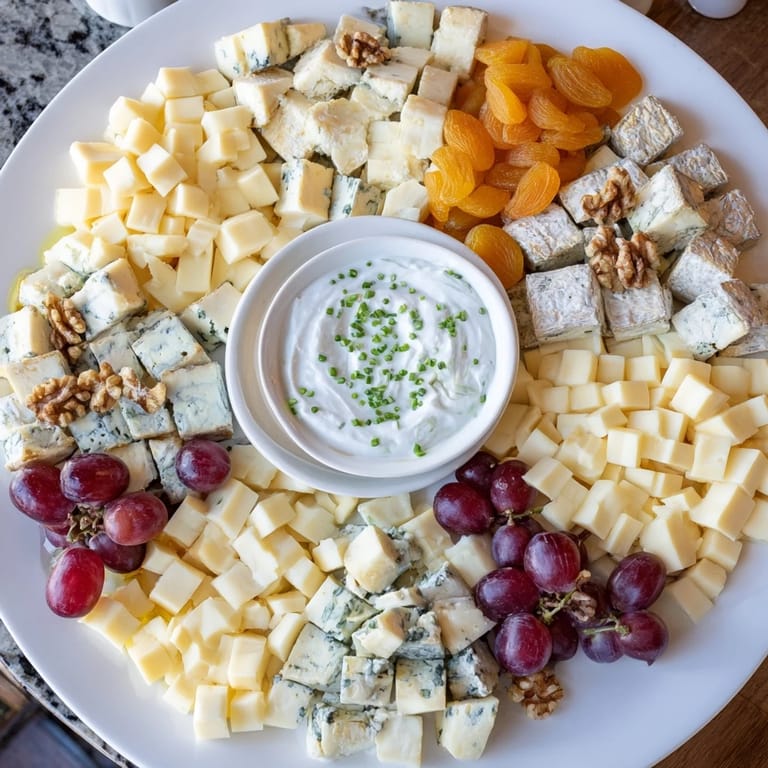
 The first time I built a Celtic cross cheese platter, I wasn't trying to be fancy—I just had four different cheeses in the fridge and a round platter that seemed to beg for a little ceremony. My grandmother had always said that good food should feed both the eye and the stomach, and something about arranging these cheeses in quadrants, like compass points radiating from a central dip, felt right. That quiet moment of arranging, stepping back, tweaking, felt almost meditative. Now whenever I make this for friends, they photograph it before they eat it, which always makes me smile.
I remember making this for a small dinner party during a particularly rainy November, and someone asked if the Celtic cross was intentional or accidental. I'd been so focused on making it beautiful that I hadn't thought about the symbolism, but suddenly it felt like it meant something—like I'd stumbled onto a design that had been working for people for thousands of years. We ended up talking about that through the whole meal, all because of how the cheeses were arranged.
Ingredients
- Irish cheddar, 100 g cubed: The backbone of this platter—sharp enough to stand out but not so aggressive that it overpowers the subtler cheeses.
- Brie, 100 g sliced: Its creamy texture is the soft counterpoint; slice it just before serving so it doesn't dry out.
- Blue cheese, 100 g crumbled: This is your flavor anchor, the one that makes people pause and really taste; don't skimp on quality here.
- Manchego, 100 g sliced: A buttery warmth that Spanish sheep's milk brings—it ties the whole thing together in a way cow cheeses alone can't.
- Sour cream or Greek yogurt, 150 g: Use whichever you have; the yogurt is tangier and lighter if you prefer that.
- Fresh chives, 1 tbsp finely chopped: Chopped just before mixing so they stay bright and their onion bite doesn't mellow out.
- Lemon juice, 1 tsp: A single teaspoon lifts everything, cutting through the richness without announcing itself.
- Salt and black pepper, to taste: Taste as you season the dip; you might need more than you think.
- Seedless red grapes, 80 g: Their sweetness and slight tartness balance the savory cheeses beautifully.
- Dried apricots, 80 g: These hold their flavor better than fresh fruit does throughout the evening.
- Walnuts, 50 g: Toast them lightly if you want to wake them up, or leave them raw for a softer presence.
- Honey, 50 g: Drizzle it warm over the blue cheese so it clings; this is where sweetness and salt have a small, delicious conversation.
- Rustic crackers, 100 g: Choose ones with texture so they don't crumble under the weight of cheese.
- Baguette, 1 small sliced: Slice it the morning of if you can, so it's still slightly crisp but not rock hard.
Tired of Takeout? 🥡
Get 10 meals you can make faster than delivery arrives. Seriously.
One email. No spam. Unsubscribe anytime.
Instructions
- Make your dip base:
- Stir the sour cream or yogurt with the chives and lemon juice in a small bowl, tasting as you season with salt and pepper. The dip should taste bright and a little peppery—this is your opening note for the whole platter.
- Set your centerpiece:
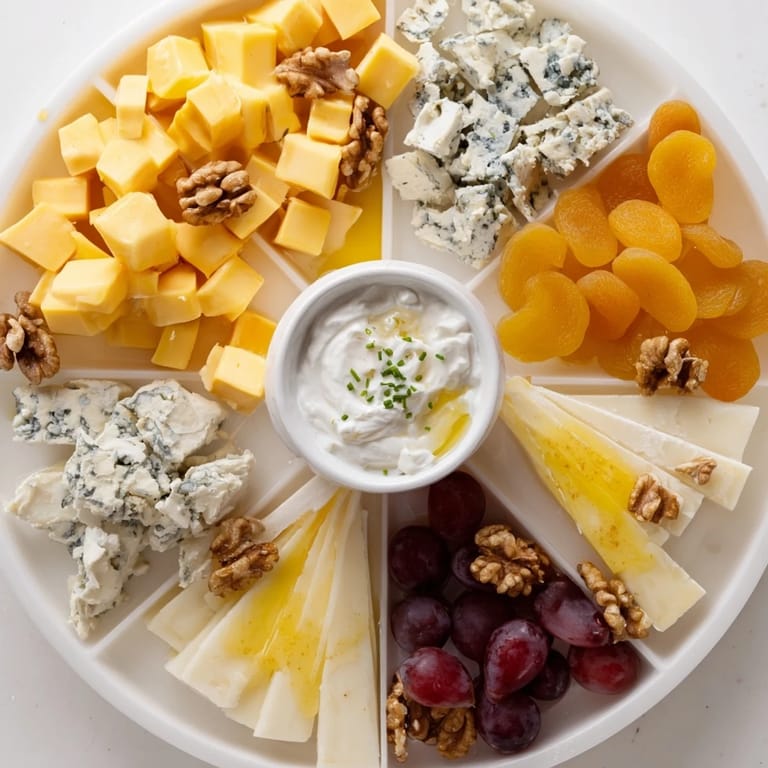
- Place the dip bowl right in the middle of your largest round platter. Stand back and imagine drawing a cross through it; this mental image will guide everything else you arrange.
- Divide into quadrants:
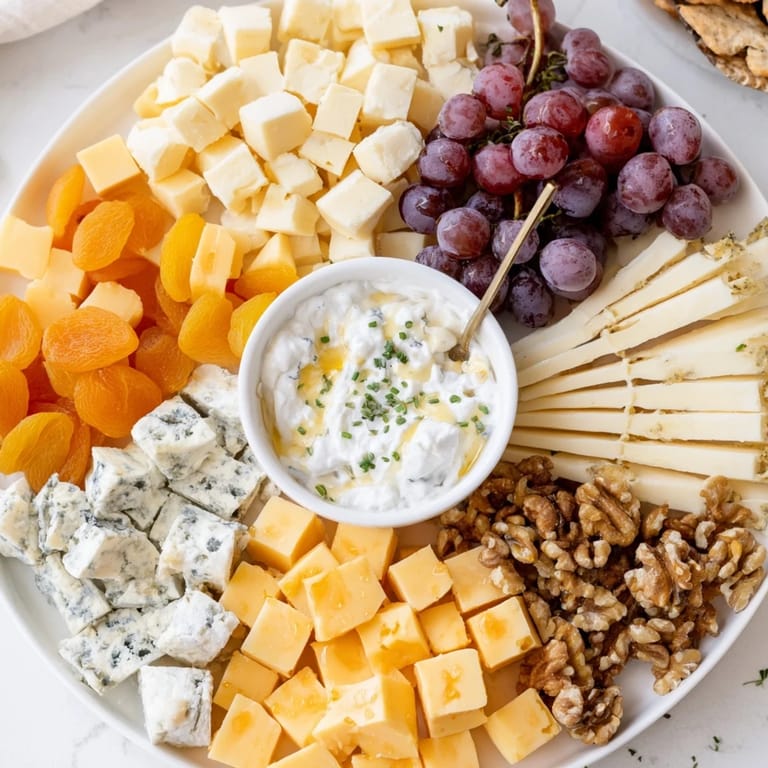
- Using that invisible cross as your guide, assign each cheese type to its own quadrant—I usually put the Irish cheddar north, Brie east, blue cheese south, and Manchego west, but the order is entirely yours. Fan the sliced cheeses or cube them depending on what looks most appetizing; there's no wrong way here.
- Fill the spaces thoughtfully:
- Scatter the grapes, apricots, and walnuts into the gaps between quadrants, rotating through them as you go around so the colors feel balanced rather than clustered. This is where your eye takes over from the recipe.
- Crown the blue cheese:
- Warm the honey slightly so it drizzles, then let it pool gently over the blue cheese quadrant. The warmth helps it settle, and the sweetness makes the cheese taste even more intense.
- Frame it with crackers:
- Arrange the crackers and baguette slices around the outer edge of the platter like a border. Prop some of them at angles so they look casually abundant, not rigidly placed.
- Bring everything to temperature:
- Let the platter sit for a few minutes if your kitchen is cool, so the cheeses warm up just slightly from their fridge chill. Room temperature cheese tastes like what it actually is; cold cheese tastes like almost nothing.
 Save to Pinterest
 I realized during one dinner that this platter does something unexpected—it turns eating cheese into a conversation. People don't just grab a cracker; they linger, comparing the cheeses, arguing about which one is their favorite, asking questions about where the Manchego comes from. Food that makes people talk feels like it's done its job.
The Geometry of Good Entertaining
There's a reason so many cultures return to the cross shape for everything from garden layouts to table settings. It feels balanced, intentional, and somehow easier to navigate than a chaotic arrangement. When you're hosting, giving yourself a simple visual structure makes everything feel calmer, and that calm transfers to your guests. They sense that you're organized, even if you threw this together while they were pulling into your driveway.
Cheese Temperature and Flavor
Cold cheese is almost a different food from room-temperature cheese. The fat is tight and dense when it's cold, so the flavors can't unfold properly. I learned this the hard way years ago, pulling a cheese board straight from the fridge and wondering why everyone was so lukewarm about it. Now I'm evangelical about letting cheese sit for 15 to 20 minutes before serving. It's worth the wait.
Adapting This for Your Crowd
The beauty of this platter is that it's not precious about the specific cheeses you use. If you can't find good Irish cheddar, use a sharp Vermont white cheddar. Don't have Manchego? A good Gruyère works beautifully. Blue cheese not your thing? Swap in a tangy goat cheese or a soft, pungent Taleggio. The structure stays the same even if every ingredient changes.
- Apple or pear slices arranged just before serving add a crisp freshness if your crowd tends toward lighter palates.
- Swap the walnuts for almonds or hazelnuts if someone has nut allergies, or skip them entirely and let the fruit do the textural work.
- If you're serving vegetarians, make sure your cheeses are labeled vegetarian—not all blue cheeses or hard cheeses are.
 Save to Pinterest
 Making this platter has taught me that elegance isn't about complexity or fussiness. It's about paying attention to what you're serving and caring enough to arrange it thoughtfully.
Frequently Asked Questions
- → How should I arrange the cheeses on the platter?
Divide the platter into four quadrants and place each cheese type separately. This creates a balanced, visually appealing display centered around the dip.
- → What is the best way to prepare the central dip?
Mix sour cream or Greek yogurt with finely chopped chives, lemon juice, salt, and pepper. Chill slightly before serving for fresh, tangy flavor.
- → Can I substitute the cheeses for others?
Yes, you can swap cheeses for regional favorites or those suiting dietary needs, keeping a balance of textures and flavors.
- → How do I enhance the platter's presentation?
Use lines of nuts or fruit to separate cheese quadrants, and drizzle honey lightly over the blue cheese section for added visual appeal.
- → What accompaniments pair well with this cheese arrangement?
Seedless red grapes, dried apricots, walnuts, rustic crackers, and sliced baguette provide complementary flavors and textures.