 Save to Pinterest
 My neighbor knocked on my door one evening with a jar of red curry paste and said, "Trust me with dinner tonight." We didn't have a plan, just whatever vegetables were sitting in my crisper drawer and a can of coconut milk from the pantry. Two hours later, the kitchen smelled like warmth itself—ginger, garlic, and something spiced I couldn't quite name. That one improvised meal taught me that curry isn't about perfection; it's about throwing bright vegetables into something creamy and fragrant, then letting the stove do the thinking.
I made this for my sister the week she moved into her first apartment, when her kitchen was mostly empty boxes and good intentions. She sat at her new table with a bowl of this curry, rice, and lime wedges, and for the first time that day, she stopped looking stressed. Food doesn't solve everything, but it sure does make a difference when someone's overwhelmed.
Ingredients
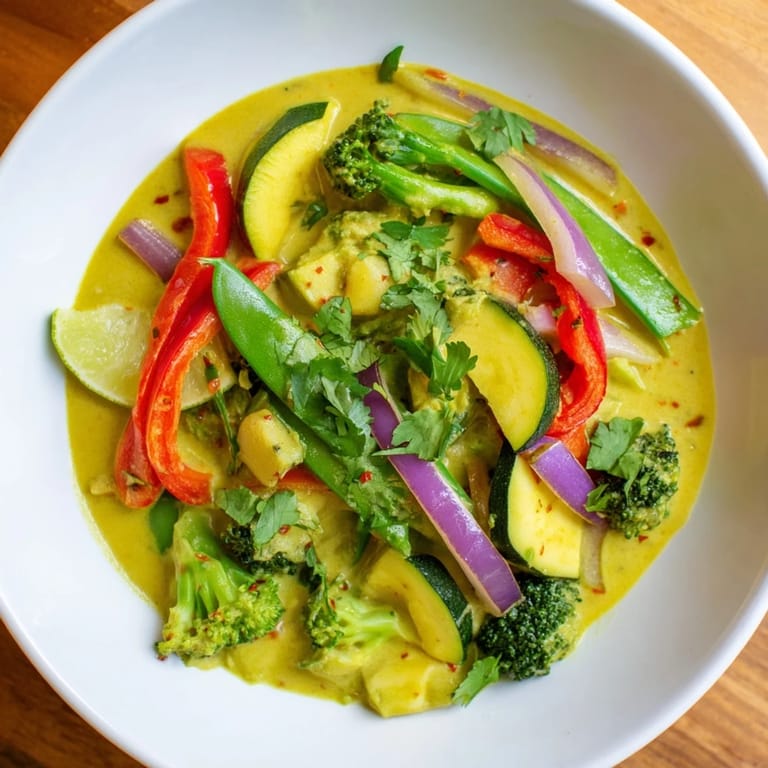
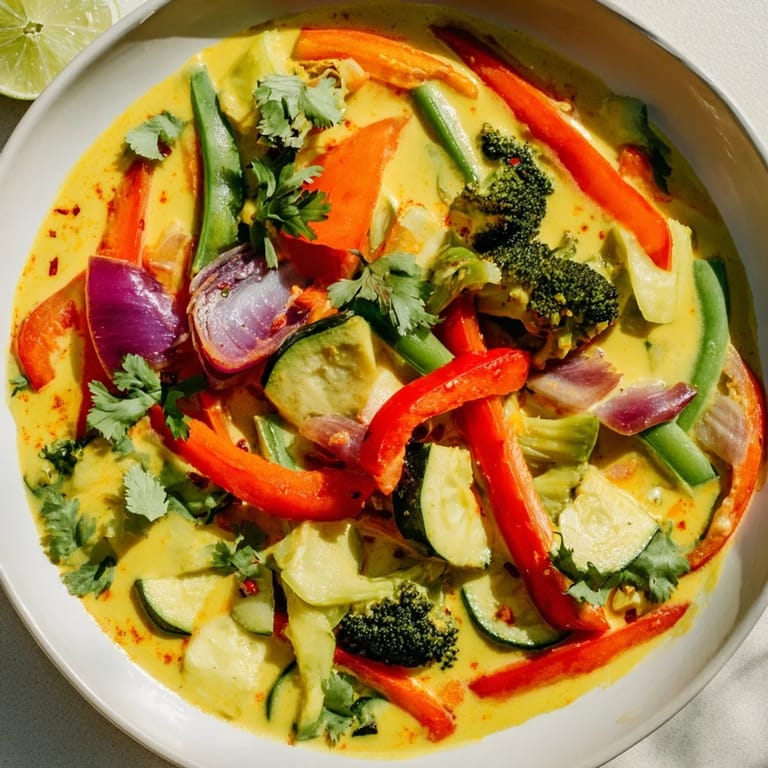
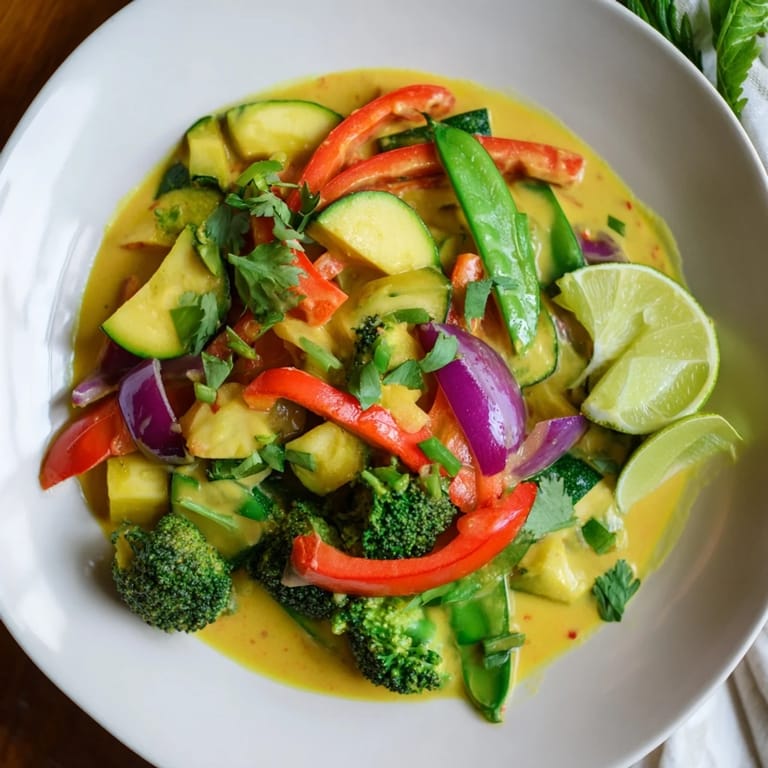
- Red bell pepper, carrot, zucchini, broccoli, snap peas: The vegetables are the real star here—pick ones that feel firm to the touch, and slice them to roughly the same size so they cook evenly instead of some turning to mush while others stay crunchy.
- Red onion: Thin slices mellow out as they cook and add a subtle sweetness that balances the spices beautifully.
- Coconut oil: It has a higher smoke point than you'd think, and the flavor it brings is more subtle than regular oil once everything's cooking.
- Garlic and ginger: Fresh ginger makes all the difference—the pre-minced stuff in jars never quite tastes the same no matter what anyone says.
- Red curry paste, turmeric, cumin, coriander: This spice blend is where the magic happens; the paste carries depth while the individual spices add their own personalities.
- Coconut milk: Go for full fat, always—the thin kind leaves you with a watery curry that tastes thin too.
- Vegetable broth and soy sauce: Broth keeps things from becoming too heavy, while soy sauce (or tamari if you're gluten-free) adds umami depth that you don't realize you need until you taste it.
- Fresh lime juice: Wait until the very end to add this; it brightens everything and makes the curry taste alive instead of flat.
- Fresh cilantro and lime wedges: Cilantro is the final touch that makes this taste like it came from somewhere special, not just your kitchen on a Tuesday night.
Tired of Takeout? 🥡
Get 10 meals you can make faster than delivery arrives. Seriously.
One email. No spam. Unsubscribe anytime.
Instructions
- Build Your flavor base:
- Heat the coconut oil until it's just shimmering, then add the red onion and let it soften for a few minutes—this is when your kitchen starts to smell intentional. Once the garlic and ginger go in, your whole house will smell like something good is happening.
- Awaken the spices:
- This one minute of stirring the curry paste with the turmeric, cumin, and coriander is non-negotiable; you're releasing oils and deepening flavors that would stay hidden if you skipped it. You'll feel the change in the air when they're ready.
- Sear the vegetables:
- Add the harder vegetables first—bell pepper, carrot, zucchini, broccoli—and let them get a little color on the edges, which takes about three to four minutes of stirring. This step is short but important; you're not cooking them all the way through yet.
- Simmer into softness:
- Pour in the coconut milk and broth, bringing everything to a gentle bubble, then add the snap peas and soy sauce and let it all cook together for about ten to twelve minutes. The vegetables should be tender enough to eat easily but still hold their shape and color—taste one to be sure.
- Finish with brightness:
- Off the heat, stir in the lime juice and taste before adding salt and pepper; the lime will wake everything up in a way that makes you understand why cooks always say to taste as you go. This is your moment to make it exactly right.
 Save to Pinterest
 My friend who never cooks brought this to a potluck once using this exact recipe, and someone actually asked if she'd had it catered. She laughed harder than I'd ever heard her laugh, and there was something perfect about that—a simple curry making someone feel capable and proud.
Vegetables That Work and Vegetables That Don't
The vegetables I've listed are solid choices, but here's what I've learned about swapping them out: anything too delicate like spinach or bok choy will disappear into the sauce, while hard vegetables like cauliflower, green beans, and mushrooms take beautifully to this curry and cook in about the same time. Avoid watery vegetables like tomatoes or eggplant unless you're okay with them breaking down into the coconut milk.
When You Want More Substance
This curry is lovely as-is, but I've found that throwing in a can of chickpeas or some cubed tofu during the final simmer transforms it from a side dish into something that stands on its own. Either one soaks up the sauce and adds the kind of protein that makes the meal actually stick with you instead of leaving you hungry an hour later.
Serving and Stretching
Serve this over jasmine rice, quinoa, or even naan if you want something to soak up the extra sauce. I've also served it over cauliflower rice for people watching carbs, and honestly, the curry is so flavorful it doesn't matter what's underneath.
- If you're cooking for more people than expected, stretch it by adding more broth and an extra can of chickpeas without changing the spice balance.
- Leftovers actually taste better the next day once the flavors have had time to settle and mingle together.
- This freezes beautifully for up to three months, so make a double batch and forget about cooking for a week.
 Save to Pinterest
 This curry taught me that simple food, made with care and fresh ingredients, is what people actually want to eat. It's not fancy, but it's honest.
Frequently Asked Questions
- → What vegetables work best in this dish?
Bell peppers, carrots, zucchini, broccoli, snap peas, and red onion create a colorful and flavorful combination, but cauliflower, green beans, or mushrooms can also be used.
- → How can I adjust the spice level?
Modify the amount of red curry paste to suit your heat preference, adding less for mild flavors or more for extra warmth.
- → What can I add for extra protein?
Chickpeas or tofu can be stirred in during the simmering step to boost protein content.
- → Can this be made gluten-free?
Yes, by using tamari or gluten-free soy sauce alternatives and ensuring all spices and curry paste are gluten-free.
- → What sides pair well with this dish?
Steamed jasmine rice, quinoa, or naan bread complement the creamy coconut curry perfectly.