 Save to Pinterest
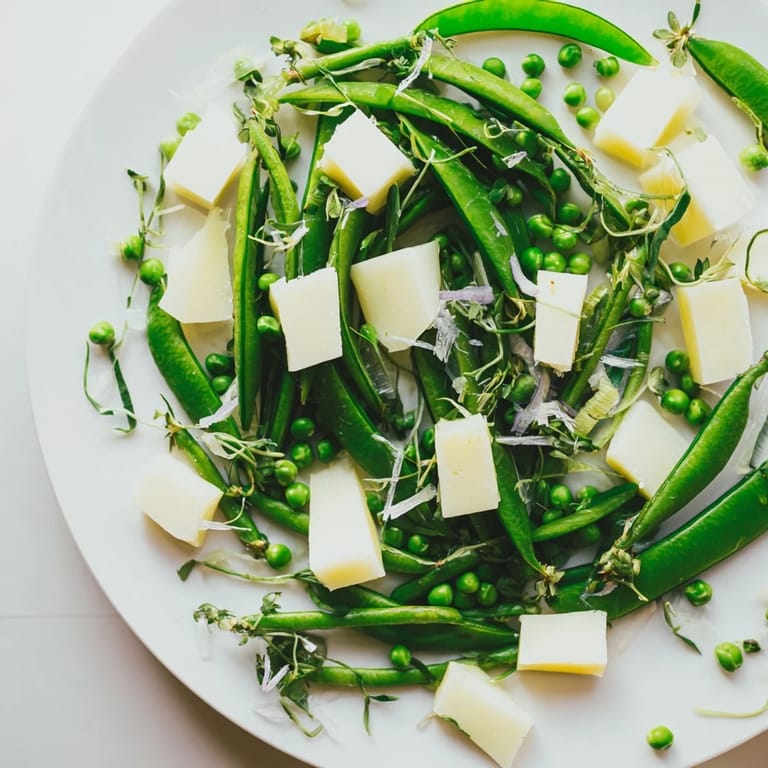
 There's something about arranging vegetables like you're composing a painting that makes you fall in love with cooking all over again. I discovered The English Ivy on a spring afternoon when my farmer's market haul looked too beautiful to chop up into the usual bowl—those snap peas were impossibly green, still snapping between my fingers with that fresh-picked sound. Instead of tossing everything together, I decided to layer them like vines, sharp white cheddar between the strands, a tart dressing to catch it all. What started as a way to avoid making a mess became the most elegant thing I'd made in months, and somehow that simple decision changed how I think about salads entirely.
I made this for my sister's dinner party, and she actually paused mid-conversation to ask what it was—that moment when someone stops talking about work because the food demands attention. The way the cheddar caught the light under the kitchen lamp, the green beans arranged like they'd grown that way on purpose, something about it felt intentional in a way that made everyone linger over their plates longer than usual. She asked for the recipe before dessert was even served, which never happens.
Ingredients
- Snap peas: Look for ones that snap audibly when you bend them—they should feel firm and heavy for their size, a sign they're fresh enough to taste like spring itself.
- Green beans: Choose the thinner ones if you can, they blanch faster and have a better texture than the chunky ones that sit in grocery stores for days.
- Shallot: The raw bite matters here, so slice it thin and let it sit in the dressing for a minute first—it mellows just slightly while keeping its edge.
- Sharp white cheddar: Don't settle for mild; the tanginess is what makes this work, and small cubes melt slightly against the warm blanched vegetables in the best way.
- Extra virgin olive oil: The quality actually shows in a simple dressing like this, so use one you'd want to taste on its own.
- Lemon juice: Fresh lemon only—bottled tastes flat and misses the point of everything else being so vibrant.
- Dijon mustard: Just enough to add backbone without making it hot; it's the quiet anchor that holds the dressing together.
- Honey: A tiny bit rounds out the sharpness and balances the acid in a way sugar never quite does.
- Chives: Fresh is mandatory; they add a gentle onion whisper without competing with the shallot.
Tired of Takeout? 🥡
Get 10 meals you can make faster than delivery arrives. Seriously.
One email. No spam. Unsubscribe anytime.
Instructions
- Boil and blanch with intention:
- Fill a large pot with salted water—it should taste like the sea—and get it to a rolling boil. Drop in your snap peas and green beans together, and watch them. Two minutes is the magic number; any longer and you lose that snap that makes everything worth eating. You want them to shift from dull green to brilliant, almost glowing.
- Stop the cooking immediately:
- Fish them out with a slotted spoon and plunge them into ice water like you're saving them from something. The ice water is essential; it halts the cooking and locks in that crunch. Let them sit for a minute, then drain and pat them completely dry—any water clinging to them will dilute your dressing.
- Build your dressing with care:
- Whisk together the olive oil, lemon juice, mustard, and honey in a large bowl. Taste it before you add the vegetables; the dressing should make you pause, bright and sharp and slightly sweet all at once. Season generously with salt and pepper, remembering that the vegetables themselves are mild and need proper seasoning to shine.
- Toss gently and arrange like you mean it:
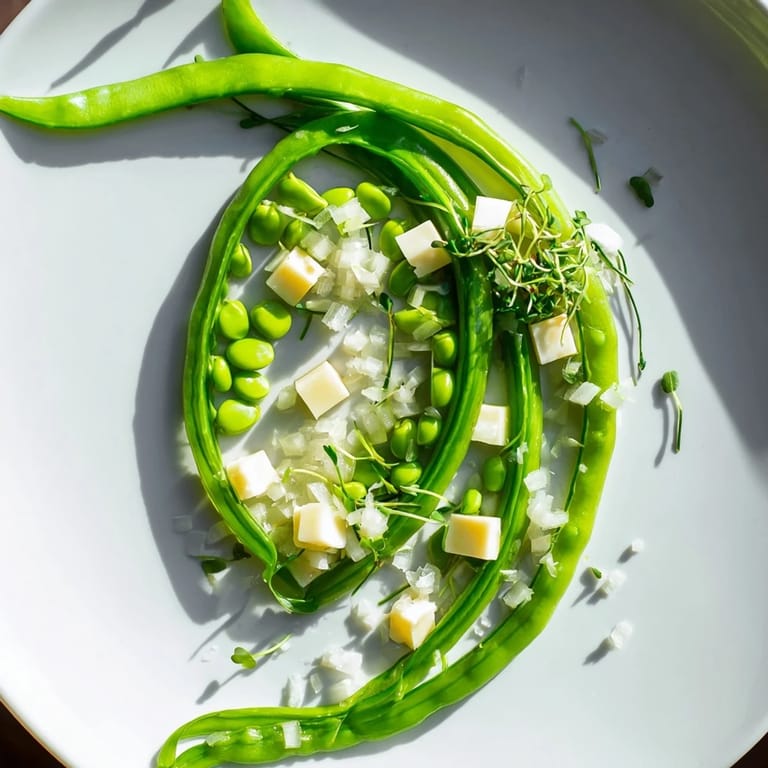
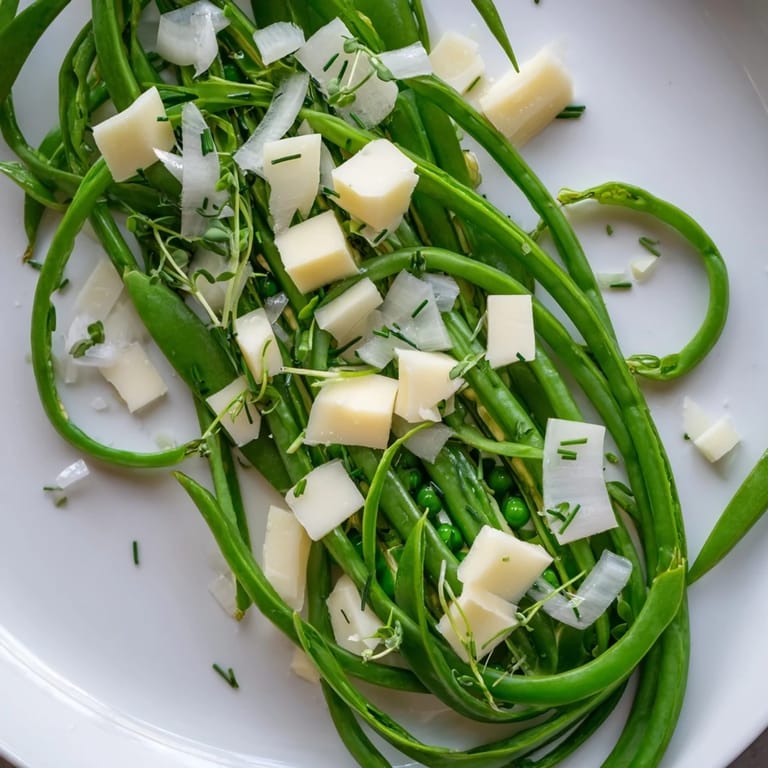
- Add the cooled vegetables and shallot to the dressing and toss just enough to coat everything evenly—you're not trying to mix them into submission. Then arrange them on a serving platter in long, winding lines, like snap pea and green bean vines actually growing across the plate. Scatter the sharp white cheddar over the top, tucking some pieces between the vegetables so every bite has cheese.
- Finish with flourish:
- Sprinkle with chopped fresh chives and add microgreens or pea shoots if you have them—they add a peppery note and look undeniably pretty. Serve immediately, while everything is still cool and the vegetables haven't started to soften.
 Save to Pinterest
 What I love most about this salad is how it made me realize that vegetables don't need to hide or apologize for being simple. The moment my guests started eating, they weren't polite—they were genuinely delighted, asking for extra cheddar, wanting to know if snap peas were always this good. That's the kind of salad that changes how people think about what's possible in a bowl.
Why Sharp Cheddar Changes Everything
Most salads treat cheese like a casual addition, something to sprinkle at the end out of obligation. But sharp white cheddar in this salad is a conversation starter—it has actual flavor that doesn't fade into the background. The tanginess cuts through the sweetness of the snap peas and contrasts with the earthiness of the blanched green beans, creating a flavor dynamic that feels almost three-dimensional. When you bite through a piece of cheddar with a snap pea, the combination is so much more interesting than either ingredient alone.
The Art of the Blanch and Chill
Blanching is one of those techniques that sounds fancy but is actually just boil-and-shock, a two-step dance that locks in everything you want and kicks out everything you don't. Two minutes in boiling salted water softens the vegetables just barely—enough that your teeth don't feel like they're working overtime, but not so much that they lose their character. The ice bath is the real secret; it stops the cooking dead and keeps the color impossibly green, something that makes the platter look alive when you set it down.
Building a Dressing That Holds Its Own
A dressing this simple has nowhere to hide, so every component matters and every ratio counts. The lemon juice provides brightness, the mustard adds complexity and helps emulsify everything together, and the honey smooths the rough edges without making it sweet. I learned the hard way that bottled lemon juice and pre-made dressings turn this into something generic, but when you whisk it together fresh right in the serving bowl, it tastes like intention. The shallot should spend at least a minute in the dressing before you add the vegetables—it mellows slightly and infuses the whole thing with its subtle sharpness.
- Taste the dressing alone before adding vegetables; it should make you pucker slightly and then nod with satisfaction.
- If you're making this ahead, keep the dressing and vegetables separate and combine just before serving.
- Extra dressing is never wrong; some people will want their portion saucier than others, and that's fine.
 Save to Pinterest
 This salad proved to me that the simplest things, done with attention and fresh ingredients, often taste the best. It's become my go-to when I want to impress without fussing, a recipe that reminds me that sometimes a salad can be the most memorable part of a meal.
Frequently Asked Questions
- → What is the best way to blanch snap peas and green beans?
Bring salted water to a boil and blanch the vegetables for 2 minutes until bright green and tender-crisp. Then immediately cool them in ice water to preserve color and texture.
- → Can I substitute the sharp white cheddar with another cheese?
Yes, goat cheese or feta can be used for a tangier flavor, offering a different but delicious twist.
- → How should I store leftovers to keep them fresh?
Store the salad in an airtight container in the refrigerator and consume within one day for optimal freshness and texture.
- → Are there any recommended garnishes to enhance the salad?
Fresh chives and microgreens or pea shoots add visual appeal and subtle flavor. Toasted nuts like walnuts or almonds provide a nice crunchy contrast.
- → What dressings pair well with this salad?
The included olive oil, lemon juice, Dijon mustard, and honey dressing complements the ingredients well, but a light vinaigrette or herb dressing could also work.