 Save to Pinterest
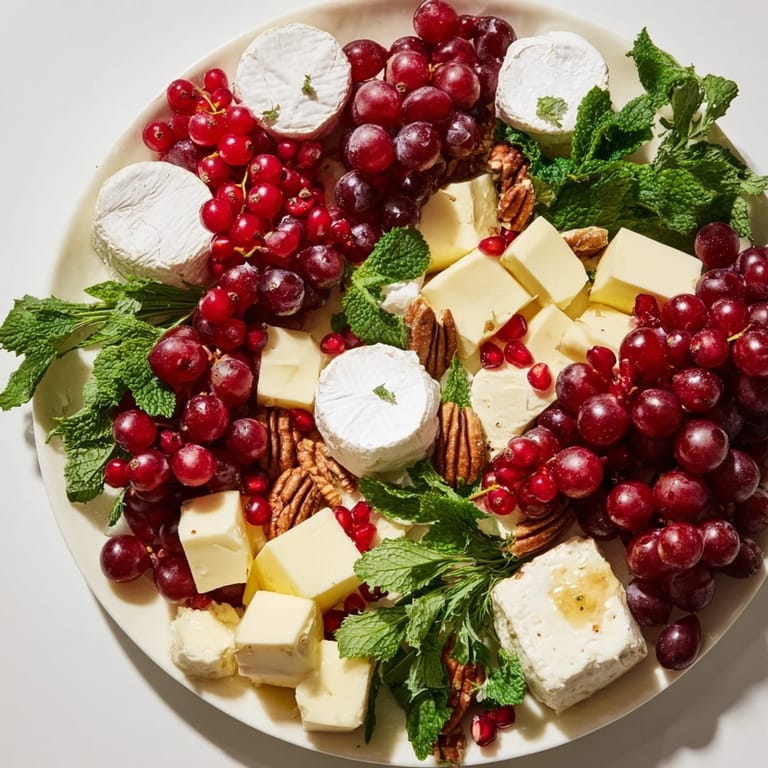
 I'll never forget the first time I arranged a holly berry cluster for a holiday dinner party. I was standing in my kitchen on a December afternoon, surrounded by ruby-red berries and fresh herbs, and suddenly realized I could create something that looked like edible art. The way the colors caught the light—those deep crimsons against the bright green leaves—reminded me that sometimes the simplest ideas make the most memorable impressions. That platter became the conversation starter of the evening, and I've been crafting versions of it ever since.
I made this for my sister's engagement party last year, and what struck me most wasn't the compliments on the platter itself, but watching my grandmother lean in close to examine it. She pointed out how the arrangement reminded her of garlands she used to make as a girl, and suddenly this simple appetizer became a bridge between generations. That's when I understood that beautiful food does more than nourish—it connects us.
Ingredients
- Fresh red currants or cranberries, 1 cup: These little jewels are the heart of the design. Currants have a slightly tart brightness that balances the richness of the cheese, and they're sturdy enough to hold their shape throughout your gathering. If you can't find currants, cranberries work beautifully and photograph just as well.
- Pomegranate arils, 1 cup: These add a jewel-box quality to the platter. The arils burst slightly when guests pick them up, releasing their juice—a sensory moment that makes eating this platter feel a little bit luxurious.
- Red grapes, halved, 1/2 cup: The halves create a grounded, clustered look. I learned early on that leaving some whole and halving others creates better visual depth than using them all the same way.
- Goat cheese, shaped into small rounds, 200 g: Goat cheese is mild enough not to compete with the herbs but tangy enough to make you notice it. Roll the rounds lightly in the fresh herbs before arranging—this was a discovery that changed everything about how this platter tastes.
- Brie, cut into cubes, 100 g: Brie brings a creamy softness that contrasts with the firm crackers and the burst of berries. Room temperature brie is essential; cold brie tastes flat.
- Aged cheddar, cut into cubes, 100 g: This adds a sharper note that keeps the platter from feeling too rich. Look for cheddar that's been aged at least 12 months for real depth of flavor.
- Assorted crackers, 1 cup: Choose a mix of shapes and textures—some thin and crispy, some heartier. This gives guests options and makes the platter feel more generous.
- Baguette, sliced into rounds, 1/2 baguette: Optional, but I always include it because some guests prefer bread to crackers, and the toasted rounds are wonderful vehicles for cheese.
- Fresh flat-leaf parsley, 1 large bunch: Parsley is your greenery anchor. Its mild flavor won't overpower, and its leaves mimic the shape of holly leaves in the most natural way.
- Fresh mint, 1 small bunch: This adds brightness and a whisper of cool flavor that guests might not identify but will definitely notice as something special.
- Fresh rosemary, 1 small bunch: Rosemary brings an almost piney sophistication. Even just one sprig tucked here and there lifts the entire composition.
- Toasted pecans or walnuts, 1/4 cup: Toast them yourself if you can—this small step makes an enormous difference in flavor. They add crunch and a subtle richness that keeps people reaching back for more.
- Honey, 2 tbsp: A light drizzle over the cheese cubes adds sweetness and a touch of shine that catches the light beautifully.
Tired of Takeout? 🥡
Get 10 meals you can make faster than delivery arrives. Seriously.
One email. No spam. Unsubscribe anytime.
Instructions
- Prepare with care:
- Wash your berries and herbs gently, then pat them completely dry. Wet berries will slide around on your platter like little escape artists, and nobody wants to chase their appetizers. I pat everything with a clean kitchen towel and let them air-dry for a few minutes while I pull out my serving platter.
- Build your berry clusters:
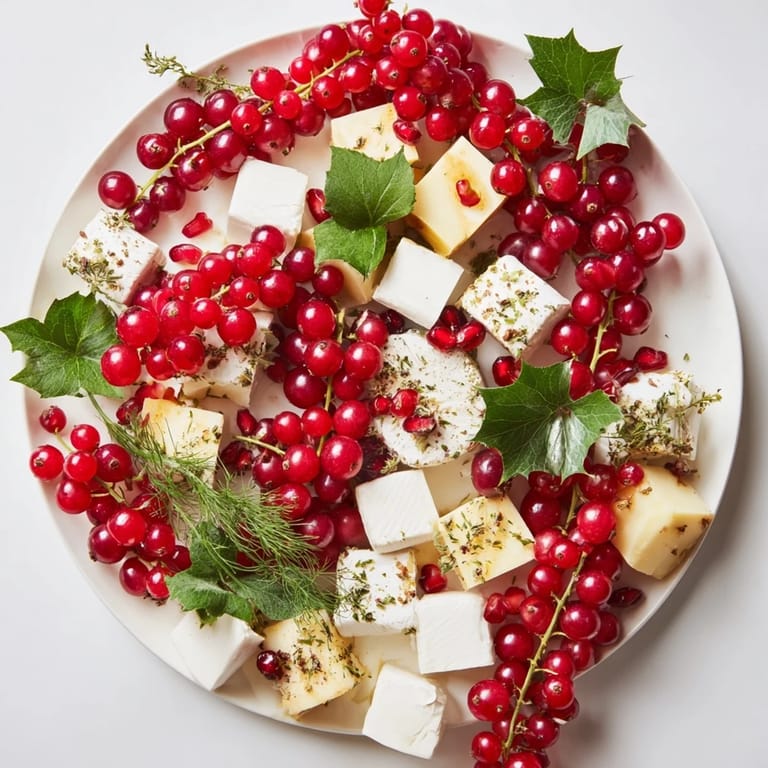
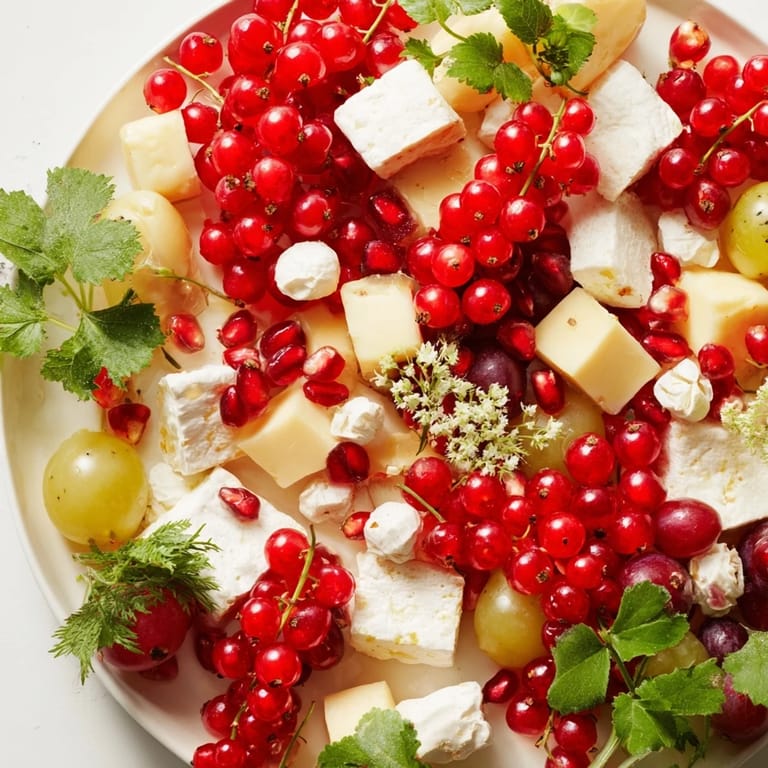
- This is where the magic happens. Start with your largest platter and arrange tight clusters of red currants or cranberries in three or four groupings, as if you're creating little ruby pools across the surface. The key is to keep them clustered and organic-looking—think of how berries naturally cling to a branch. These clusters become the anchors for everything else.
- Tuck in the cheese:
- Nestle your goat cheese rounds and cubes of brie and cheddar among and between the berry clusters. They should feel like they're nestled in, not just sitting on top. I like to place the goat cheese rounds so they peek out slightly from the berries—this creates a beautiful visual rhythm.
- Add the holly leaves:
- Now comes the part that transforms this from just a cheese board into something special. Tuck sprigs of flat-leaf parsley, mint, and rosemary around the berries and cheese. Think of yourself as arranging flowers. The herbs should feel like they're emerging from the arrangement, not stuck in as an afterthought. I always save my nicest herb sprigs for the spots where guests will first look.
- Fill the spaces:
- Take your crackers and baguette rounds and fill in any open areas. This is puzzle-like and satisfying—every empty spot becomes an opportunity. Vary the angles and orientations so it feels abundant rather than arranged.
- Add the finishing touches:
- Sprinkle your toasted nuts over the platter with a light hand—they should look scattered but intentional. Then, if using honey, drizzle it lightly over some of the cheese cubes. The honey will glisten under any lighting, and it adds an unexpected sweetness that delights people when they taste it.
- Present with joy:
- Step back and look at what you've created. It should feel inviting and vibrant—like you're offering guests not just food, but a small work of edible art. Serve immediately so everything is at its best.
 Save to Pinterest
 There's a moment near the end of most parties where someone will lean over to a friend and point out the holly berry cluster, saying it's almost too beautiful to eat. Almost. Then they pick up a cracker topped with brie and a pomegranate aril, and their eyes light up. That moment—when beautiful food becomes a genuine pleasure—is everything.
Choosing Your Berries Wisely
The success of this platter hinges on the quality and freshness of your berries. I've learned to shop for them the morning of my event rather than the day before. Red currants are my top choice because they stay plump and glossy longer than other berries, but if they're not available at your market, don't hesitate to use cranberries—they're actually more forgiving and equally stunning. Pomegranate arils are wonderful when they're in season, but frozen pomegranate arils work beautifully too if you thaw them and pat them dry. The berries should feel firm to the touch, not soft or shriveled. Trust your instinct—if they don't look vibrant in the market, they won't look vibrant on your platter either.
The Cheese Selection Strategy
I used to think you needed expensive, complicated cheeses for an impressive platter, but I've learned that the magic is in contrast rather than complexity. Goat cheese brings tanginess, brie brings creaminess, and aged cheddar brings sharpness—together, they create a conversation about flavor that guests notice. The shapes matter too. Round goat cheese looks intentional and elegant. Cubes of soft brie invite gentle handling. Chunks of cheddar look sturdy and dependable. If you're not familiar with these cheeses, ask your cheesemonger for their recommendations—they usually have strong opinions about what's best right now, and they're usually right.
Timing and Temperature Matters
I learned this lesson when I assembled a platter hours before a party, only to watch the cheese soften too much as the room warmed up. Now I assemble the platter no more than 45 minutes before guests arrive if it's a warm day, and no more than an hour if the kitchen is cool. The berries and crackers can sit out longer, but the cheese really benefits from being as close to room temperature as possible when guests start eating. If your kitchen is particularly warm, arrange everything but the cheese first, then add the cheese rounds and cubes just before bringing the platter to the table. It might feel like rushing, but it's worth it for texture and flavor.
- Assemble the platter close to serving time for the best texture
- If you must make it early, keep it in a cool spot away from direct light
- Cheese at room temperature tastes so much better than cold cheese
 Save to Pinterest
 This platter has taught me that hospitality isn't always about complicated cooking. Sometimes it's about taking simple, beautiful ingredients and arranging them with care and attention. Every time I make it, I'm reminded that the most memorable meals aren't the ones that took all day—they're the ones that made someone feel truly welcomed.
Frequently Asked Questions
- → What berries work best for this platter?
Fresh red currants or cranberries provide vibrant color, while pomegranate arils and halved red grapes add variety and sweetness.
- → Can I substitute the cheeses in this arrangement?
Yes, goat cheese, brie, and aged cheddar create a balanced flavor. For alternatives, try plant-based cheeses for different dietary needs.
- → How do the fresh herbs contribute to the platter?
Parsley, mint, and rosemary bring fresh greenery that mimics holly leaves, adding aroma and visual appeal.
- → Is it necessary to use toasted nuts?
Toasted pecans or walnuts add a crunchy texture and nutty depth, enhancing the complexity of the platter.
- → How should I serve the platter for best presentation?
Arrange berries tightly to mimic holly clusters, nestle cheese pieces among them, tuck herbs carefully around, and fill gaps with crackers and bread rounds.
- → Can this platter be made ahead of time?
It's best assembled shortly before serving to maintain freshness of berries and herbs, but prep ingredients in advance to save time.