 Save to Pinterest
 I discovered the power of a slate board on a gray October afternoon when a friend arrived unexpectedly with a bottle of wine. Rather than scramble for something elaborate, I grabbed what I had—some quality cold cuts, a wedge of aged cheddar, a handful of grapes—and arranged them in purposeful lines on a dark stone slab I'd been using as a doorstop. The minimalist geometry transformed ordinary ingredients into something that felt deliberate and bold. What started as improvisation became a revelation about how restraint and presentation can elevate simplicity.
The first time I served this to more than just one person, I realized something shifted in how people approached eating. They slowed down, studying the arrangement before reaching for anything. One guest actually asked where I'd ordered it from. That moment—watching people pause before indulging—made me understand that sometimes food is as much about the visual rhythm as the taste.
Ingredients
- Smoked Prosciutto: Choose paper-thin slices with a deep mahogany color; they should be almost translucent and slightly salty to balance the sharp cheeses.
- Soppressata: This peppery Italian salami brings a gentle heat that cuts through rich cheese—slice it slightly thicker than prosciutto so it holds its shape on the board.
- Coppa: The marbled fat keeps this cut tender and rich; look for a deep red color with visible white streaks running through.
- Mortadella: Its silky texture and subtle spices create contrast; this is your comfort element among the sharper flavors.
- Aged Cheddar: The deeper the color, the more crystalline and complex the bite—those little crunchy bits are prized.
- Manchego: This Spanish cheese has a subtle nuttiness that feels both elegant and approachable; a natural bridge between mild and intense flavors.
- Gruyère: Rich and slightly sweet with an earthy undertone, it prevents the board from tasting one-dimensional.
- Blue Cheese: The pungent anchor of the whole arrangement; use it sparingly unless your guests love bold flavors—a little goes a long way.
- Seedless Red Grapes: Their sweetness and juiciness reset your palate between salty bites, and their roundness softens the angular geometry.
- Cornichons: These tiny pickles add vinegary brightness and crunch that keeps everything from feeling heavy.
- Whole Grain Mustard: More textured and less acidic than yellow mustard, it pairs naturally with cured meats without overpowering cheese.
- Mixed Olives: The briny intensity adds another layer of savory complexity; choose ones you've actually tasted first.
Tired of Takeout? 🥡
Get 10 meals you can make faster than delivery arrives. Seriously.
One email. No spam. Unsubscribe anytime.
Instructions
- Set Your Stage:
- Place your slate board on a clean, level surface where it won't slide around. If the surface is cold, all the better—a chilled board keeps everything fresher longer, and your guests will notice the thoughtfulness.
- Arrange the Meats:
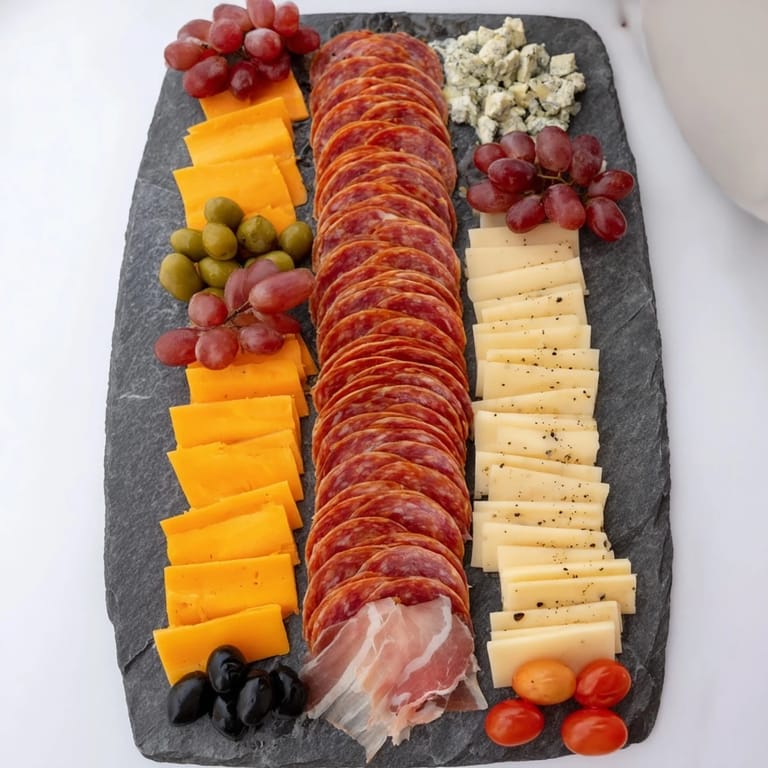
- Fold or roll each type of cured meat loosely and position them in parallel lines along one side of the board, keeping each meat separate so their distinct colors and textures remain visible. The straight lines create visual order; slight imperfections feel intentional rather than sloppy.
- Line Up the Cheeses:
- Mirror the meat arrangement on the opposite side with your cheese slices, grouping each type together. The contrast between the creamy, pale colors of cheese and the deep reds and browns of the meats is half the appeal.
- Fill the Spaces:
- Tuck small bunches of grapes and cornichons into the gaps between meats and cheeses, then scatter the olives where they feel balanced. Think of this like composing a small landscape where everything has intentional placement.
- Add the Mustard:
- Either create a thin mustard line running through the board or dollop it into a small ceramic ramekin set at one corner. Mustard is your flavor bridge—keep it accessible but contained.
- Finish with Pepper:
- Give the meats and cheeses a light, final shower of freshly cracked black pepper. The aroma rises immediately, signaling that something special is about to happen.
- Present and Serve:
- Bring the board to the table and let it sit for a moment while people absorb the arrangement. Serve immediately so the cold cuts don't warm and the cheese stays properly firm.
 Save to Pinterest
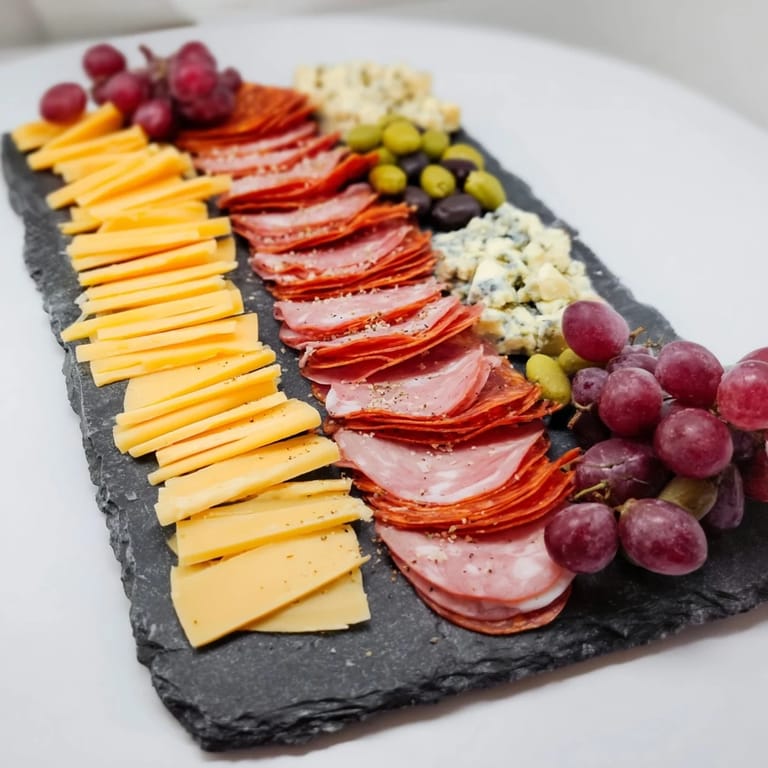
 There was an evening when I realized this simple board had become a ritual in my home—not fancy, but honest. A neighbor stopped by, saw it on the table, and smiled like they'd stumbled onto something they didn't know they were missing. That's when I understood: sometimes the most memorable meals aren't the ones with the longest recipes, but the ones arranged with intention and served with ease.
Why Straight Lines Matter
The geometry of this board is not accident—it's intention. Straight lines create visual confidence and make each element distinct rather than jumbled. The eye knows where to look, the hand knows what to reach for, and somehow this clarity makes the whole experience feel more luxurious. When you step back from the finished board, it should look like a small art installation, not a random pile of food.
Choosing the Right Slate
Not all stone boards are created equal. You want something genuinely heavy and unpolished—the irregular surface keeps items from sliding around, and the matte finish looks intentional rather than overly glossy. If you're shopping for one, feel the weight in your hands and run your fingers across the surface; rough edges and a genuine heft tell you it will last decades. The board itself becomes part of the story you're telling with this dish.
Building Your Own Board
The beauty of this dish is that it adapts to what you love and what you can find. Start with one excellent cured meat and one bold cheese, then build from there—you're not locked into specific ingredients, just the principle of quality and restraint. Seasonality matters too; in summer, add fresh figs or apricots, and in winter, consider adding a small handful of candied nuts or a soft cheese like burrata. The structure stays the same, but your personality shows through in what you choose.
- Buy ingredients from places where you can taste before committing, whether that's a market counter or a good cheese shop.
- Prep everything the morning you're serving and keep it covered in the refrigerator until the last moment.
- If you're uncertain about quantities, remember that a little of something excellent beats a lot of something mediocre.
 Save to Pinterest
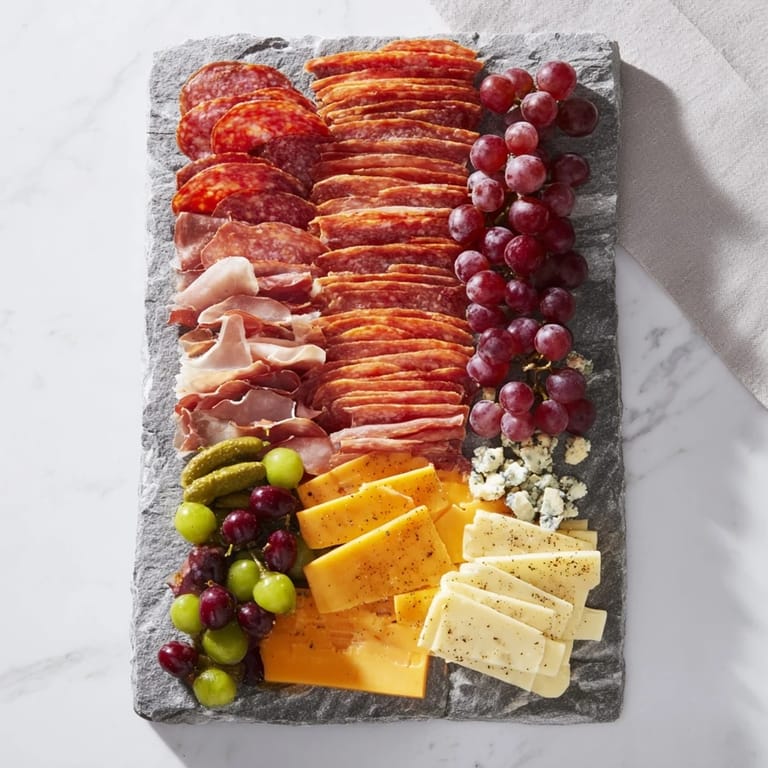
 This board taught me that sometimes the most elegant food comes from knowing when to stop adding. Serve it with good wine, honest company, and let the arrangement do the talking.
Frequently Asked Questions
- → What types of meats are used in this platter?
The platter features smoked prosciutto, soppressata, coppa, and mortadella, all served cold and thinly sliced.
- → How should the cheeses be prepared and arranged?
Sharp cheeses such as aged cheddar, Manchego, Gruyère, and blue cheese are sliced or crumbled and arranged in straight parallel lines opposite the meats.
- → What accompaniments complement the arrangement?
Seedless red grapes, cornichons, mixed green and black olives, and whole grain mustard provide contrast and enhance the flavors.
- → Why use an unpolished stone slab for serving?
The heavy, textured surface offers a bold, minimalist appearance that enhances the modern, industrial aesthetic of the presentation.
- → Can this arrangement be made vegetarian?
Yes, by omitting the meats and adding marinated artichoke hearts and roasted nuts as alternatives.
- → Are there any allergen considerations to keep in mind?
This platter contains dairy from the cheeses and may include nuts if added as a variation; processed meats may have gluten, so checking labels is important.