 Save to Pinterest
 There's something about throwing together a Mediterranean salad on a lazy afternoon that feels like the opposite of cooking. I was standing in my kitchen with a can opener and three different types of beans, thinking about a trip to Athens where I sat in a tiny taverna and ate something very much like this—except theirs was somehow better because I didn't have to make it. Then I realized: maybe it was better because of the simplicity. I've been making this version for years now, and it's become the salad I reach for when I want something that tastes intentional but requires almost no heat.
I made this for a potluck once where someone brought store-bought hummus and called it a day, and my salad somehow became the thing people kept coming back to. There's a specific moment I remember—a friend who usually skips salad entirely filled a bowl and then asked for the recipe because she wanted to make it at home. That's when I knew this wasn't just a salad; it was something that actually worked.
Ingredients
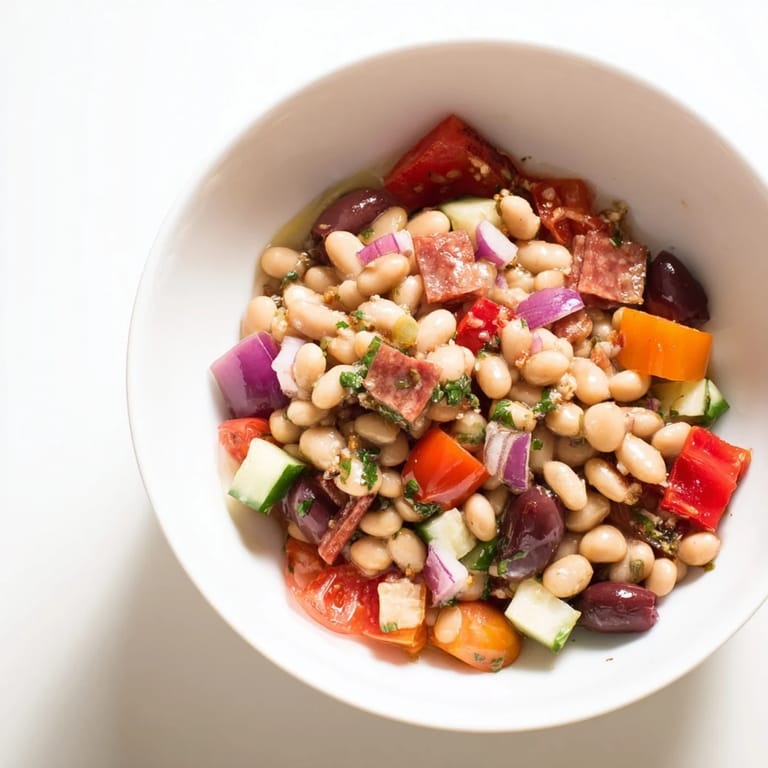
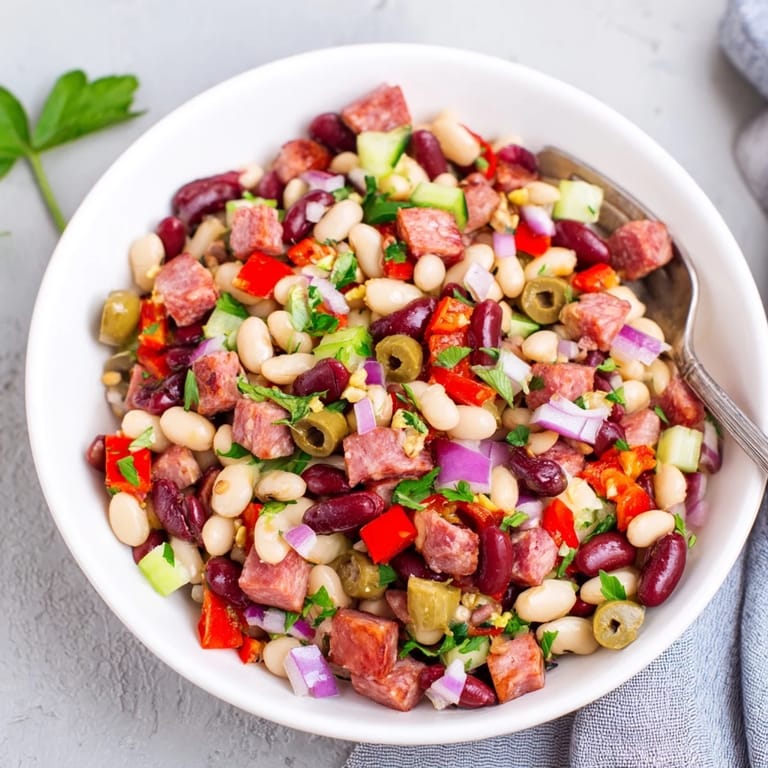
- Cannellini beans, chickpeas, and kidney beans: Three types give you texture variation and make sure no single bean dominates—use canned and rinsed to avoid that tinny flavor.
- Dry-cured salami: The salty, umami-forward presence that changes everything; cheaper salami gets mealy, so don't skimp here.
- Red onion: Dice it small and it disappears into the salad while adding a subtle bite that pulls everything together.
- Cucumber and red bell pepper: These are your fresh, crisp anchors that keep the salad from feeling heavy.
- Cherry tomatoes: Halve them so they release a little juice into the dressing without falling apart.
- Kalamata olives and capers: Both are salty and briny—they're the voice of the Mediterranean in this bowl, so taste as you go.
- Fresh parsley and basil: Add them right before serving or they'll turn dark and sad; fresh herbs are non-negotiable here.
- Extra-virgin olive oil: This isn't the time for cooking oil; use something you'd actually want to drink.
- Red wine vinegar: It has enough body not to disappear into all those beans.
- Dijon mustard and garlic: These create an emulsion that holds the dressing together instead of letting it separate.
Tired of Takeout? 🥡
Get 10 meals you can make faster than delivery arrives. Seriously.
One email. No spam. Unsubscribe anytime.
Instructions
- Combine your beans:
- Drain and rinse all three cans of beans in a colander—this removes the starchy liquid that makes everything taste canned. Use a large bowl so you have room to work.
- Build the salad base:
- Add the salami, onion, cucumber, bell pepper, tomatoes, olives, and capers to the beans. The salami pieces should be small enough that they distribute throughout instead of clumping together.
- Add the herbs:
- Sprinkle in the parsley and basil last so they stay bright green and don't bruise from being tossed around too early.
- Make the dressing:
- In a separate small bowl or jar, whisk the olive oil, vinegar, mustard, oregano, salt, pepper, and garlic until it looks slightly creamy and emulsified. If you have a jar with a tight lid, put everything in there and shake hard—it works just as well.
- Combine everything:
- Pour the dressing over the salad and toss gently but thoroughly, making sure every bean gets coated. Taste a bite and adjust the salt or vinegar if needed.
- Let it rest:
- If you have 30 minutes, cover it and chill—the flavors deepen and the beans absorb the dressing. If you don't, it's still delicious immediately.
 Save to Pinterest
 There's a quiet comfort in knowing you have a salad that works for almost any occasion. I've served it warm from the counter on summer nights, cold from the fridge on rushed mornings, and even brought it to a beach where someone's beach towel somehow ended up in the bowl, and it still tasted good enough that nobody cared.
Why This Salad Never Gets Old
The reason this works is restraint. It's not trying to be a composed salad with a story or a deconstructed something pretentious. It's just real ingredients that belong together, the way they've belonged together in Greece and Italy and Spain for generations. When you use good oil and fresh herbs, you don't need anything else to happen. The salami does the heavy lifting, the beans do the filling, and the vinegar keeps everything bright.
How to Make It Your Own
This salad is a template, not a prison. I've seen people add crumbled feta instead of the salami for a vegetarian version, or throw in artichoke hearts for extra Mediterranean flavor. Someone once added roasted red peppers and it was revelatory. The key is respecting the ratio—you want beans and vegetables in similar quantities, with just enough salami and olives to taste them in every bite.
Serving and Storage
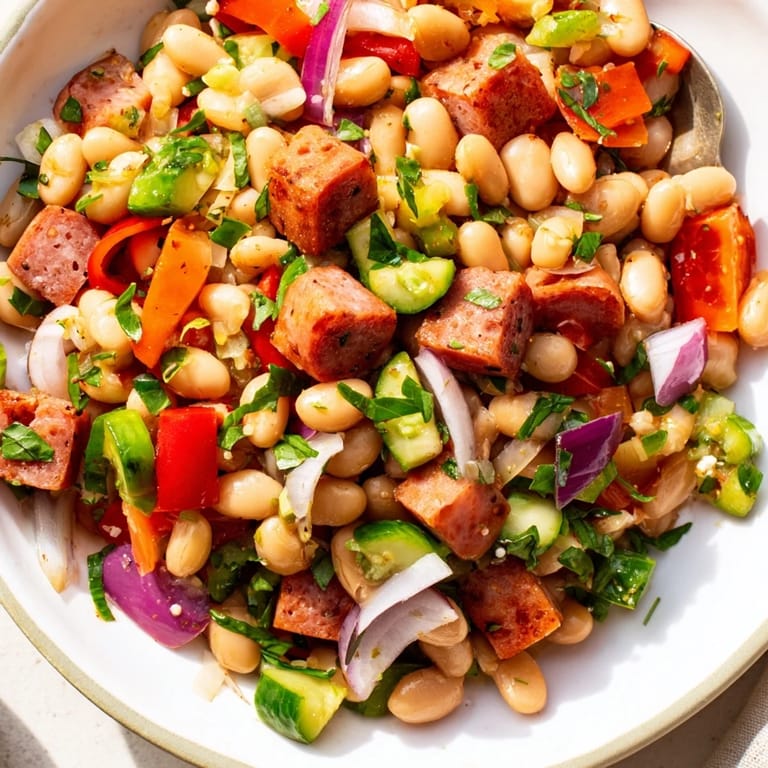
This salad gets better with time, which makes it the ultimate meal-prep invention. It holds for three days in the fridge before the herbs start to fade and the beans start to feel mushy. Serve it cold as a main course with crusty bread, or room temperature as a side for grilled chicken or fish. A crisp white wine or chilled rosé pairs perfectly, though honestly, cold water is fine too.
- If it sits for more than a day, taste it again before serving and add a splash more vinegar and olive oil to freshen it up.
- Don't dress it more than a few hours ahead if you're using particularly tender vegetables, or they'll weep liquid and make everything soggy.
- Cold straight from the fridge is wonderful, but let it sit on the counter for 15 minutes before serving if you want the flavors to taste less muted.
 Save to Pinterest
 This is the kind of recipe that proves you don't need complicated techniques or exotic ingredients to make something genuinely delicious. It just needs good instincts and ingredients that taste like themselves.
Frequently Asked Questions
- → What beans are used in this salad?
Cannellini beans, chickpeas, and kidney beans form the hearty bean base, providing protein and texture.
- → Can I prepare the salad ahead of time?
Yes, chilling the salad for 30 minutes before serving helps meld the flavors and enhances the taste.
- → How is the dressing made?
The dressing combines extra-virgin olive oil, red wine vinegar, Dijon mustard, oregano, garlic, salt, and pepper whisked together until emulsified.
- → Are there vegetarian alternatives to salami?
Omitting salami and adding diced feta cheese provides a vegetarian-friendly option without sacrificing flavor.
- → What herbs contribute to the flavor profile?
Fresh parsley and basil add bright, aromatic notes that complement the robust ingredients.
- → Can additional ingredients be added for variety?
Yes, ingredients like artichoke hearts or roasted red peppers can enhance the flavor complexity.