 Save to Pinterest
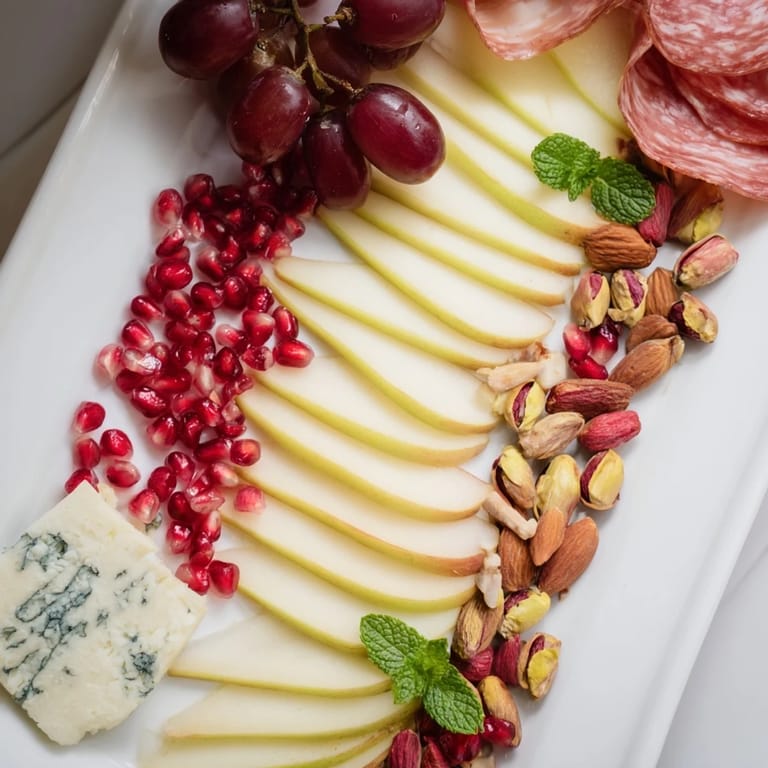
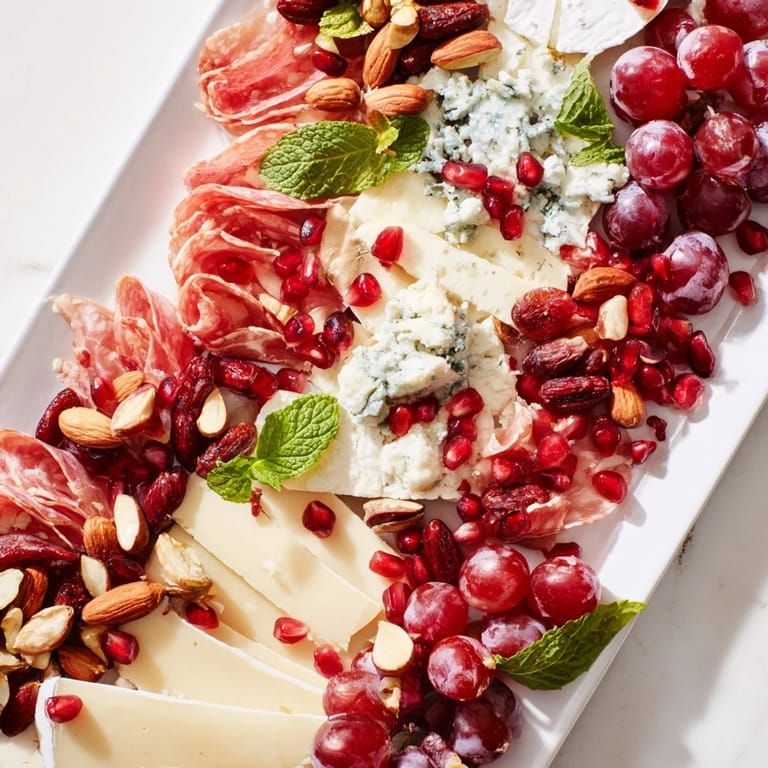
 I'll never forget the afternoon I decided to arrange a cheese board for my sister's engagement party. Rather than the typical scattered approach, I wanted to create something that told a visual story—something that made guests pause before diving in. That's when the idea struck: a diagonal cascade of jewel-toned pomegranate seeds scattered across creamy cheeses and cured meats, flowing like a river of rubies across the board. It became the centerpiece everyone photographed, and more importantly, it sparked conversations around the table that lasted hours.
The first time I made this board, my neighbor peeked over the kitchen counter and gasped. She'd never seen pomegranate seeds used as decoration before, and suddenly this simple appetizer felt like edible art. Her daughter asked if we could make it again for her birthday party, and that's when I knew I'd stumbled onto something special—food that doesn't just taste good, but makes people feel celebrated.
Ingredients
- Creamy goat cheese: Its tangy, luxurious texture creates the perfect canvas for sweet and salty companions. Slice it while slightly chilled so it holds its shape beautifully along your diagonal line.
- Aged Manchego: This Spanish cheese brings a nutty complexity that elevates the entire board. Its firm texture means it slices cleanly without crumbling, making it architectural perfection.
- Blue cheese: Crumble this boldly—it's your flavor anchor, the salty whisper that makes people say 'wow, what is that?'
- Prosciutto and spicy salami: Fold these gently so they catch the light and create dimension. The contrast between delicate prosciutto and robust salami gives you textural diversity.
- Pomegranate arils: These aren't just garnish—they're the soul of the board. Their jewel-like appearance combined with tart-sweet flavor is what makes this board unforgettable. Remove them gently over a bowl to catch the juice.
- Fresh fruits: Slice pears and apples just before serving to prevent browning. Halve your grapes for visual consistency along the diagonal flow.
- Dried apricots and figs: These bridge fresh and cured flavors beautifully, adding chewiness and natural sweetness that complements sharp cheeses.
- Toasted pistachios and roasted almonds: Don't skip the toasting step—it deepens their flavor and creates an irresistible crunch that contrasts with creamy elements.
- Honeycomb and fig jam: These are your flavor accelerators, small touches that transform a bite from good to remarkable. Place them in small bowls so guests can add as much as they like.
- Crusty baguette and artisan crackers: Think of these as edible utensils that let your guests build their own flavor combinations.
- Fresh mint: A final flourish that adds color, aroma, and a hint of freshness that keeps the board from feeling too heavy.
Tired of Takeout? 🥡
Get 10 meals you can make faster than delivery arrives. Seriously.
One email. No spam. Unsubscribe anytime.
Instructions
- Visualize Your Cascade:
- Before you place anything, take a moment to imagine a diagonal line flowing from the top left corner to the bottom right of your board. This isn't about perfection—it's about creating movement and intention.
- Anchor With Cheese:
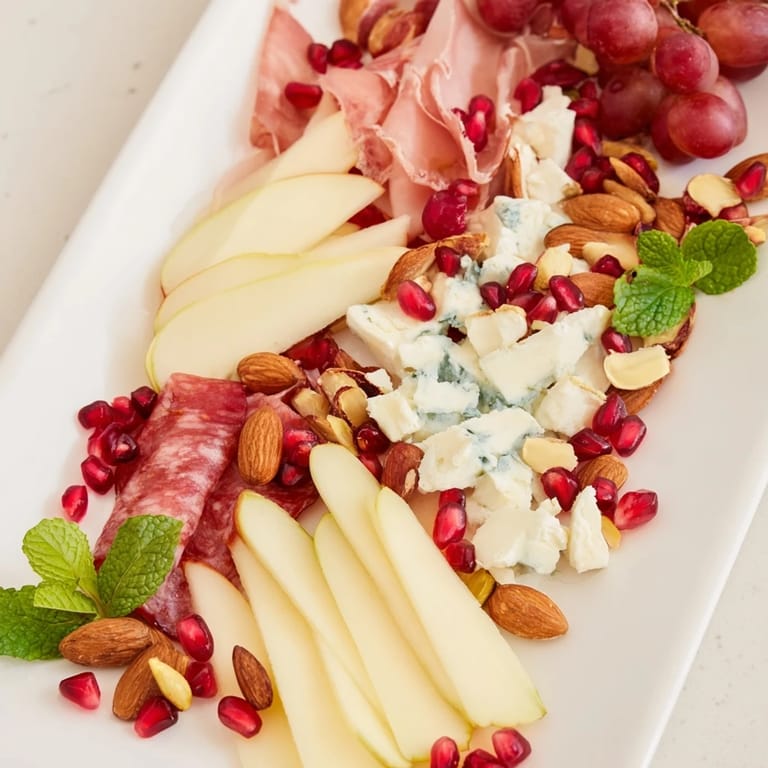
- Start by placing your three cheeses along this diagonal line, alternating them as you go. Let them overlap slightly, creating natural valleys where other ingredients will nestle. The goat cheese should look creamy and inviting, the Manchego should show off its golden color, and the blue cheese should be boldly present.
- Introduce the Meats:
- Gently fold your prosciutto and salami into the spaces between cheeses. Don't flatten them—let them bunch and billow naturally, like fabric catching the light. This creates the visual richness that makes people pause before eating.
- Weave In the Fruits:
- Now it's time for fresh fruit. Arrange your pear and apple slices, along with halved grapes, so they follow your diagonal line. Tuck dried apricots and figs between everything, creating pockets of color and texture.
- Crown With Pomegranate Jewels:
- This is the moment where everything comes together. Sprinkle pomegranate arils generously across the entire diagonal, but don't scatter them evenly—create little clusters where they catch the light like actual jewels. Let some rest on cheese, some on fruit, some on empty space. This is where the magic happens.
- Add Crunch and Richness:
- Tuck your toasted pistachios and roasted almonds into the remaining spaces. They should feel hidden until someone discovers them mid-bite.
- Frame With Honey and Jam:
- Place your honeycomb and fig jam in small bowls at opposite ends of the cascade. This signals to guests that these are flavor enhancers, ready to accompany any bite.
- Finish the Presentation:
- Fan your baguette slices and crackers along both sides of the cascade, creating an accessible frame. They should be within easy reach but not competing for attention.
- Final Garnish:
- Scatter fresh mint leaves across the board, focusing on visible gaps. The green adds brightness and signals freshness.
- Serve Immediately:
- Bring the board directly to the table at room temperature. The first moments are when guests are most enchanted by its beauty, so timing is everything.
 Save to Pinterest
 What I didn't expect was how this simple board became a conversation starter. At one gathering, a guest discovered that combining blue cheese with pomegranate and fig jam created their new favorite flavor combination—and they asked me for the recipe. That's when I realized this board isn't just food; it's an invitation for people to explore, experiment, and discover their own favorite bites.
The Art of the Diagonal
The diagonal arrangement isn't arbitrary—it creates visual momentum that draws the eye across the board and makes the presentation feel intentional and designed. When you arrange elements in straight lines or scattered clusters, they feel accidental. But a diagonal tells a story; it suggests movement, elegance, and thoughtfulness. I've found that guests are more likely to take time admiring the board before eating when it has this clear directional flow. It also makes serving easier because items naturally cluster in a way that prevents the 'bare spot' problem that plagued my earlier, more random arrangements.
Cheese Selection and Pairing
The three cheeses I've chosen represent different flavor and texture territories: creamy and tangy, firm and nutty, and bold and salty. This variety ensures that every guest finds a cheese that speaks to them. But here's what I've learned through experimentation: the most important thing is contrast. If all your cheeses are similar—say, three different aged cheddars—the board loses its complexity. Mix creamy with firm, mild with bold, young with aged. Your pomegranate arils will taste different depending on which cheese they're paired with, and that's exactly the point.
Pomegranate: More Than Just Beautiful
Pomegranate arils are the reason this board works. They're not just visually stunning—they provide tart sweetness that cleanses the palate between rich bites of cheese and cured meat. When you bite into one, it releases juice that adds moisture and brightness to every combination. The seeds also serve a practical purpose: they prevent the board from feeling too heavy or overwhelming. Without them, this much cheese and cured meat would feel indulgent to the point of fatigue. With pomegranate, it feels celebratory and balanced.
- To remove pomegranate arils efficiently, cut the pomegranate in half and hold it over a bowl, then tap the back with a wooden spoon—the arils will fall right out without releasing excess juice onto your hands
- If fresh pomegranate isn't available or is out of season, fresh raspberries or tart cranberries can provide similar brightness, though they won't have quite the same dramatic visual impact
- Buy your pomegranate 1-2 days before serving and store it in the refrigerator—this keeps the arils firm and jewel-like rather than soft and shriveled
 Save to Pinterest
 The beauty of this board is that it's not just about feeding people—it's about creating a moment where everyone slows down and appreciates the care you've taken. That's the real recipe.
Frequently Asked Questions
- → How do I arrange the cascade effect?
Start by placing cheese slices diagonally across your board, then layer cured meats gently folded between them. Alternate fresh fruits and dried fruits along this line, finishing with sprinkled pomegranate arils for a vibrant jewel-like look.
- → Can I make this platter vegetarian-friendly?
Yes, omit cured meats and increase nuts or roasted vegetables to maintain texture and variety while keeping it vegetarian-friendly.
- → What cheeses work best for this board?
Creamy goat cheese, aged Manchego, and blue cheese offer contrasting flavors, but Brie, aged Cheddar, or Camembert are great alternatives tailored to your taste.
- → How should this board be served?
Serve immediately at room temperature to best enjoy the layers of flavors and maintain the freshness of fruits and cheeses.
- → What drinks pair well with this board?
Crisp rosé, sparkling wine, or a refreshing pomegranate spritzer complement the diverse flavors beautifully.