 Save to Pinterest
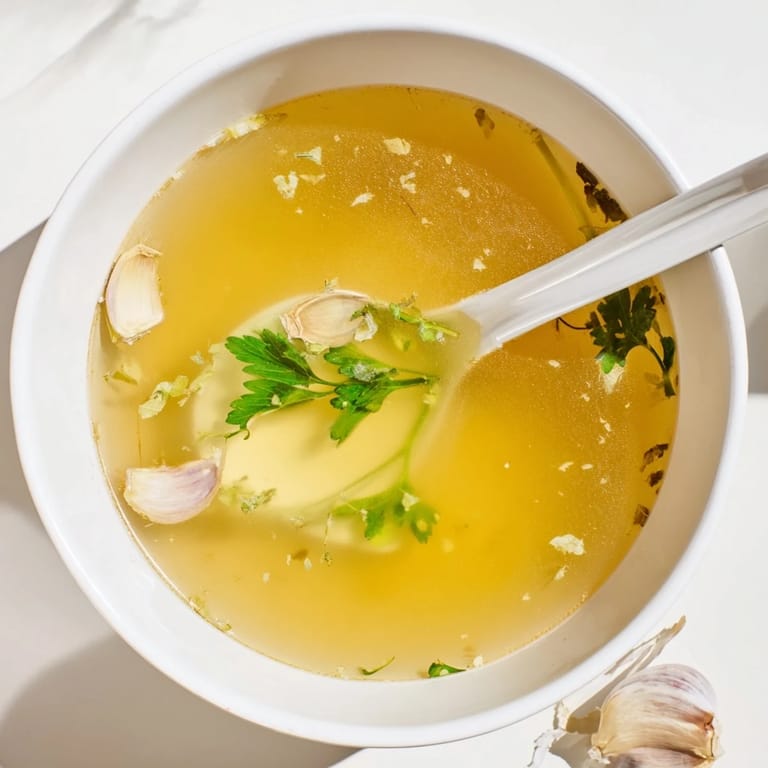
 My grandmother kept a marked container in her freezer, and for years I thought it was emergency ice until the day she pulled it out to make soup. That was the moment I understood magic doesn't need to be complicated. Now my own freezer holds bags of carrot peels, onion skins, and celery ends, like a savings account that pays off in warmth.
Last winter, my friend Sarah came over for soup and kept asking what my secret ingredient was. She refused to believe it was just 'garbage water' until I showed her the scrap bag. Now she sends me photos of her freezer collection like proud parents sharing baby pictures.
Ingredients
- Vegetable Scraps: 5–6 cups of carrot peels, onion skins, celery ends, leek tops, mushroom stems, garlic skins, and parsley stems—basically everything you'd normally toss during meal prep
- Bay Leaves: 2 whole leaves bring that classic savory depth that makes broth taste like it simmered all day
- Black Peppercorns: 8–10 whole ones add subtle warmth without the harsh bite of ground pepper
- Garlic: 2 smashed cloves (if you have them) for that aromatic backbone
- Fresh Herbs: A handful of parsley or thyme sprigs makes everything taste brighter and fresher
- Salt: 1–2 teaspoons to taste, added at the end so you don't overseason
- Cold Water: 2 liters (8 cups) to cover everything and let the flavors meld slowly
Tired of Takeout? 🥡
Get 10 meals you can make faster than delivery arrives. Seriously.
One email. No spam. Unsubscribe anytime.
Instructions
- Gather Your Scraps:
- Collect your clean vegetable trimmings, but skip anything bitter or cruciferous like broccoli, cauliflower, or cabbage—trust me, that one time I used Brussels sprout ends, my whole kitchen smelled like regret
- Combine Everything:
- Place your scraps, bay leaves, peppercorns, smashed garlic, and fresh herbs into a large stockpot, then pour in the cold water until everything is covered by about an inch
- Bring to a Gentle Boil:
- Set the pot over medium-high heat and watch for bubbles to start breaking the surface, then immediately dial it back down to a gentle simmer
- Simmer Uncovered:
- Let it bubble quietly for about 1 hour, skimming off any foam that rises to the top with a spoon—this keeps your broth clear and clean-tasting
- Season and Taste:
- Add your salt gradually, tasting as you go, since the intensity will depend on what vegetables you used
- Strain the Broth:
- Pour everything through a fine-mesh sieve or cheesecloth into a large bowl, letting the liquid catch below while the solids get left behind
- Store Your Liquid Gold:
- Cool completely before transferring to airtight containers, where it will keep in the fridge for 5 days or in the freezer for up to 3 months
 Save to Pinterest
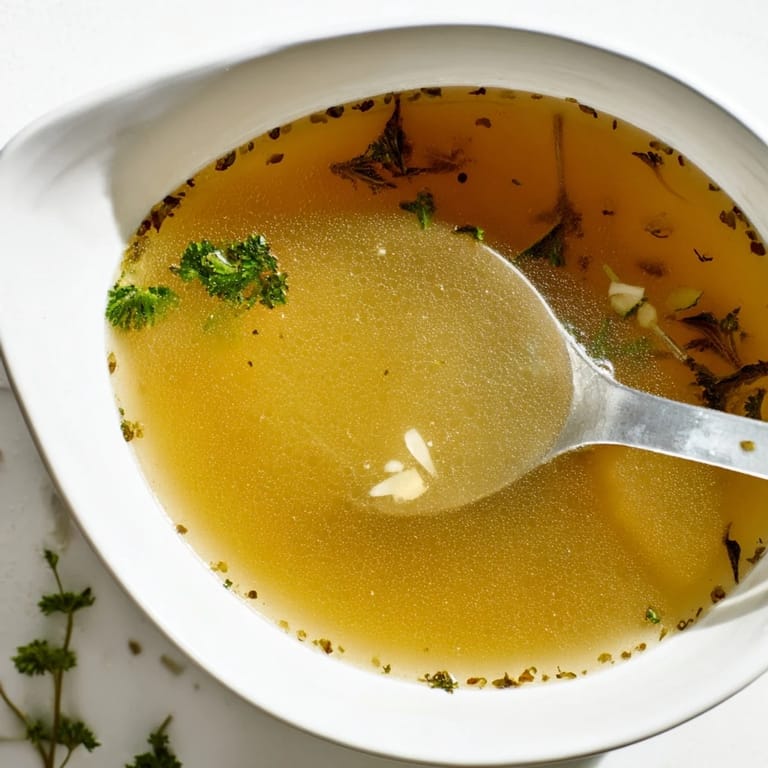
 The first time I served this broth on its own, just sipped from a mug on a rainy Sunday, it felt like cheating. Something this good shouldn't come from what was headed for the compost. Now it's the base for almost every soup I make.
Building Your Scrap Collection
I keep a large freezer bag designated just for broth scraps, adding to it throughout the week whenever I prep vegetables. When it's full, that's my signal that it's broth-making day. The variety actually works in your favor, since different additions mean slightly different flavors each time.
Freezing for Later
Pour cooled broth into ice cube trays for small portions, or freeze in 2-cup containers for recipes. Either way, label with the date—frozen broth keeps forever quality-wise, but after 3 months, the flavor starts fading like a photograph left in the sun.
Making It Your Own
Sometimes I add a piece of kombu seaweed or dried shiitake mushrooms for extra umami depth. Other times, roasting the scraps first at 400°F for 20 minutes transforms the whole thing into something darker and richer, almost beefy despite having no meat at all.
- Freeze scraps in a dedicated bag until you have about 6 cups full
- Add parsnip ends or fennel fronds for subtle sweetness
- Avoid beets unless you want pink broth that tastes like earth
 Save to Pinterest
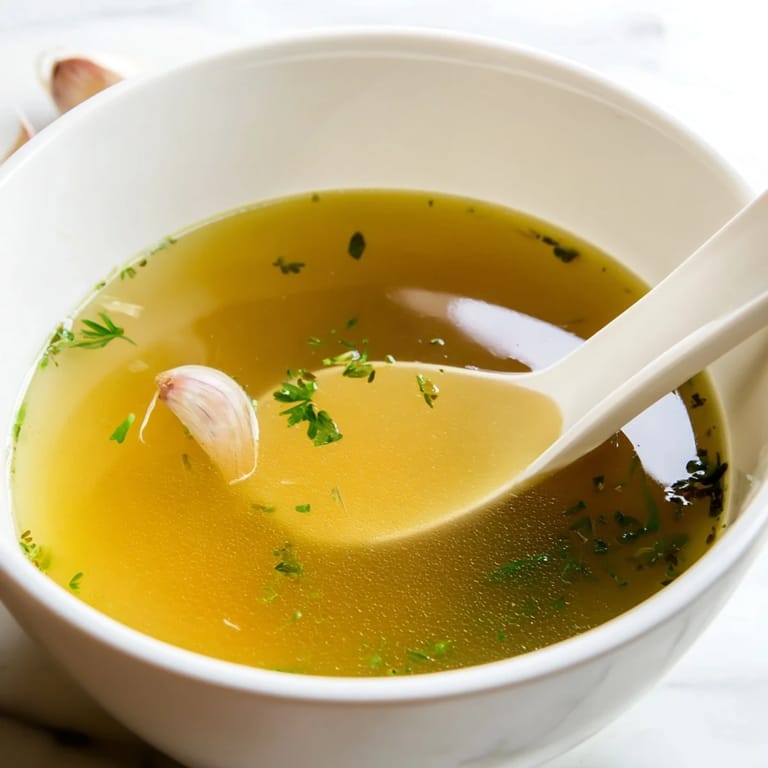
 There's something deeply satisfying about closing the loop, turning waste into something that nourishes. Every time I pull a frozen bag of scraps from the freezer, I feel a little connection to all the cooks before me who understood that good food starts with respecting every part of what you have.
Frequently Asked Questions
- → What vegetables should I avoid putting in broth?
Skip cruciferous vegetables like broccoli, cauliflower, Brussels sprouts, and cabbage. These can make broth bitter and overpowering. Stick with sweet vegetables like carrots, onions, celery, leeks, and mushrooms.
- → How long does homemade broth last?
Store in airtight containers in the refrigerator for up to 5 days, or freeze for up to 3 months. Freeze in portion-sized containers or ice cube trays for easy use later.
- → Can I add fresh vegetables instead of scraps?
Absolutely. While scraps make this economical, you can use fresh chopped vegetables. The flavor will be more intense and the color clearer.
- → What gives the broth deeper flavor?
Add kombu seaweed or dried shiitake mushrooms for umami depth. Roasting vegetable scraps before simmering also adds richness and caramel notes.
- → Should I salt the broth?
Add salt lightly during cooking, then adjust to taste at the end. Remember that broth reduces when used in other dishes, so under-seasoning is safer.