 Save to Pinterest
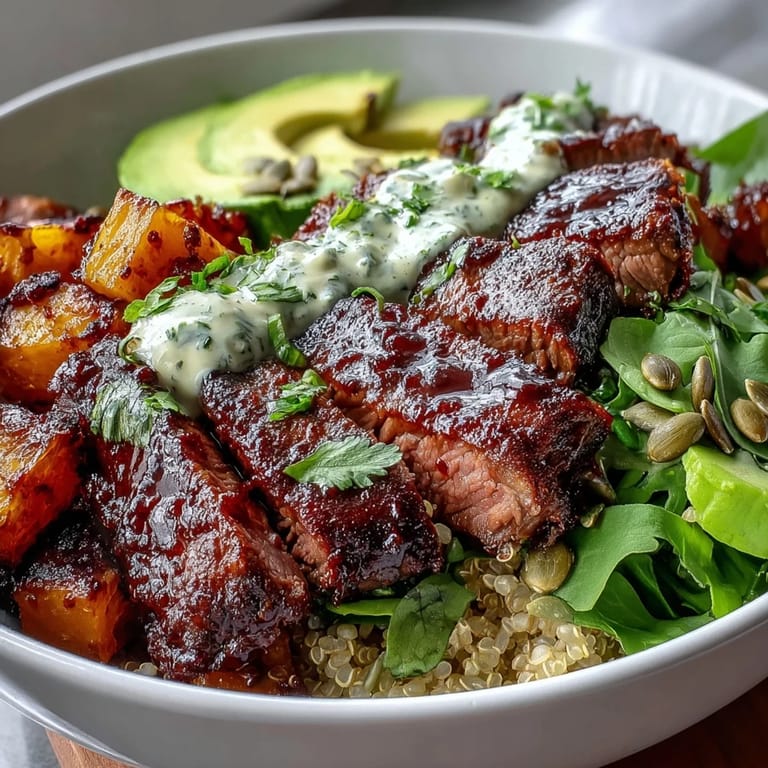
 My apartment was freezing that November evening, and I had one butternut squash left from the farmers market. I wasn't planning anything fancy, just something warm and filling, but when I tossed those cubes with cumin and watched them caramelize in the oven, the whole place smelled like a completely different season. I seared a steak I'd been saving, piled everything into a bowl with whatever greens I had, and realized I'd stumbled onto something I'd crave all winter. That first bite, sweet squash against smoky meat with a bright lime kick, felt like solving a puzzle I didn't know I was working on.
I made this for my sister when she visited in February, skeptical she'd want something this veggie-forward after a long flight. She ate two bowls, scraping up every pumpkin seed, and asked for the recipe before she even unpacked. The next morning she admitted she dreamed about the dressing, which made me laugh because I'd thrown it together in under a minute. Sometimes the simplest additions become the thing people remember most.
Ingredients
- Butternut squash: Look for one with a long neck and small bulb so you get more usable flesh, and peel it with a sturdy Y-peeler to save your wrists.
- Quinoa: Rinsing removes the natural coating that can taste bitter, and using broth instead of water adds a quiet savory depth.
- Baby spinach or mixed greens: They wilt slightly under the warm toppings, which I prefer to raw crunch, but use whatever greens you actually enjoy eating.
- Avocado: Wait until it yields gently to pressure near the stem, and slice it right before serving so it stays bright green.
- Red onion: Soaking the slices in ice water for five minutes tames the sharpness if raw onion usually bothers you.
- Pumpkin seeds: Toast them in a dry skillet until they pop and smell nutty, which takes about three minutes and makes all the difference.
- Flank steak or sirloin: Flank has more chew and flavor, sirloin is more tender, both work beautifully if you slice against the grain.
- Olive oil: Use the everyday kind for roasting and marinating, save the fancy bottle for drizzling at the end if you want.
- Ground cumin: This is what makes the squash taste warm and slightly mysterious instead of just sweet.
- Garlic powder: It clings to the squash better than fresh garlic, which would burn at high heat.
- Soy sauce or tamari: A tablespoon is enough to add umami without making the steak taste Asian, and tamari keeps it gluten-free.
- Smoked paprika: It gives the steak a faint campfire edge that plays well with the lime later.
- Lime juice: Roll the lime on the counter before cutting to get more juice, and taste the dressing as you go.
- Honey or maple syrup: Just enough sweetness to balance the acid, maple makes it vegan-friendly if that matters to you.
- Fresh cilantro: Chop the stems too, they have tons of flavor and nobody will notice once it's mixed in.
Tired of Takeout? 🥡
Get 10 meals you can make faster than delivery arrives. Seriously.
One email. No spam. Unsubscribe anytime.
Instructions
- Prep the oven and squash:
- Heat your oven to 425°F and line a baking sheet so cleanup stays easy. Toss the squash cubes with oil, cumin, garlic powder, salt, and pepper until every piece is lightly coated, then spread them out so they roast instead of steam.
- Roast until golden:
- Slide the pan into the oven and let the squash go for 25 to 30 minutes, stirring once halfway so the edges get evenly caramelized. You'll know it's ready when the corners turn deep amber and a fork slides through without resistance.
- Marinate the steak:
- While the squash roasts, whisk together olive oil, soy sauce, minced garlic, smoked paprika, cumin, salt, and pepper in a shallow dish. Add the steak, turn it a few times to coat, and let it sit at room temperature for at least 15 minutes so the flavors soak in.
- Cook the quinoa:
- Bring the rinsed quinoa and broth to a boil in a medium saucepan, then lower the heat, cover, and let it simmer for 15 minutes. When the liquid is gone, fluff it with a fork and leave the lid off so steam escapes and the grains stay light.
- Sear the steak:
- Heat a cast-iron skillet or grill pan over medium-high until it's almost smoking, then lift the steak from the marinade and let excess drip off. Cook it for 4 to 5 minutes per side for medium-rare, or longer if you prefer, then move it to a cutting board and let it rest for 5 minutes before slicing thinly against the grain.
- Make the dressing:
- In a small bowl, whisk lime juice, olive oil, honey, chopped cilantro, salt, and pepper until it emulsifies into a glossy, tangy sauce. Taste it and adjust with more lime or honey depending on how bright or sweet you want it.
- Assemble the bowls:
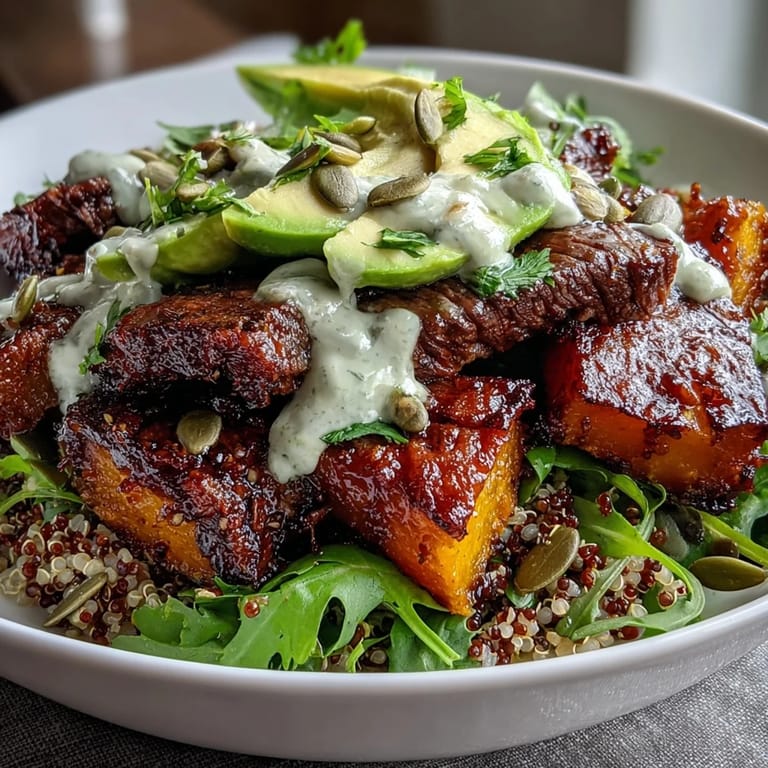
- Divide the quinoa and greens among four bowls, then arrange the roasted squash, sliced steak, avocado, red onion, and toasted pumpkin seeds on top. Drizzle the lime cilantro dressing over everything and serve right away while the steak is still warm.
 Save to Pinterest
 One Saturday I meal-prepped four of these bowls and packed them in glass containers for the week ahead. By Wednesday, my coworker leaned over during lunch and asked what smelled so good, and I realized I'd been looking forward to that bowl since I woke up. It's rare to find something hearty enough to keep you full but light enough that you don't feel weighed down an hour later, and this manages both without trying too hard.
Choosing Your Steak
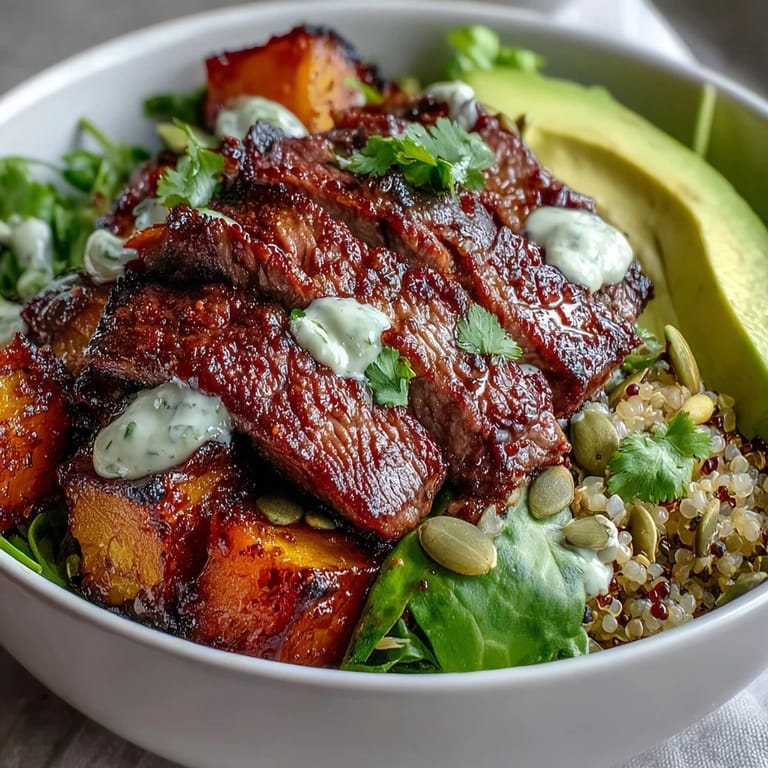
Flank steak has a beefy chew and stands up to bold marinades, while sirloin is more forgiving if you're nervous about overcooking. I've used both and never regretted either choice, but flank feels more special because slicing it thin reveals those beautiful striations. If you can only find skirt steak, that works too, just cook it a minute less per side since it's thinner.
Swapping the Grains
Quinoa cooks fast and has a pleasant nutty pop, but I've made this with farro when I wanted something chewier and with brown rice when that's all I had on hand. Farro takes longer to cook, so start it first, and brown rice benefits from a little extra salt in the cooking water. Whatever you choose, make sure it's fluffy and not gummy or the whole bowl feels heavy.
Storing and Reheating
These bowls keep beautifully in the fridge for up to four days if you store the dressing separately and add it right before eating. I reheat the quinoa, squash, and steak together in the microwave for about 90 seconds, then add fresh greens and cold avocado so there's a temperature contrast. The steak won't be quite as tender as day one, but it's still satisfying, and the squash somehow tastes even sweeter.
- Let everything cool completely before sealing the containers to avoid condensation and sogginess.
- If you're making this ahead, slice the avocado and onion fresh each day for the best texture.
- Double the dressing recipe and keep it in a jar so you can shake it up and drizzle it over salads all week.
 Save to Pinterest
 This bowl has become my answer to the question of what to make when I want something nourishing but exciting, something that feels like taking care of myself without a lot of fuss. I hope it lands in your regular rotation the way it has in mine.
Frequently Asked Questions
- → Can I prepare components ahead of time?
Yes, you can marinate the steak up to 2 hours in advance and roast the butternut squash earlier in the day. Store components separately and reheat squash gently before assembling bowls.
- → What can I substitute for quinoa?
Brown rice, farro, or even cauliflower rice work well as the base. Adjust cooking times accordingly based on your grain choice.
- → How do I know when the steak is done?
Use a meat thermometer: 130-135°F for medium-rare, 135-145°F for medium. Let it rest 5 minutes before slicing to retain juices.
- → Can I make this dairy-free?
This dish is already dairy-free as written. If adding optional cheese toppings mentioned in notes, simply omit the feta or goat cheese.
- → How should I store leftovers?
Store components separately in airtight containers for up to 3 days. Keep dressing separate and add just before serving to maintain freshness and texture.
- → What's the best way to cut butternut squash?
Peel with a vegetable peeler, cut in half lengthwise, scoop out seeds, then cut flesh into 1-inch cubes. A sharp chef's knife makes this easier and safer.