 Save to Pinterest
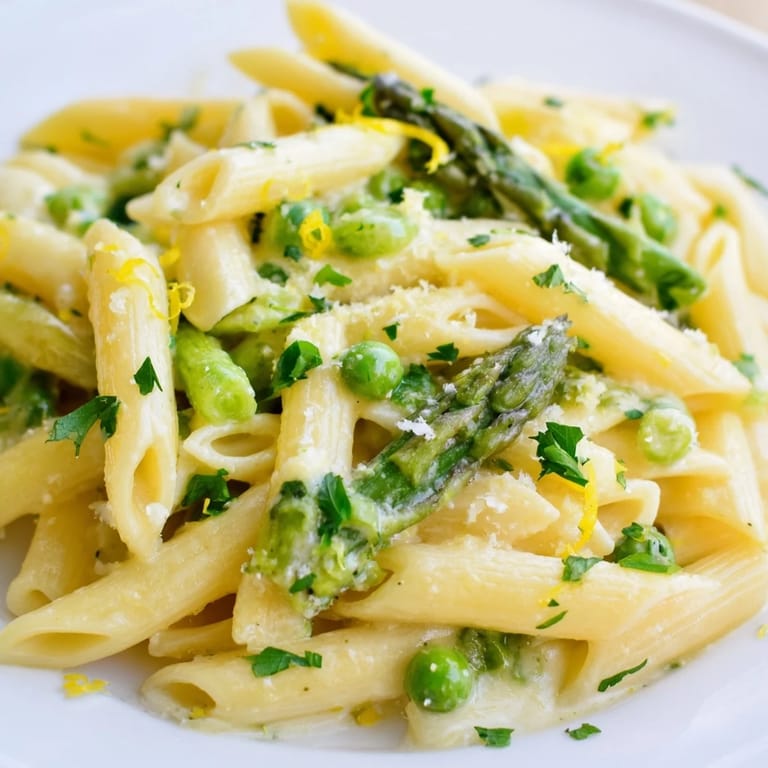
 The first time I made this pasta, my roommate stuck her head in the kitchen and asked if I'd bought flowers. It was just the asparagus and green beans cooking, but that's how bright and fresh this dish smells. Spring vegetables deserve more than steaming, and tossing them into a creamy garlic sauce makes them feel like a treat rather than an obligation.
I served this at my first proper dinner party in a new apartment, nervous about everything. My friend Sarah took three servings and asked for the recipe before she'd even finished her plate. Something about the combination of sweet peas and sharp Parmesan makes people feel comfortable and well-fed.
Ingredients
- 350 g penne pasta: The ridges catch the sauce beautifully, and I've found that shorter pasta works better than long strands with chunky vegetables
- 200 g asparagus: Trim the woody ends by snapping them where they naturally break, then cut into bite-sized pieces for even cooking
- 150 g fresh or frozen peas: Frozen peas work perfectly here and actually retain their sweet color better than fresh ones that can turn dull
- 150 g green beans: Trim both ends and cut them the same size as your asparagus so everything cooks at the same rate
- 2 tbsp olive oil: This creates the base for your sauce, so use something decent quality that you'd also put on a salad
- 3 cloves garlic: Mince this finely rather than crushing it so you get small bursts of flavor throughout rather than one overpowering hit
- 60 ml vegetable broth: This helps deglaze the pan and adds depth without overpowering the delicate spring vegetables
- 120 ml heavy cream: The sauce thickens quickly once it hits the heat, so have yourParmesan measured and ready before you pour it in
- 60 g freshly grated Parmesan: Buy a wedge and grate it yourself, pre-grated cheese has anti-caking agents that make sauce grainy
- 1/2 tsp black pepper: Freshly ground makes a noticeable difference in such a simple sauce
- 1/4 tsp salt: The Parmesan is already salty, so start with less and adjust at the end
- Zest of 1 lemon: Use a microplane or the smallest holes on your grater, avoiding the bitter white pith underneath
- 1 tbsp fresh lemon juice: Squeeze this just before serving to maintain its bright acidity
- Extra Parmesan and fresh herbs: Basil or parsley add a pop of color and make the dish feel finished
Tired of Takeout? 🥡
Get 10 meals you can make faster than delivery arrives. Seriously.
One email. No spam. Unsubscribe anytime.
Instructions
- Get your pasta water bubbling:
- Bring a large pot of salted water to a boil and cook the penne until it's al dente, reserving 120 ml of the starchy pasta water before you drain it
- Warm your skillet and bloom the garlic:
- Heat olive oil in a large skillet over medium heat, add the minced garlic, and let it sizzle for just one minute until fragrant but not brown
- Give the vegetables their moment:
- Add asparagus, green beans, and peas to the pan, sautéing for 3 to 4 minutes until they're tender but still retain their bright spring green color
- Build the sauce foundation:
- Pour in the vegetable broth and let it bubble for 2 minutes, scraping up any flavorful bits from the bottom of the pan
- Create the creamy finish:
- Reduce heat to low, stir in the heavy cream and Parmesan, and cook just until the cheese melts and the sauce becomes smooth and silky
- Bring it all together:
- Add the cooked penne to the skillet, tossing everything together and adding splashes of the reserved pasta water until the sauce coats each piece perfectly
- Season and brighten:
- Stir in the black pepper, salt, lemon zest, and lemon juice, tasting and adjusting until the flavors sing
- Finish with flourish:
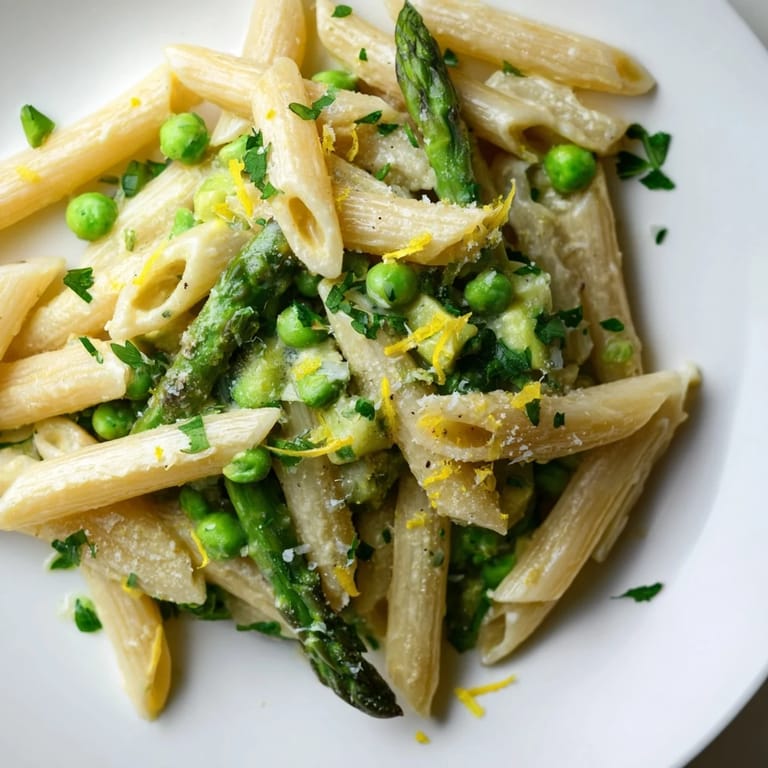
- Serve immediately in warm bowls, topped with extra Parmesan and a generous scattering of fresh basil or parsley
 Save to Pinterest
 This pasta became my go-to for congratulating friends on small wins. A new job, a finished project, a survived week. The bright vegetables and comforting cream feel like both celebration and comfort.
Making It Lighter
Half-and-half creates a lovely sauce that's less dense than heavy cream, though you'll need to let it reduce a bit longer to achieve the same silky consistency. I've also used evaporated milk in a pinch, and while it changes the flavor profile slightly, it still delivers that creamy satisfaction.
Heat It Up
A pinch of red pepper flakes added with the garlic transforms this into something entirely different. The heat lingers pleasantly against the cool sweetness of the peas, and I've found that people who claim they don't like spicy food still reach for seconds when I use just a light touch.
Saucing Secrets
The most common mistake I see is adding the pasta water all at once. Add it gradually, letting the sauce absorb and thicken between splashes. Some nights I need it all, other nights only a tablespoon.
- Grate your Parmesan from a wedge rather than buying it pre-grated for a smoother sauce
- Add the lemon juice last to preserve its bright acidity
- Warm your serving bowls so the sauce stays silky until the last bite
 Save to Pinterest
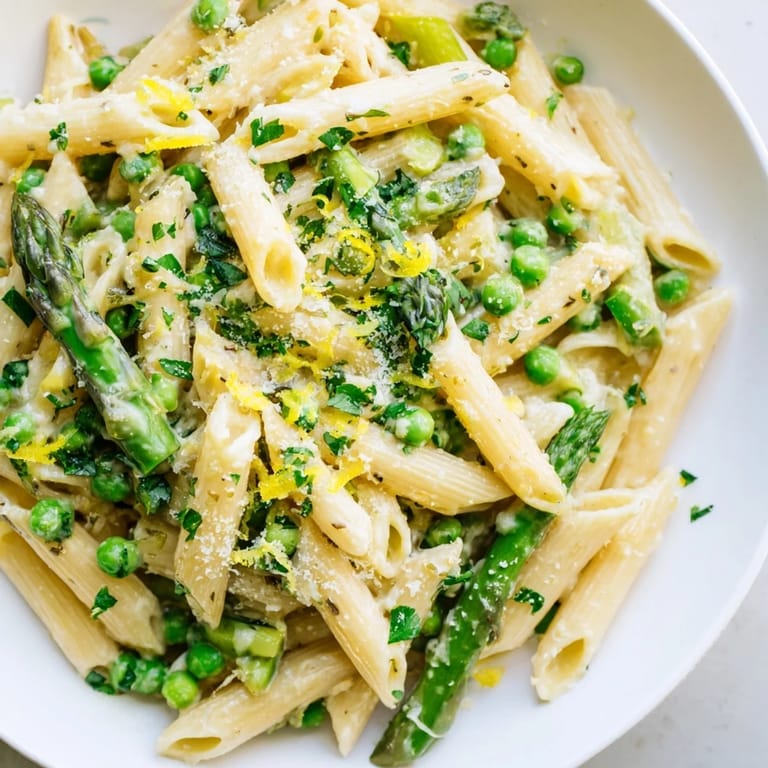
 Spring moves fast, and so does this pasta. From pot to plate in 35 minutes, it's the kind of dinner that makes you feel like you have your life together even when you absolutely don't.
Frequently Asked Questions
- → Can I use frozen vegetables instead of fresh?
Yes, frozen asparagus, peas, and green beans work wonderfully. Thaw them slightly before sautéing, and reduce the cooking time to 2-3 minutes since they're partially cooked already.
- → What can I substitute for heavy cream?
Half-and-half creates a lighter version with similar results. For dairy-free options, use plant-based cream alternatives like oat or cashew cream, which work just as well in the sauce.
- → How do I prevent the sauce from breaking?
Keep the heat on low when adding cream and cheese. Stir constantly and gradually incorporate the cheese to ensure it melts smoothly. Reserved pasta water helps maintain a silky consistency.
- → Can I add protein to this dish?
Absolutely. Grilled chicken, seared shrimp, or crispy chickpeas complement the flavors beautifully. Add about 150-200g of cooked protein per serving for a heartier meal.
- → Is this dish freezer-friendly?
The pasta is best enjoyed fresh, but you can prepare the sauce ahead and refrigerate for up to three days. Cook the pasta fresh and combine just before serving for optimal texture.
- → What type of Parmesan works best?
Freshly grated Parmigiano-Reggiano offers superior flavor and melts more smoothly than pre-grated varieties. The aged, nutty notes enhance the dish's overall taste.