 Save to Pinterest
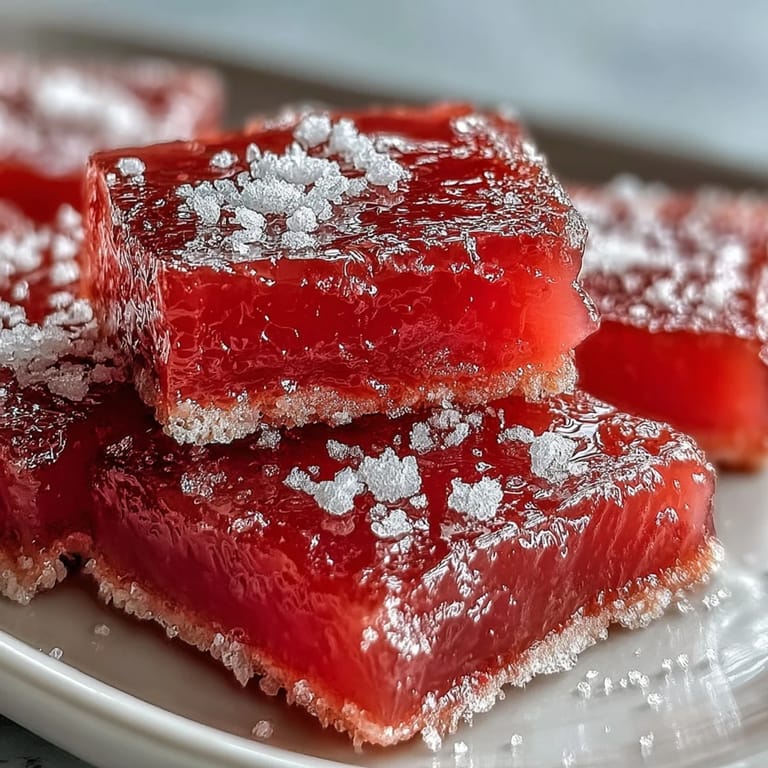
 There's something about guava cheese that stops time in a kitchen. My first encounter was at my grandmother's house on a monsoon afternoon, when she pulled out a faded tin box and showed me these jewel-like pink squares she'd made weeks before. The smell hit first—tropical, floral, almost perfumed—and then came the taste: sweet but never cloying, with that bright lime tang cutting through like a secret whispered by the fruit itself. I was hooked instantly, though I had no idea how she'd transformed simple guavas into something so elegant and refined.
I made this for my sister's book club last spring, nervous because I'd only attempted it once before. When I cut into the cooled batch and held up a square to the light, the room actually went quiet—everyone was mesmerized by how it caught the afternoon sun, glowing like stained glass. That moment taught me that food made with intention carries a weight that goes beyond flavor; it becomes a small ceremony shared with people you care about.
Ingredients
- Ripe guava (pink or white), peeled, deseeded, and chopped: Use fruit that yields slightly to pressure and smells fragrant; this is where the entire flavor begins, so choose carefully.
- Water: Just enough to help the fruit soften without making the mixture watery.
- Granulated sugar: The backbone that balances guava's natural tartness and creates the firm-but-tender set.
- Fresh lime juice: This is not optional—it brightens everything and prevents the sweetness from becoming heavy or one-dimensional.
- Unsalted butter, plus extra for greasing: Added at the very end, it gives the final texture that silky, slightly yielding quality that makes it so moreish.
- Superfine sugar for dusting (optional): If you choose to coat the squares, use this fine grade so it clings properly and dissolves on your tongue.
Tired of Takeout? 🥡
Get 10 meals you can make faster than delivery arrives. Seriously.
One email. No spam. Unsubscribe anytime.
Instructions
- Prepare your canvas:
- Grease the 8x8-inch pan generously with butter and line it with parchment paper, letting the edges hang over the sides like a gift wrapping you can actually use. This step saves you from frustration later when you're desperate to unmold your masterpiece.
- Soften the guavas:
- Place the chopped guava and water in a saucepan and let it simmer gently over medium heat for about 15 minutes, until the fruit is completely soft and begins to break down. You'll know it's ready when a wooden spoon passes through without resistance and the kitchen smells intensely tropical.
- Transform into silk:
- Blend the cooked guava until it's completely smooth, then push it through a fine sieve with the back of a spoon to catch any remaining seeds or fibrous bits. This step takes patience, but the resulting silken puree is what separates homemade from rough.
- Measure and return:
- You need exactly 2 cups of puree; any less and the ratio shifts, any more and the set becomes soft. Pour it back into your heavy-bottomed saucepan, which is now your most important tool.
- Begin the transformation:
- Add the sugar and lime juice to the puree and set the heat to medium, then stir constantly with a wooden spoon or heat-proof spatula. This is not the moment to multitask; the mixture needs your attention and your strength.
- Watch for the moment of truth:
- Keep stirring for 30 to 40 minutes, and the mixture will gradually thicken, deepen in color, and eventually begin to pull away from the sides of the pan like it's developing its own life. This is when you add the butter and stir until the mixture is glossy, thick, and holds its shape when you lift the spoon—it should be almost molten amber.
- Set it in its home:
- Pour the hot mixture immediately into your prepared pan and smooth the top with a spatula, working quickly because it begins to set as it cools. The speed here matters; hesitation means an uneven surface.
- Let time do the work:
- Leave it undisturbed at room temperature for a full hour, resisting the urge to poke it or move it. Patience here creates the perfect set.
- Free your creation:
- Once cooled, lift the entire block out using the parchment overhang and place it on a cutting board. A greased sharp knife makes clean cuts; dull knives will drag and tear instead of slicing through.
- Finish with grace (optional):
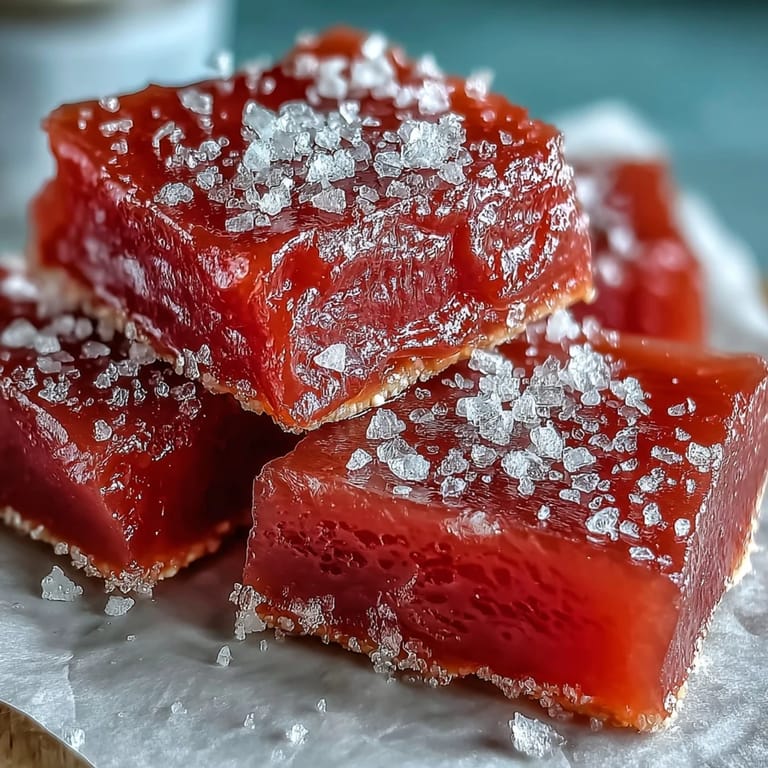
- If you're coating with superfine sugar, do this immediately after cutting so it adheres to the still-slightly-warm edges. Otherwise, leave them bare and jewel-like.
 Save to Pinterest
 My neighbor noticed the aroma wafting from my kitchen one afternoon and followed it like a cartoon character. When I offered her a piece, she closed her eyes and went completely quiet, and I realized that's exactly what this confection does—it makes people pause and really taste. Food like this reminds me why I cook.
Understanding Guava Cheese
Despite its name, there's no cheese in guava cheese; it's a Portuguese-influenced confection called goiabada that became a beloved tradition in Goa and across India. The name comes from its firm, sliceable texture and the way it pairs with actual cheese—the tartness of the guava against sharp cheese is a combination that feels almost synergistic. Understanding this context changes how you approach the recipe; you're not making a random dessert, you're honoring a tradition that spans centuries and continents.
Texture and the Science Behind It
The transformation from liquid to set happens through pectin—the natural compound in guavas that thickens as you cook and reduce the mixture. This is why you can't rush it; the cooking time is essential chemistry, not just convention. The lime juice does double duty: it brightens the flavor and also helps activate the pectin, so skipping it would give you either a grainy texture or one that never sets properly.
Serving, Storing, and Savoring
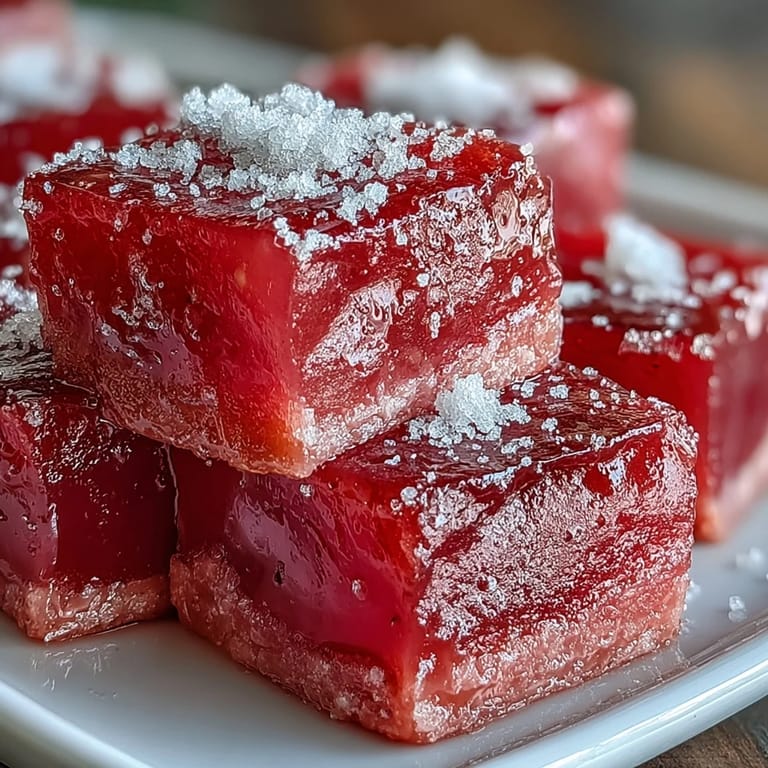
Guava cheese is remarkably forgiving once made; it keeps at room temperature in an airtight container for up to two weeks, making it perfect for gifting or stashing for afternoon cravings. Serve it alongside tea, with cheese and crackers for an elegant plate, or simply on its own as a small sweet moment. The superfine sugar coating is purely optional but it does add a pleasant textural contrast and catches light beautifully on a platter.
- Cut pieces can be individually wrapped in parchment for gift-giving or easy snacking throughout the week.
- If your kitchen is very warm or humid, store in the refrigerator to prevent any softening, though room temperature is ideal for flavor.
- A thin slice alongside sharp white cheddar or aged manchego creates a flavor pairing that feels both simple and sophisticated.
 Save to Pinterest
 Making guava cheese connects you to something older and more patient than everyday cooking. Once you've made it, you'll find yourself making it again, each batch a small ritual that slows everything down.
Frequently Asked Questions
- → What makes guava cheese authentic?
Authentic guava cheese uses ripe pink or white guava varieties pureed to smooth consistency before slow-cooking with sugar until thick and glossy. The addition of fresh lime juice provides characteristic tang while butter creates rich finish. Traditional Goan preparation requires constant stirring during reduction to achieve proper texture.
- → How do I know when guava mixture is ready?
The mixture is ready when it thickens noticeably, pulls away from pan sides, and forms a mass that holds its shape. This typically takes 30-40 minutes of constant stirring. The glossy surface should leave a clean trail when spatula passes through, and mixture should no longer flow freely.
- → Can I use different guava varieties?
Both pink and white guava varieties work well. Pink guava produces ruby-colored confection with deeper fruit flavor, while white guava yields lighter golden hue with milder taste. Choose fully ripe fruit for natural sweetness and smooth texture regardless of variety.
- → Why add butter to guava mixture?
Butter enriches the final confection, creating smooth glossy finish and adding subtle richness that balances fruit's natural acidity. The fat content also helps prevent excessive sticking and contributes to firm yet creamy texture when set. Use unsalted butter to control sodium levels.
- → How should guava cheese be stored?
Store pieces in airtight container at room temperature for up to two weeks. The high sugar content acts as natural preservative. Avoid refrigeration as this can cause condensation and affect texture. For longer storage, wrap pieces individually in wax paper before placing in container.
- → What pairs well with guava cheese?
This tropical confection pairs beautifully with soft cheeses like cream cheese or mild goat cheese for sweet-savory contrast. Serve alongside afternoon tea, as part of dessert platter, or crumbled over vanilla ice cream. The tangy fruit notes also complement nutty flavors like almonds or cashews.