 Save to Pinterest
 My neighbor Maria brought a small jar of guava paste to a dinner party, and I watched it disappear faster than the wine. She'd made it that afternoon, the kitchen still warm and fragrant when I arrived early to help. There's something almost magical about turning a pile of humble fruit into something so intensely flavored and beautiful, deep pink like a sunset. That night, I couldn't stop thinking about how something so simple—just fruit, sugar, and time—could taste like memory itself.
I made this for the first time on a quiet Tuesday when the farmers market had overflowing baskets of guavas I couldn't resist. My kitchen filled with this perfume that made my partner pause mid-sentence to ask what smelled so good. By the time the paste was cooling, friends had texted asking if they could stop by, somehow sensing something wonderful was happening. That's when I realized this isn't just a recipe—it's an edible invitation.
Ingredients
- Ripe guavas (1 kg or 2.2 lbs): Look for guavas that yield slightly to pressure and smell sweet and musky—this is where all the flavor comes from, so don't settle for rock-hard ones.
- Granulated sugar (450 g or 2 1/4 cups): This acts as both sweetener and preservative, so measure it by weight if you can for consistency.
- Fresh lemon juice (2 tbsp): This brightens the deep guava flavor and helps set the paste, so don't skip it even though it seems small.
- Water (120 ml or 1/2 cup): Just enough to help the guavas release their juices and cook evenly.
Tired of Takeout? 🥡
Get 10 meals you can make faster than delivery arrives. Seriously.
One email. No spam. Unsubscribe anytime.
Instructions
- Prep your fruit:
- Wash the guavas under cool water, then trim off the blossom ends. Cut them into quarters—you can remove the seeds now if you want an ultra-smooth paste, or leave them in and strain them out later.
- Cook the guavas soft:
- Place the quartered fruit in a large saucepan with the water, bring it to a boil over medium heat, then cover and let it simmer gently for 15 to 20 minutes. You'll know they're ready when a fork slides through easily and the kitchen smells incredible.
- Strain to perfection:
- Remove the pot from heat and let it cool just enough to handle. Push the cooked guavas through a food mill or fine mesh strainer, working the pulp through and leaving behind the seeds and skins—this step is worth the effort.
- Measure and sweeten:
- Count how much puree you have. The general rule is one part sugar to one part puree, though you can adjust based on how sweet your guavas are and how much paste you ended up with.
- The long, slow cook:
- Return the puree to the pot with the sugar and lemon juice, then stir everything together over low heat. You're going to stand here stirring constantly for the next 40 to 50 minutes—this is where patience pays off and the flavor deepens.
- Watch for the finish:
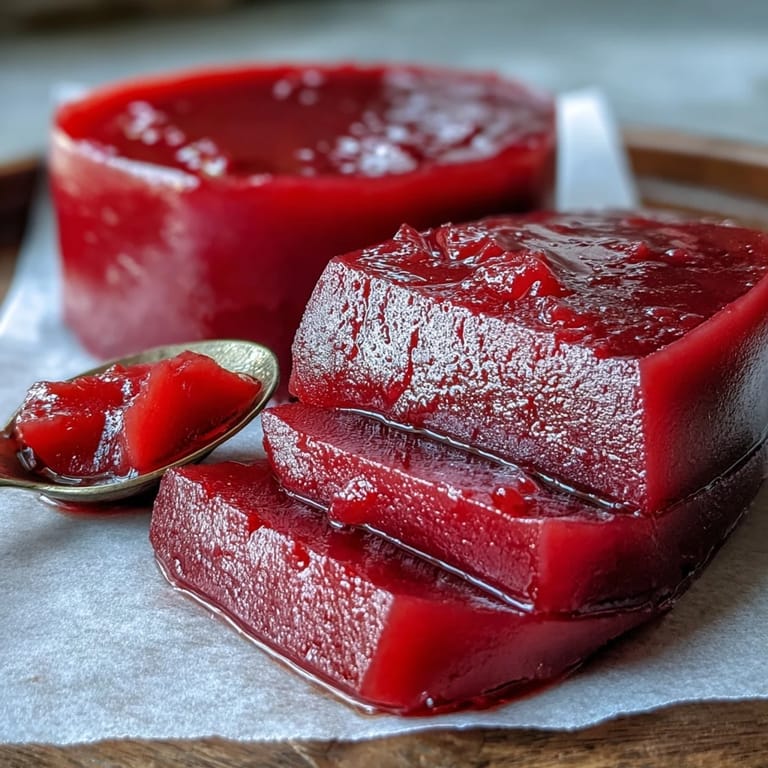
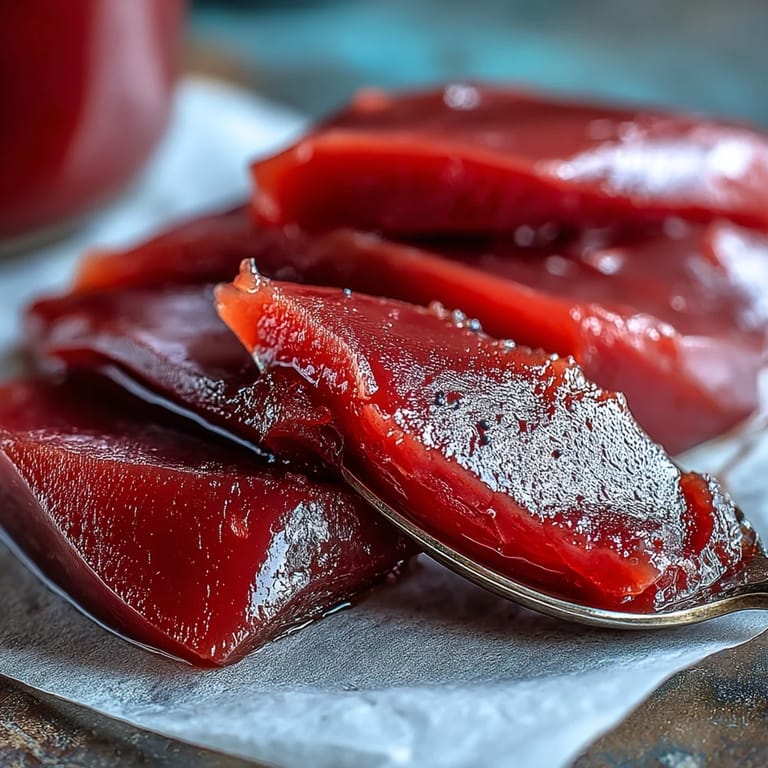
- The paste is done when it's thick, glossy, and pulls away from the sides of the pan as you stir. Drop a spoon of it on a plate—if it holds its shape, you're ready.
- Set and cool:
- Pour the hot paste into a parchment-lined loaf pan or shallow baking dish and smooth the top. Let it cool at room temperature for 2 to 3 hours until it's completely firm and sliceable.
 Save to Pinterest
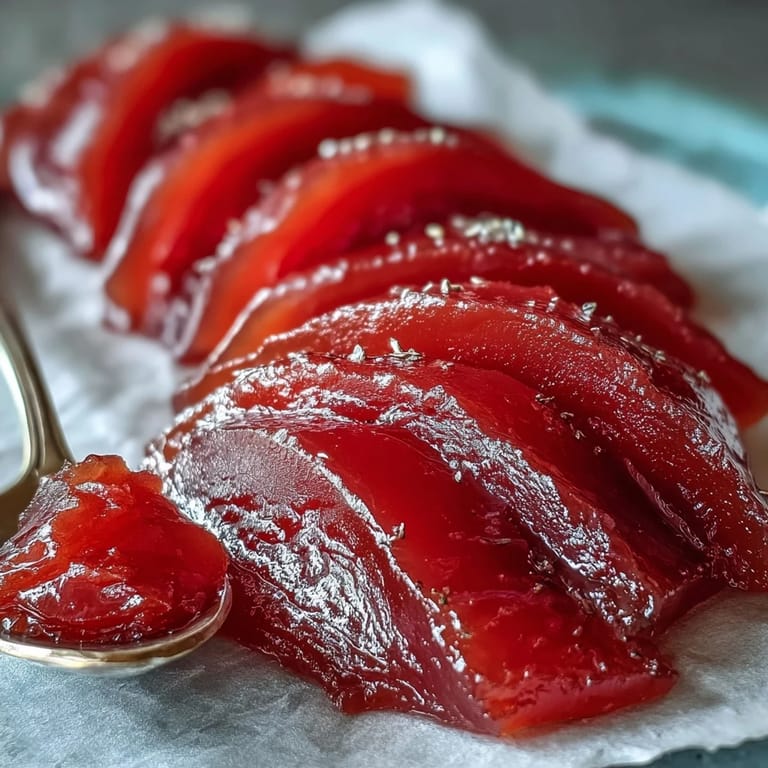
 My cousin brought a block of Manchego cheese to my house and I cut thin slices of the paste to serve alongside it. Watching people taste that combination—the salty, nutty cheese with the bright, sweet paste—something clicked about why this simple condiment has been made in Latin kitchens for generations. It's not just dessert or a side; it's conversation, it's generosity, it's proof that the best things don't need to be complicated.
Why This Paste Keeps So Long
The high sugar content acts as a natural preservative, which is why your paste will last for months in the refrigerator without any trouble. This isn't accidental—it's the reason this recipe has survived for so long, passed down because it actually works. Store it in an airtight container and it becomes your secret weapon for unexpected guests or midnight snacking.
What to Do With Your Finished Paste
Slice it thin and serve with cheese and crackers, spread it on buttered toast, swirl it into yogurt, or use it as a filling for pastries and tarts. Some people have told me they spoon it straight from the container, and I won't judge because I've done it too. The beauty of making your own is that you control how thick it is and how it fits into your kitchen life.
Kitchen Wisdom From the Slow Stir
There's something meditative about standing at the stove stirring this paste for nearly an hour. Your arm gets tired, the kitchen gets warm, and you start to understand why people make things by hand. This is where you learn that the best flavors need time, attention, and a little bit of your presence.
- If you're worried about sticking, use a heat-proof spatula and make sure your heat is truly low—too high and the bottom will burn before the top thickens.
- You can make this in a heavy-bottomed pot to help distribute the heat more evenly and reduce your stirring burden slightly.
- Taste it as it cools if you're unsure about doneness—the paste will set more as it cools, so slightly softer on the spoon is actually perfect.
 Save to Pinterest
 Making guava paste is the kind of recipe that rewards you immediately and keeps rewarding you long after. Once you taste your own version cooling on the counter, you'll understand why Maria brought that jar to the party.
Frequently Asked Questions
- → What is guava paste?
Guava paste, known as goiabada in Portuguese, is a thick, sweet confection made from ripe guavas cooked down with sugar until it reaches a fudge-like consistency. It's a traditional Latin American treat often served with cheese.
- → How long does homemade guava paste last?
When stored properly in an airtight container in the refrigerator, guava paste keeps for up to 3 months. The high sugar content acts as a natural preservative, maintaining freshness and texture over time.
- → What cheese pairs best with guava paste?
Manchego is the classic pairing, offering a salty contrast to the sweet paste. Other excellent choices include aged cheddar, Gouda, Brie, cream cheese, or fresh goat cheese for a milder complement.
- → Can I use frozen guavas?
Fresh guavas yield the best results, but frozen guava pulp works in a pinch. Thaw completely before cooking, and adjust sugar slightly as frozen fruit may have different sweetness levels.
- → Why add lemon juice to guava paste?
Lemon juice balances the sweetness with bright acidity and helps the mixture set properly through natural pectin activation. It also preserves the vibrant reddish-pink color during cooking.
- → How do I know when guava paste is done?
The paste is ready when it's thick, glossy, and pulls away from the pan sides. Test by dropping a small amount onto a cold plate—if it holds its shape without spreading, it's finished.