 Save to Pinterest
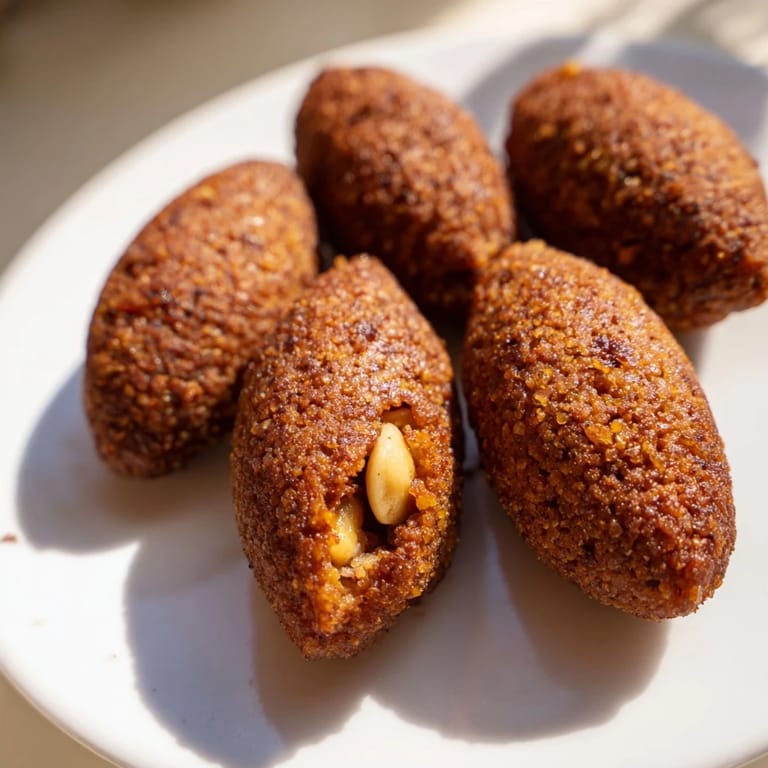
 My neighbor Leila showed up one evening with a tray of these golden torpedoes still warm from her kitchen, and I didn't even know what they were called yet. She said her grandmother used to shape them while telling stories, and that the dough had to feel like silk between your fingers. I ate three before I even thought to ask for the recipe. The next weekend, she came over and we made them together, her hands moving so fast I could barely keep up.
I made these for a potluck once, and they disappeared so fast I didn't get to eat any myself. Someone's aunt came up to me near tears, saying they tasted exactly like the ones her mother used to make in Beirut. I had no idea food could carry that kind of weight. Since then, I've made kibbeh for birthdays, for quiet Sundays, and once for a friend going through a hard time who just needed something warm and golden and made with care.
Ingredients
- Fine bulgur wheat: This is the backbone of the dough, and using fine grain is crucial because coarse bulgur won't bind properly or give you that smooth texture.
- Lean ground beef or lamb: Lamb gives a richer, more traditional flavor, but beef works beautifully too and is what I usually have on hand.
- Onion: Finely chop it so it melts into the dough and doesn't leave chunky bits that make sealing harder.
- Ground allspice and cinnamon: These warm spices are the soul of the filling and dough, giving everything that unmistakable Lebanese flavor.
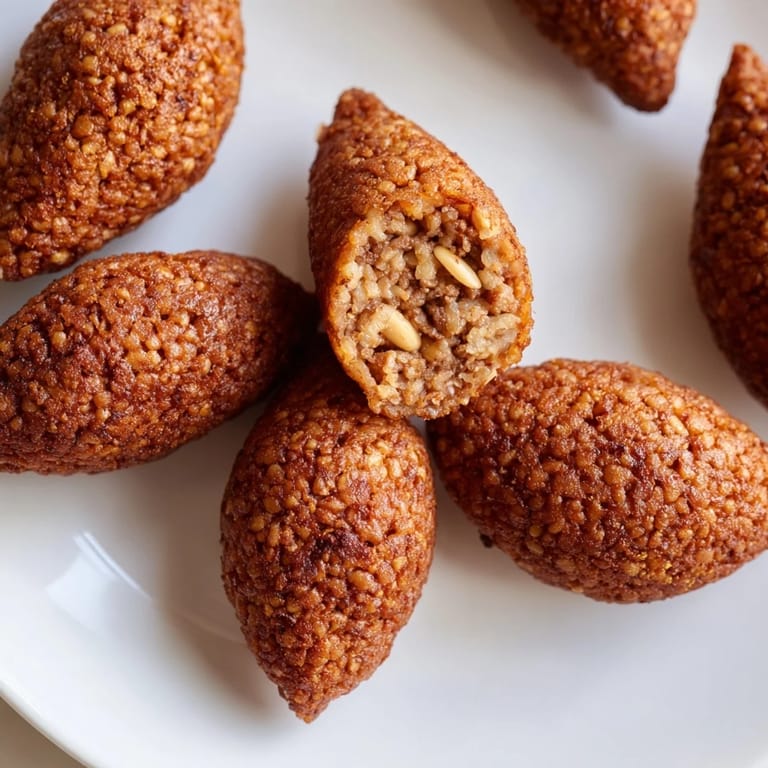
- Pine nuts: They add a buttery crunch to the filling, and toasting them in the pan with the meat makes all the difference.
- Cold water: Just a little helps bring the dough together without making it sticky, so add it slowly.
- Vegetable oil or olive oil: For frying, use something with a high smoke point, but for baking, a good olive oil brushed on top adds flavor and color.
Tired of Takeout? 🥡
Get 10 meals you can make faster than delivery arrives. Seriously.
One email. No spam. Unsubscribe anytime.
Instructions
- Soften the bulgur:
- Rinse it under cold water, then let it sit for about 10 minutes while you prep everything else. It should absorb just enough moisture to become pliable without turning mushy.
- Make the dough:
- Combine the bulgur, meat, onion, and spices in a large bowl and knead it like you mean it, adding cold water a tablespoon at a time until it feels smooth and holds together. This takes a few minutes, and your hands will get cold, but that's normal.
- Cook the filling:
- Heat olive oil in a skillet and cook the onions until soft and fragrant, then add the meat and break it up as it browns. Stir in the pine nuts and spices, cooking just until the nuts turn golden and everything smells incredible.
- Shape the kibbeh:
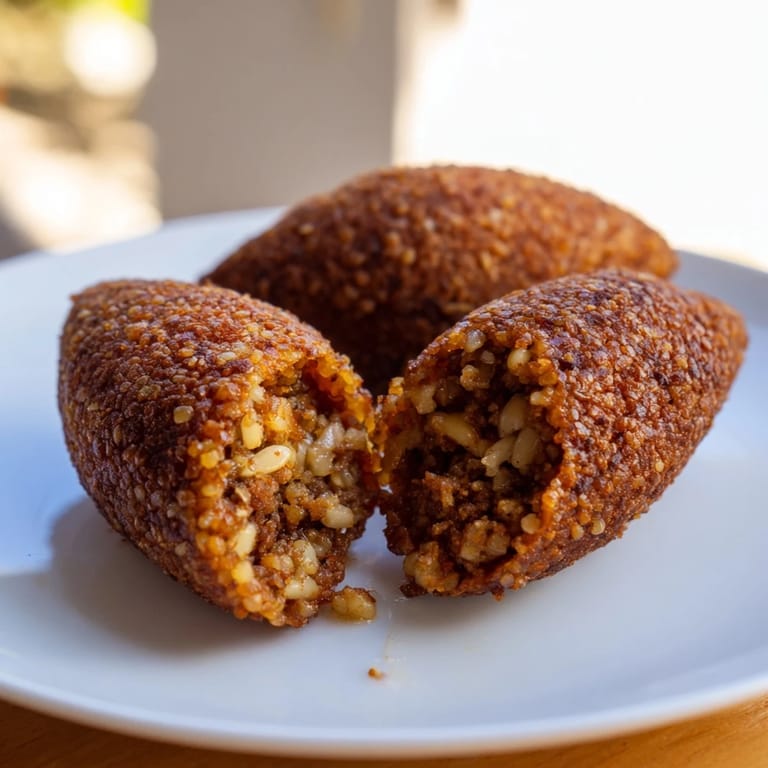
- Wet your hands, take a small handful of dough, and flatten it into an oval in your palm. Spoon a little filling in the center, then pinch the edges closed and roll it into a smooth football shape.
- Fry or bake:
- If frying, heat the oil until a small piece of dough sizzles immediately, then fry in batches until deep golden. If baking, brush with olive oil and bake at 200°C, turning halfway through, until crisp and bronze all over.
 Save to Pinterest
 There's something about pulling a batch of kibbeh from the oil, golden and crackling, and setting them on a plate lined with paper towels that feels like a small victory. The smell fills the whole house, and everyone wanders into the kitchen without being called. It's the kind of dish that turns a regular Tuesday into something people remember.
Serving Suggestions
I love serving these with a bowl of thick yogurt mixed with a little garlic and salt, or a drizzle of tahini thinned with lemon juice. A simple salad of chopped tomatoes, cucumbers, and parsley on the side makes it feel like a real meal. Sometimes I'll add pickled turnips or olives, and suddenly it's a whole spread.
Make Ahead and Storage
You can shape all the kibbeh and freeze them on a tray before cooking, then transfer them to a bag once solid. They'll keep for up to three months, and you can fry or bake them straight from frozen, adding just a couple extra minutes to the cooking time. Cooked kibbeh will last in the fridge for about three days, and they reheat beautifully in the oven to crisp them back up.
Variations and Swaps
If you want to try a vegetarian version, swap the meat filling for cooked lentils and sautéed mushrooms with the same spices, and use mashed chickpeas in the dough to help it bind. Some people bake them in a casserole dish instead of shaping individual pieces, pressing half the dough into a pan, adding the filling, then topping with the rest of the dough and scoring it into diamonds before baking. I've also seen people add a pinch of cumin or sumac to the filling for a little extra brightness.
- Try adding finely chopped fresh mint to the filling for a burst of freshness.
- If you can't find pine nuts, use slivered almonds or even walnuts, toasted until fragrant.
- For a lighter version, bake them instead of frying and serve with a squeeze of lemon.
 Save to Pinterest
 Once you get the hang of shaping these, you'll find yourself making them more often than you'd expect. They're the kind of recipe that feels like a gift every time you pull them out of the freezer or off the stove.
Frequently Asked Questions
- → What is kibbeh traditionally made of?
It combines ground meat—usually beef or lamb—with fine bulgur wheat and a mix of spices like allspice and cinnamon.
- → How is the filling prepared?
The filling consists of browned ground meat cooked with onions, pine nuts, and warmed spices, enhancing its rich flavor and texture.
- → What cooking methods can be used?
Kibbeh can be deep-fried for a crispy texture or baked after brushing with olive oil for a lighter finish.
- → Are there vegetarian alternatives?
Yes, cooked lentils and sautéed mushrooms can replace meat in the filling for a vegetarian-friendly version.
- → How should kibbeh be served?
It is commonly accompanied by yogurt or tahini sauce alongside a fresh salad, balancing the savory flavors.
- → Can kibbeh be prepared in advance?
The shaped croquettes can be frozen for up to three months before cooking, making it convenient for later use.