 Save to Pinterest
 There's something about the smell of maple and mustard hitting a hot sheet pan that instantly tells me dinner is going to be good. I stumbled onto this combination on a random Tuesday when I had chicken thighs thawing and a nearly empty pantry—just maple syrup, Dijon, and whatever vegetables were lurking in the crisper drawer. The glaze caramelized into something so golden and glossy that my partner asked if I'd been secretly taking cooking classes. Now it's the recipe I turn to when I need something that looks impressive but takes barely an hour from start to table.
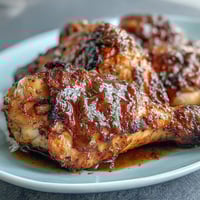
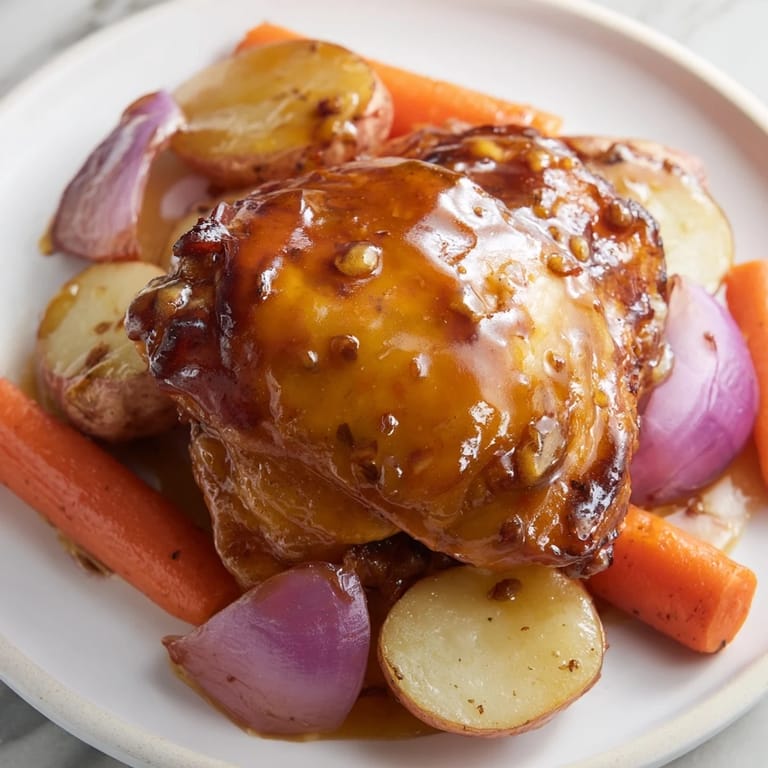
I made this for a dinner party when I was absolutely convinced I'd overcommitted, and somehow it became the meal people still text me about. The thighs came out of the oven looking like something from a magazine, the potatoes were buttery and deeply browned, and I got to spend most of the cooking time actually talking to my guests instead of hovering over the stove. That's when I knew this recipe had become my secret weapon.
Ingredients
- Bone-in, skin-on chicken thighs (8 pieces, about 1.2 kg): This cut is where the magic happens—the bones keep the meat tender and juicy, while the skin crisps up beautifully in the heat. I learned the hard way that boneless thighs cook faster and can dry out more easily, so stick with bone-in if you want that restaurant-quality result.
- Kosher salt and freshly ground black pepper: The foundation layer that makes everything taste like itself, just better.
- Pure maple syrup (1/4 cup): Real maple syrup matters here because it has depth; the cheap pancake syrup versions taste thin by comparison.
- Dijon mustard (3 tbsp): This is what gives the glaze its sophisticated tang and helps it stick to the chicken as a proper coating.
- Olive oil (2 tbsp): Helps the glaze emulsify and keeps it from separating while roasting.
- Apple cider vinegar (2 tbsp): Cuts through the sweetness and brightens the whole dish so it doesn't feel one-note.
- Garlic, minced (2 cloves): Fresh garlic caramelizes beautifully in the glaze and adds savory complexity.
- Fresh thyme (1 tbsp) or dried (1 tsp): The herbal note that ties everything together; fresh is worth it if you have it.
- Smoked paprika (1/2 tsp): A small amount adds a whisper of smokiness that makes people ask what your secret ingredient is.
- Baby potatoes (400 g), carrots (250 g), and red onion (1): These vegetables are your flavor sponges, absorbing all the glaze and chicken drippings as they roast.
Tired of Takeout? 🥡
Get 10 meals you can make faster than delivery arrives. Seriously.
One email. No spam. Unsubscribe anytime.
Instructions
- Get your pan ready and heat the oven:
- Set the oven to 220°C (425°F) and line a large sheet pan with parchment paper or foil—this saves you from scrubbing caramelized maple later, trust me. A hot oven is essential because you want those vegetables to caramelize in the time it takes the chicken to cook through.
- Dry and season your chicken:
- Pat the chicken thighs completely dry with paper towels; any moisture on the skin will steam instead of crisp. Season both sides generously with salt and pepper, and let them sit for a minute so the seasoning sticks.
- Make the glaze:
- Whisk together the maple syrup, Dijon mustard, olive oil, apple cider vinegar, minced garlic, thyme, and smoked paprika in a small bowl until it's smooth and glossy. Taste it—you should taste sweetness, tang, and a hint of mustard spice all at once.
- Prep your vegetables:
- Toss the halved potatoes, cut carrots, and onion wedges with a little olive oil, salt, and pepper, then spread them in a single layer on your prepared sheet pan. They need room to roast, not steam, so don't crowd them.
- Nestle in the chicken and apply the glaze:
- Arrange the chicken thighs skin-side up among the vegetables, then brush each thigh generously with the glaze. Save about 2 tablespoons of glaze for a second coat—this creates those shiny, caramelized layers.
- Roast until the skin is golden:
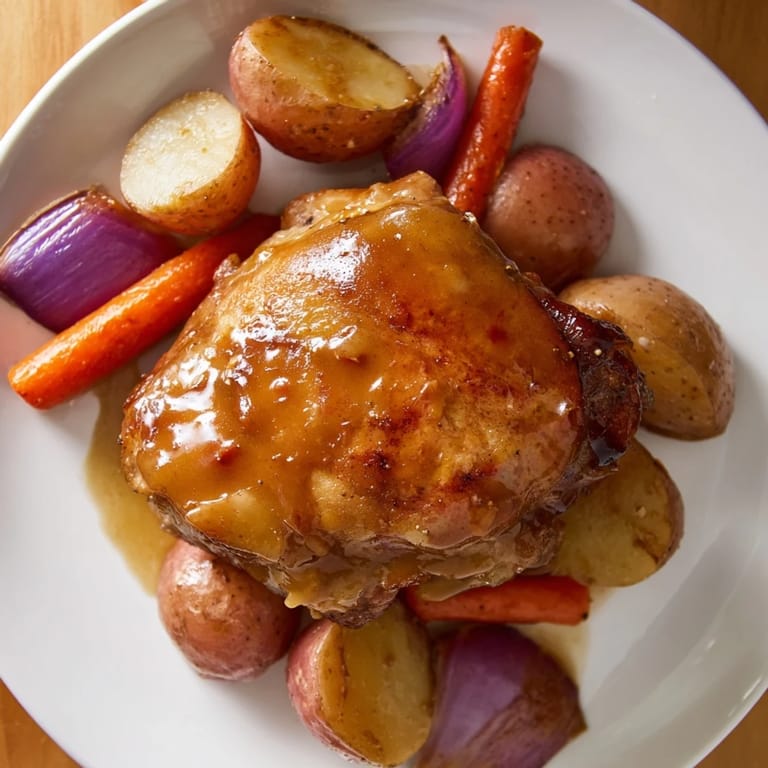
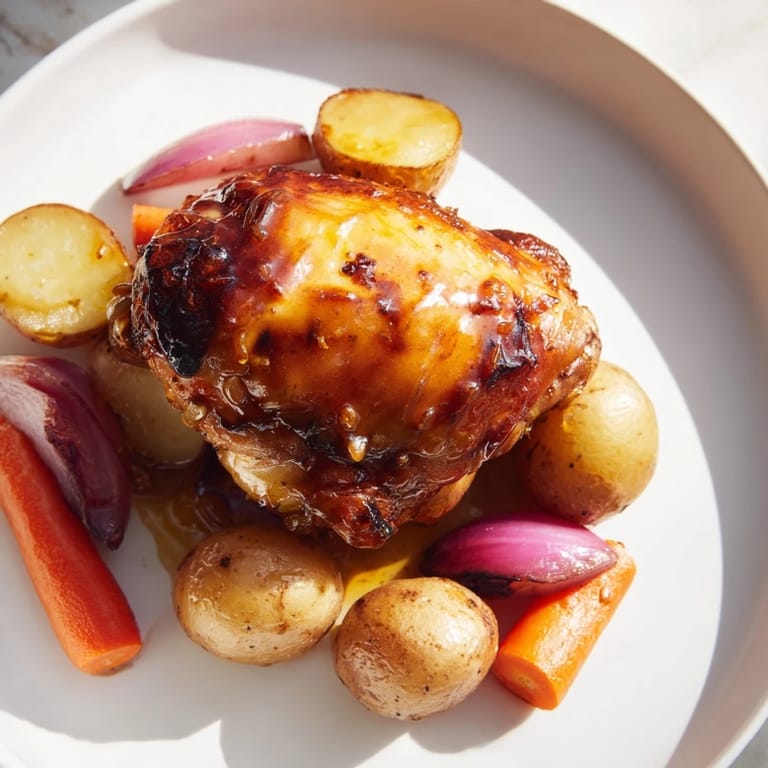
- Pop the pan into the oven for 30 minutes, then pull it out and brush the chicken with that reserved glaze. Return it to the oven for another 5 to 10 minutes until the skin is mahogany-brown and the chicken registers 74°C (165°F) at the thickest part.
- Rest and serve:
- Let everything sit for 5 minutes out of the oven—this allows the juices to settle so the meat stays tender when you cut into it. Garnish with fresh thyme if you have it, and serve while everything is still hot.
 Save to Pinterest
 The moment that stuck with me was watching my picky eater ask for seconds of both the chicken and the roasted vegetables—something that rarely happens in my kitchen. It reminded me that the best recipes aren't the complicated ones; they're the ones that actually get made on busy nights and somehow taste like you care.
Why Maple-Dijon Works as a Glaze
The beauty of this particular combination is that maple syrup brings natural sweetness while Dijon mustard adds that sharp, assertive tang that keeps everything in balance. Add smoked paprika and fresh thyme, and you've got a glaze that tastes savory and sophisticated, not cloyingly sweet. The apple cider vinegar is the quiet hero—just enough acid to cut through the richness of the chicken skin and make you want another bite.
Variations and Swaps
This dish is forgiving and adapts well to what you actually have on hand. Swap the baby potatoes for sweet potatoes or parsnips, use Brussels sprouts instead of carrots, or add both for a more colorful pan. I've made this with boneless thighs when that's all I had, but I reduced the roasting time to about 25 minutes total to keep them from drying out. If you don't have apple cider vinegar, use regular cider vinegar or even red wine vinegar—the acidity is what matters.
Pairing and Serving
This meal feels complete as is, but if you want a side, a simple green salad with lemon vinaigrette cuts through the richness beautifully. For wine, reach for a crisp Chardonnay if you want to echo the maple and oak notes, or a dry Riesling if you want something that balances the sweet-savory interplay. The chicken is also excellent cold the next day, shredded and piled onto a sandwich.
- Make extra glaze and drizzle it over the roasted vegetables as you plate—every vegetable deserves that coating.
- If your pan isn't large enough for all the chicken and vegetables in a single layer, use two pans or work in batches rather than crowding everything together.
- Leftovers keep for three days in the fridge and reheat gently in a 180°C oven for about 10 minutes.
 Save to Pinterest
 This is the recipe I come back to when I want something that feels special but doesn't demand hours in the kitchen. It's become proof that weeknight dinner can be genuinely delicious.
Frequently Asked Questions
- → What is the best cut of chicken to use?
Bone-in, skin-on chicken thighs are ideal as they stay juicy and develop crispy caramelized skin during roasting.
- → Can I substitute the vegetables?
Yes, sweet potatoes, parsnips, or Brussels sprouts make excellent alternatives to the baby potatoes, carrots, and red onion.
- → How do I ensure the glaze sticks well?
Pat the chicken dry and brush it generously with the maple Dijon glaze before and halfway through roasting for maximum flavor adherence.
- → Is this dish gluten-free?
Yes, the ingredients used are naturally gluten-free, but always check labels of packaged items like Dijon mustard if sensitive.
- → What temperature should the chicken reach when cooked?
Chicken thighs should reach an internal temperature of 74°C (165°F) to ensure doneness and food safety.