 Save to Pinterest
 My friend Sarah called me in a panic one weeknight, saying she had ground chicken thawing and no idea what to do with it. I remembered her mentioning she loved Asian flavors but didn't want anything too complicated, so I walked her through this dish over the phone while she cooked. By the time we hung up, she was raving about how the hoisin and sesame had transformed something so simple into something that tasted like takeout from that fancy place downtown. That's when I realized this wasn't just a quick dinner solution—it was the kind of recipe that makes people feel like they're cooking something special.
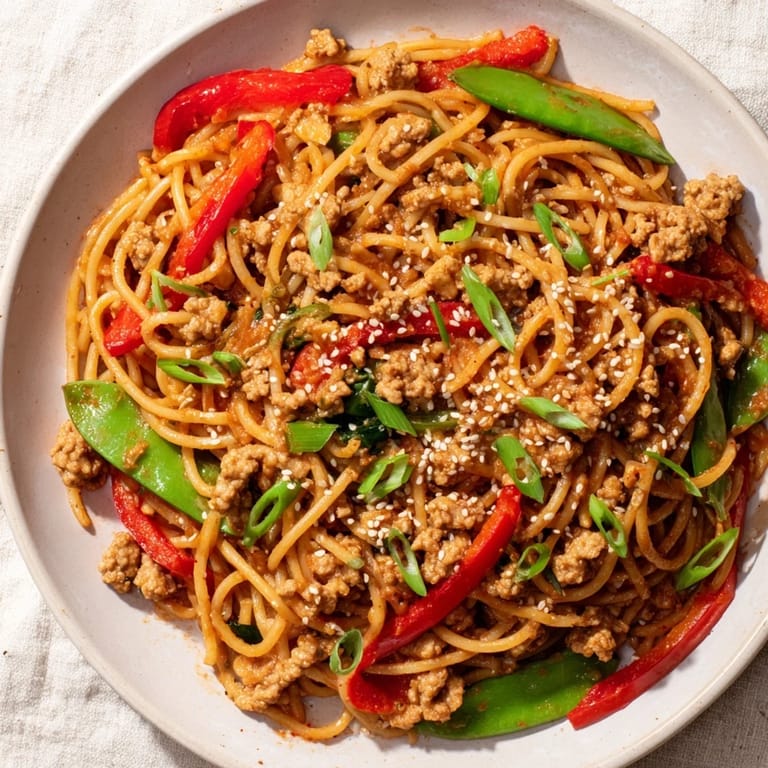
I made this for my family during a rainy Tuesday, and my dad—who usually skips vegetables—ate a whole bowl of it without complaining about the snap peas hiding in there. He asked for the recipe before he even finished, which never happens. Something about the way the sauce coats the pasta and brings everything together just makes people slow down and actually taste their food.
Ingredients
- Linguine, 350 g (12 oz): The thin strands catch sauce beautifully, but honestly, any pasta works here—I've used fettuccine and spaghetti with equal success.
- Ground chicken, 450 g (1 lb): Don't skip the browning step where you break it up with a spoon; it gets those tiny crispy edges that add real texture.
- Red bell pepper, 1, thinly sliced: Slice it ahead of time if you're short on patience; the raw crunch transforms during cooking anyway.
- Snap peas, 1 cup, halved: They stay crisp-tender if you add them toward the end, which is the whole point of this dish.
- Green onions, 2, thinly sliced: Keep some raw for garnish; the cooked ones disappear into the dish while the fresh ones add a bright finish.
- Garlic, 2 cloves, minced: Fresh is non-negotiable here because the flavor has to punch through the richness of the hoisin.
- Fresh ginger, 1-inch piece, grated: Use a microplane or the smallest holes on your box grater so it distributes evenly without big chunks.
- Hoisin sauce, 5 tbsp: This is your base; it's what makes this feel like something you ordered, not something you threw together.
- Low-sodium soy sauce, 2 tbsp: Low-sodium matters because you're building layers of flavor and don't want salt overpowering the sesame.
- Rice vinegar, 1 tbsp: The acid cuts through the richness and makes your mouth want another bite.
- Toasted sesame oil, 2 tsp: A little goes a long way; use toasted, not plain, for that deep nutty flavor.
- Chili garlic sauce, 1 tsp, optional: Add this if you like heat, but understand it changes the whole vibe of the dish.
- Honey, 1 tbsp: It balances the salty-savory with just a whisper of sweetness that nobody can quite identify.
- Toasted sesame seeds, 2 tbsp: Toast your own if you have time; store-bought is fine, but the aroma of toasting them yourself is half the appeal.
- Fresh cilantro or scallions, optional: These are your secret weapons for making the dish feel bright and finished at the last second.
Tired of Takeout? 🥡
Get 10 meals you can make faster than delivery arrives. Seriously.
One email. No spam. Unsubscribe anytime.
Instructions
- Boil the pasta backbone:
- Get a big pot of salted water rolling hard—it should taste like seawater. Drop in the linguine and stir right away so it doesn't stick; cook it to al dente because it'll keep cooking when you toss it with everything else. Drain but save that starchy water; it's your secret weapon for getting the sauce to cling to the noodles.
- Build your sauce in advance:
- Whisk everything together in a small bowl: hoisin, soy sauce, rice vinegar, sesame oil, honey, and the chili garlic if you're feeling bold. Taste it straight from the spoon—it should make your mouth water and feel balanced, not aggressively salty or sweet. This step takes two minutes but pays off because you won't be fumbling with bottles over a hot pan.
- Brown the chicken until it's golden:
- Heat your skillet or wok over medium-high heat and add a splash of neutral oil. Once it shimmers, add the ground chicken and break it up immediately with a wooden spoon, pressing it against the pan so it browns instead of steaming. Cook until no pink remains and you see little crispy edges, about five minutes total.
- Wake up the aromatics:
- Add your minced garlic, grated ginger, and most of the green onions (save some for the end), letting them sizzle for just one minute until the kitchen smells incredible. This is the moment you know everything is about to come together.
- Add vegetables and let them stay crisp:
- Toss in the sliced bell pepper and snap peas, keeping the heat high so they stay bright and almost al dente. Two to three minutes is all they need; you want them to soften slightly but still have some personality when you bite into them.
- Pour in the sauce and marry everything:
- Add your whisked sauce to the skillet and toss constantly for about a minute, making sure every piece of chicken and vegetable gets coated. You'll notice the hoisin transforms from glossy liquid into something that clings to everything.
- Bring the pasta into the party:
- Add your cooked linguine directly to the skillet and toss gently but thoroughly, adding reserved pasta water a splash at a time until the sauce coats the noodles evenly without pooling. The starchy water is key here; it helps the sauce emulsify and cling instead of sliding off.
- Finish with flair:
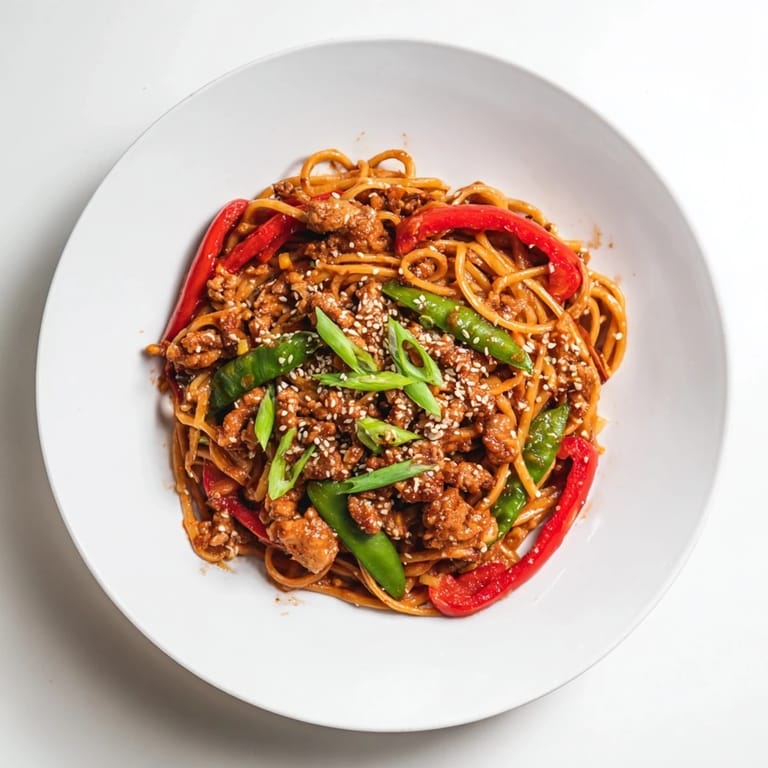
- Remove from heat and sprinkle with toasted sesame seeds, fresh cilantro if you have it, and those reserved green onions you set aside. Serve immediately while everything is still hot and the flavors are singing.
 Save to Pinterest
 I remember serving this to my neighbor one evening, and she asked if I'd order it from somewhere because she couldn't believe I'd made it at home. That's the moment I understood that some dishes have this quiet power to make people feel cared for without being fancy or complicated. It's become the recipe I reach for when I want to cook something that tastes intentional.
Why This Sauce Works
The hoisin sauce is doing so much heavy lifting here that it's easy to overlook, but once you understand what it brings—that deep, fermented, slightly sweet savoriness—you realize why Chinese restaurants keep it close. The sesame oil adds a nuttiness that feels sophisticated, while the rice vinegar keeps everything from sitting too heavily on your tongue. I've tried simplifying this sauce a dozen times, and every time I come back to this exact combination because it's simply better.
Timing and Prep
The real secret to making this feel effortless is doing your prep before any heat hits the pan. Slice your vegetables, mince your garlic, grate your ginger, and whisk your sauce while the water boils for the pasta. By the time you're cooking, you're just combining things, which means you stay calm and the food comes out better. I usually spend the first five minutes chopping and whisking, and then the actual cooking part flies by in a blink.
Serving and Pairing
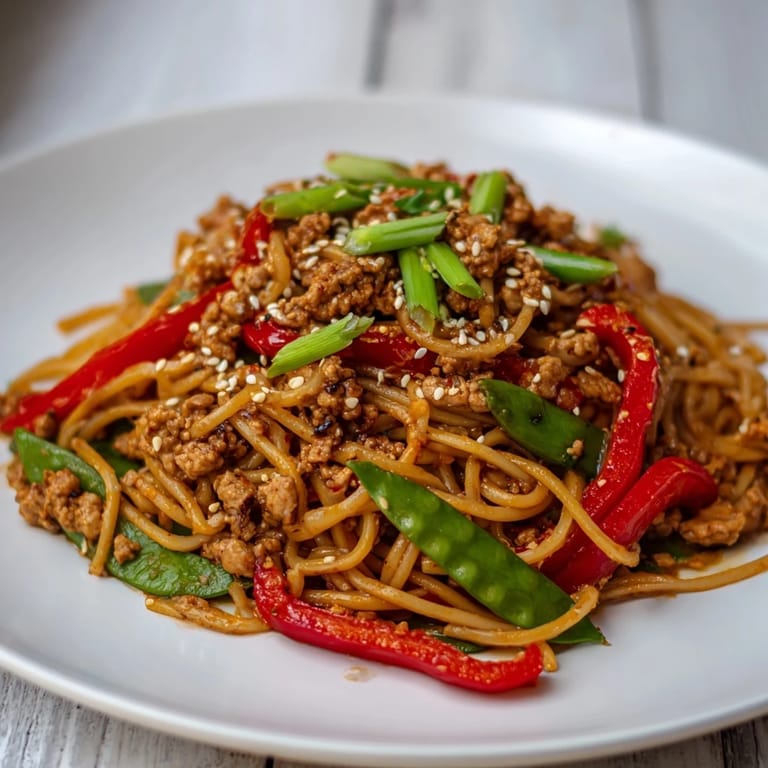
This dish feels complete on its own, but I often serve it in a shallow bowl where the sauce pools slightly at the bottom. A cold glass of crisp Riesling or even just chilled green tea cuts through the richness perfectly and makes the whole meal feel more intentional. If you're cooking for someone, the way the sesame seeds catch the light on top makes it look like you spent twice as long as you actually did.
- Serve immediately while everything is still steaming and the flavors are sharp.
- Double-check that hoisin and soy sauce labels if you're cooking for anyone with gluten sensitivity.
- Leftovers reheat beautifully in a skillet with a splash of water, though they're honestly best eaten fresh.
 Save to Pinterest
 This is one of those recipes that proved to me that fusion food doesn't have to apologize for itself. It's honest comfort made interesting, and it reminds me every time I cook it why I love being in the kitchen.
Frequently Asked Questions
- → Can I use other meats instead of ground chicken?
Yes, ground turkey or pork can be substituted for a similar flavor and texture.
- → What is the best way to cook the linguine for this dish?
Cook linguine in salted boiling water until al dente, then drain, reserving some pasta water to adjust the sauce.
- → How can I add more spice to this dish?
Incorporate extra chili garlic sauce to the hoisin mixture for a spicier profile.
- → Are there vegetarian alternatives for this dish?
Firm tofu or plant-based ground products work well, paired with vegetarian hoisin sauce.
- → What garnishes complement the flavors here?
Toasted sesame seeds, fresh cilantro, or additional sliced scallions enhance both taste and presentation.
- → Which drinks pair nicely with this meal?
A crisp Riesling or chilled green tea balances the fusion flavors perfectly.