 Save to Pinterest
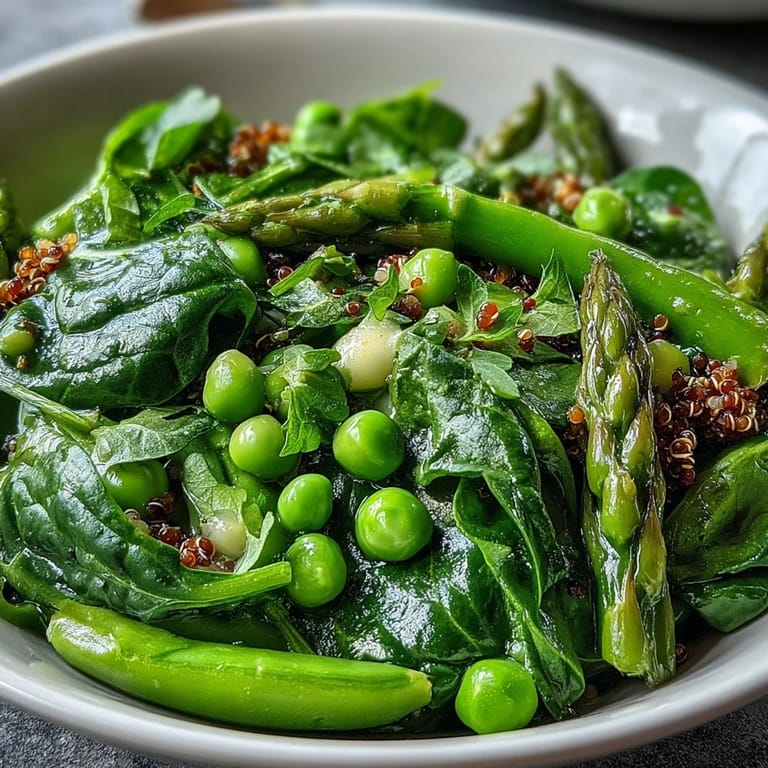
 Last April, I stood in my garden watching the first tender shoots push through the soil, and I knew immediately what I wanted to make—something that captured that exact moment of green abundance. This Spring Green Bowl came together almost by accident, born from the desire to use up those bright vegetables before they got away from me, layered over something substantial enough to make it feel like a real meal. The lemon dressing was a happy discovery, a way to bring everything together without heavy cream or complicated techniques. It's become my go-to whenever I want to feel like I'm eating spring itself, crisp and alive on a plate.
I made this for my sister one afternoon when she dropped by unannounced, tired from work and saying she didn't have time for lunch. Twenty minutes later, she was sitting at my kitchen table with this bowl in front of her, and she just went quiet—the kind of quiet where you know someone is tasting something that actually matters. She's been asking me to make it ever since, which tells you everything about how this simple bowl of vegetables and grains has this surprising power to feel both nourishing and special.
Ingredients
- Quinoa, brown rice, or farro (1 cup, 180 g): Choose whatever grain feels right to you—quinoa cooks fastest and has a delicate nuttiness, while brown rice takes longer but feels more substantial, and farro has this beautiful chewy texture that holds up to the dressing beautifully.
- Water (2 cups, 480 ml) and salt (½ tsp): Don't skip salting your cooking water; it seasons the grain from the inside out and makes a real difference in the final flavor.
- Fresh or frozen green peas (1 cup, 150 g): Frozen peas are honestly just as good as fresh here, sometimes better because they're frozen at peak ripeness.
- Asparagus (1 cup, 120 g), trimmed and cut into 2-inch pieces: Those woody bottom ends will snap right off when you bend them—trust that your asparagus knows where it wants to break.
- Green beans (1 cup, 120 g), trimmed and cut into 2-inch pieces: Cutting them uniform ensures they blanch evenly, which matters more than you'd think.
- Baby spinach leaves (2 cups, 60 g): The tenderness of baby spinach means it wilts down in seconds, so don't walk away from the pan.
- Extra-virgin olive oil (3 tbsp): This is where you want the good stuff, because the oil carries the flavor of the whole dressing.
- Freshly squeezed lemon juice (2 tbsp) and lemon zest (1 tsp): Fresh lemon juice makes an impossible difference—bottled just tastes flat by comparison, and the zest adds brightness that the juice alone can't provide.
- Dijon mustard (1 tsp): This tiny amount acts as an emulsifier and adds a subtle depth that keeps the dressing from tasting one-dimensional.
- Maple syrup or honey (1 tsp): Just a touch of sweetness to balance the acid and mustard's sharp edge.
- Garlic clove (1 small, minced): One clove is plenty; you want to taste the garlic as a whisper, not a shout.
- Salt and freshly ground black pepper: Taste as you go—the dressing needs to taste a little bold on its own because it softens once it hits the warm grains.
- Toasted pumpkin seeds or sunflower seeds (2 tbsp, optional): Toasting them yourself takes five minutes and tastes incomparably better than store-bought.
- Crumbled feta cheese (¼ cup, optional): The tanginess plays beautifully against the lemon, but leave it out if you're going vegan.
- Fresh herbs like mint, parsley, or dill (chopped, optional): Mint is my favorite here because it echoes that spring feeling, but dill works wonderfully too.
Tired of Takeout? 🥡
Get 10 meals you can make faster than delivery arrives. Seriously.
One email. No spam. Unsubscribe anytime.
Instructions
- Rinse and start your grains:
- Run your grains under cold water in a fine-mesh strainer until the water runs clear—this washes away surface starch and keeps the finished dish from tasting gummy. Bring your salted water to a rolling boil, add the grains, and once the water comes back to a boil, reduce the heat to low and cover; this is the moment when you can step back and let them do their thing undisturbed.
- Blanch the spring vegetables:
- Fill a large pot with salted water and bring it to a vigorous boil while your grains cook. Work with one vegetable at a time, starting with the green beans because they take longest (2–3 minutes), then asparagus, then peas; you'll know they're done when they're bright green and just tender enough to bite through easily. The ice bath stops them from cooking further and locks in that color and freshness.
- Wilt the spinach gently:
- Heat a skillet over medium heat and add the spinach straight from the bag; it will look like far too much at first, then collapse into something manageable in about a minute. Don't stir it constantly—just let it warm through and soften, then transfer it to a plate to cool slightly.
- Whisk together the dressing:
- In a small bowl, combine the oil, lemon juice, zest, mustard, maple syrup, and garlic, whisking constantly until it thickens slightly and becomes glossy. Taste it and adjust salt and pepper; remember that it will taste bolder than you might expect right now, which is exactly right.
- Layer and build your bowls:
- Divide the warm grains among four bowls, then arrange the vegetables on top in whatever pattern appeals to you—I like to group them by color, but there's no wrong way. Drizzle the dressing over everything while the grains are still warm so they can absorb some of that flavor.
- Top with personality:
- Sprinkle seeds, cheese if using it, and a handful of fresh herbs over each bowl, and serve right away so everything maintains its texture and temperature.
 Save to Pinterest
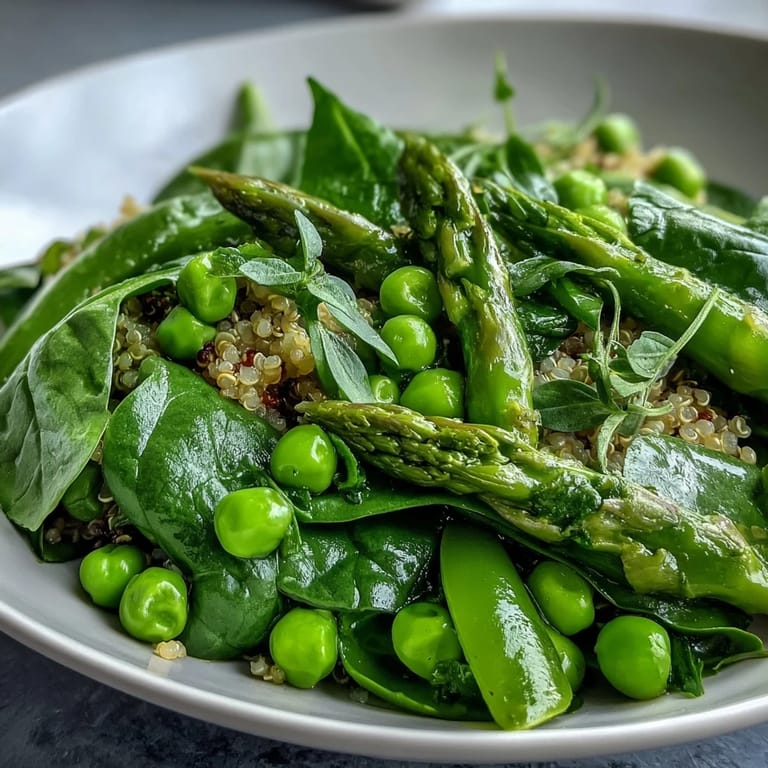
 There was a moment last summer when I brought this bowl to a potluck and watched people come back for seconds, asking what was in the dressing like it was some complicated secret. That's when I realized this wasn't just a way to use up vegetables—it had become something I make because it genuinely brings people joy, and because it reminds me that sometimes the most nourishing things are also the simplest.
Why This Works as a Complete Meal
The grain gives you staying power, the vegetables bring nutrients and freshness, and the dressing ties it all together so nothing tastes separate or plain. You could eat this for lunch three days straight and feel good about it, which is the mark of a recipe that actually understands balance. The beauty is that nothing here is precious or hard to source, but together they create something that feels polished and intentional.
Timing and Make-Ahead Strategy
The entire bowl takes 40 minutes from start to finish, but you can shave time off by cooking your grains ahead—they keep beautifully in the refrigerator for three or four days and can be eaten warm or at room temperature. The vegetables can be blanched and stored separately for a day, and the dressing keeps for up to a week in a sealed jar. The only thing you need to do fresh is assemble and garnish, which takes about five minutes.
Variations and Swaps That Work
This bowl is forgiving in the best way—if you don't have asparagus, use broccoli or sugar snap peas; if green beans aren't in season, add some shredded carrot for color and crunch. You can swap the lemon dressing for a tahini dressing, or just use a good quality olive oil with fresh lemon squeezed over top. For protein, grilled chicken, crispy tofu, or a handful of chickpeas all make sense here, and they never overpower the vegetables.
- Brown lentils mixed into the grains add earthiness and extra protein without changing the character of the dish.
- A soft-boiled egg on top transforms it into breakfast or brunch territory.
- Swap the fresh herbs for everything bagel seasoning if you want something with more texture and savory depth.
 Save to Pinterest
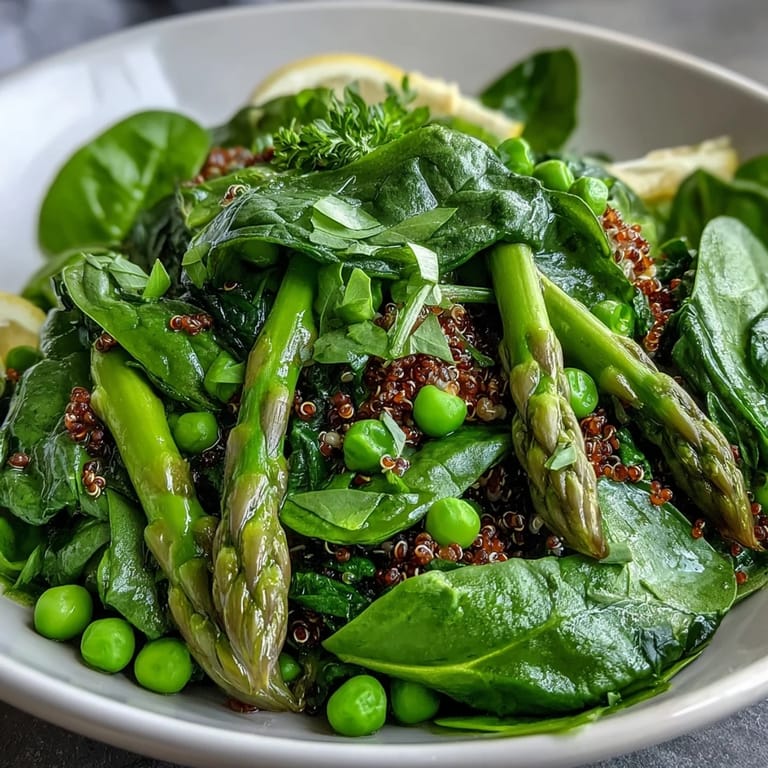
 This Spring Green Bowl has become my answer to the question of what to eat when you want something that nourishes without fussing, something that tastes like intentionality and care. Make it once and you'll understand why it keeps coming back to my table.
Frequently Asked Questions
- → Can I make this bowl ahead of time?
Yes, prepare the grains and vegetables in advance, then store them separately in the refrigerator. Keep the dressing in a small jar and toss everything together just before serving for the freshest taste and texture.
- → What grains work best for this bowl?
Quinoa, brown rice, and farro all provide excellent texture and nutty flavor. Bulgur or couscous make lighter alternatives, while barley offers a chewier, heartier base for those seeking more substance.
- → How do I blanch vegetables properly?
Bring salted water to a rolling boil, add vegetables for 2-3 minutes until bright green and tender-crisp, then immediately transfer to ice water. This stops cooking and preserves that vibrant spring color.
- → Can I add protein to make it more filling?
Grilled chicken, crispy tofu, roasted chickpeas, or even a soft-boiled egg pair beautifully. The lemon dressing complements most proteins, making this bowl incredibly versatile for different preferences.
- → What other vegetables can I use?
Sugar snap peas, snow peas, broccolini, or fresh pea shoots all work wonderfully. In late spring, try adding shaved radishes or thinly sliced raw zucchini for extra crunch and freshness.
- → Is this suitable for meal prep?
Absolutely. The grains and blanched vegetables keep well for 3-4 days when stored separately. Pack the dressing in a small container and drizzle over portions as needed throughout the week.