 Save to Pinterest
 Last January, I found myself standing in front of a half-empty farmer's market in the depths of winter, holding a bunch of muddy carrots and parsnips, wondering what on earth I'd actually make with them. The vendor smiled knowingly and mentioned something about roasting them until they caramelize, and that single suggestion became the backbone of this bowl—a dish that turned what felt like winter's meager offerings into something genuinely craveable. It's become my go-to when the season demands something warm but not heavy, something that tastes like it took hours but honestly doesn't.
My neighbor came over on a particularly gray afternoon, and I threw this together without much fanfare—just something to warm us up before we tackled a puzzle that would take us until dinner. She had thirds, then asked for the recipe, then showed up two weeks later saying she'd made it four times already. That's when I realized this bowl had somehow become the kind of food that just works, that bridges the gap between nourishing and delicious without announcing itself too loudly.
Ingredients
- Carrots: Two medium ones, peeled and cut into 1-inch pieces—they're the sweetness anchor of this whole bowl, so don't skip them even if you think you're not a carrot person.
- Parsnips: Two peeled and cubed to the same size as the carrots, bringing an earthier, almost creamy texture when roasted properly.
- Sweet potato: One small one, peeled and cubed, which adds both color and a subtle sweetness that rounds out the earthier vegetables.
- Beet: One small one, peeled and cut into wedges, for a pop of color and that distinctive grounding flavor only beets bring.
- Olive oil for roasting: Two tablespoons tossed with the vegetables—this is what creates that caramelized, almost candy-like exterior.
- Kosher salt and black pepper: One teaspoon salt and half a teaspoon pepper for seasoning the roasted vegetables.
- Dried thyme: One teaspoon scattered over everything before roasting, which somehow intensifies and becomes almost floral.
- Curly kale: Four cups stemmed and torn, which becomes silky when you massage it with just a touch of oil.
- Olive oil for kale: One tablespoon with a pinch of salt, worked into the leaves with your hands until they soften slightly.
- Olive oil for dressing: Three tablespoons heated gently in a small skillet to create the warm base.
- Apple cider vinegar: One tablespoon that cuts through the richness with its tang and slight sweetness.
- Dijon mustard: One tablespoon for a sharp bite and an emulsifying agent that helps the dressing cling to everything.
- Honey or maple syrup: One teaspoon to balance the vinegar's acidity and the mustard's edge.
- Shallot: One small one, minced finely, which softens into sweet, savory notes as it sautés.
- Toasted pumpkin seeds: A quarter cup scattered over the top for crunch and a subtle nutty undertone.
- Feta cheese: A quarter cup crumbled, adding a salty creaminess that complements the warm greens and vegetables.
Tired of Takeout? 🥡
Get 10 meals you can make faster than delivery arrives. Seriously.
One email. No spam. Unsubscribe anytime.
Instructions
- Heat your oven and prep your station:
- Preheat the oven to 425°F and line a large baking sheet with parchment paper, which saves you from scrubbing caramelized vegetable bits later. This high heat is the secret to getting those vegetables to actually caramelize rather than just steam.
- Toss and spread the root vegetables:
- In a large bowl, combine the carrots, parsnips, sweet potato, and beet with two tablespoons of olive oil, salt, pepper, and thyme, making sure every piece gets coated. Spread them in a single layer on your prepared sheet—this matters more than you'd think, since crowding them means they'll steam instead of roast.
- Roast until golden and tender:
- Slide them into the oven for 30 to 35 minutes, stirring halfway through so everything caramelizes evenly on all sides. You'll know they're ready when the edges are deeply browned and a fork passes through them without resistance.
- Soften the kale while vegetables roast:
- While everything's in the oven, massage your torn kale with one tablespoon of olive oil and a pinch of salt, working it with your hands for a minute or two until it darkens and becomes noticeably softer. This step transforms kale from tough and challenging to silky and pleasant.
- Build the warm dressing:
- In a small skillet over medium heat, warm three tablespoons of olive oil, then add your minced shallot and let it sauté gently for about two minutes until it becomes translucent and fragrant. Add the apple cider vinegar, Dijon mustard, and honey or maple syrup, then whisk everything together until it's smooth and emulsified, finishing with a taste of salt and pepper.
- Assemble the bowls:
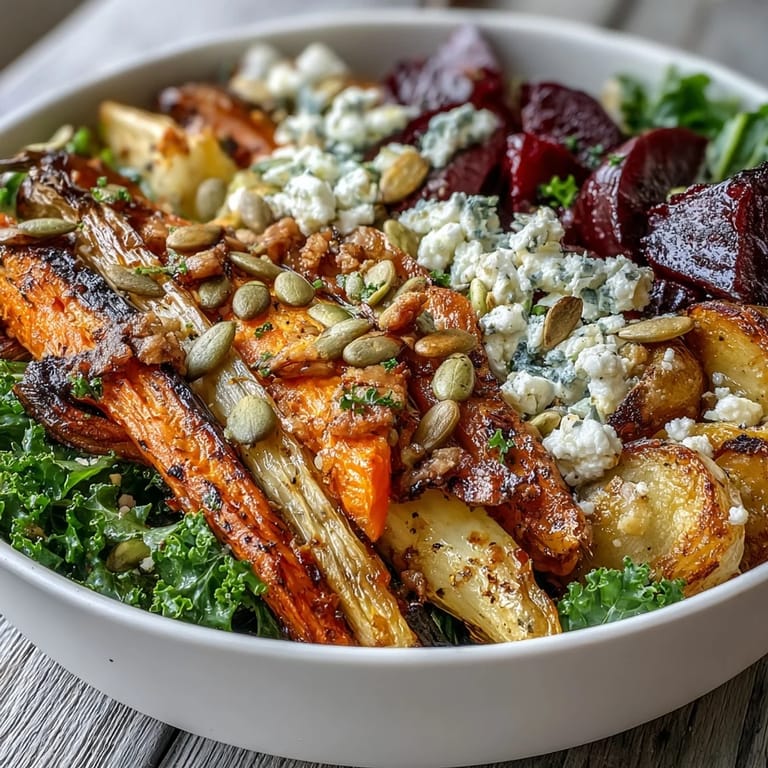
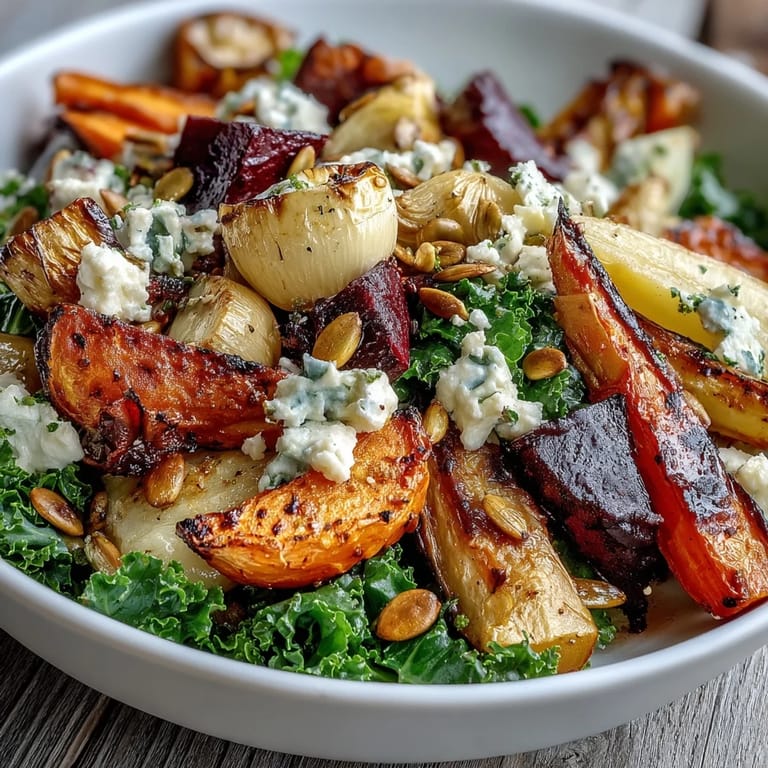
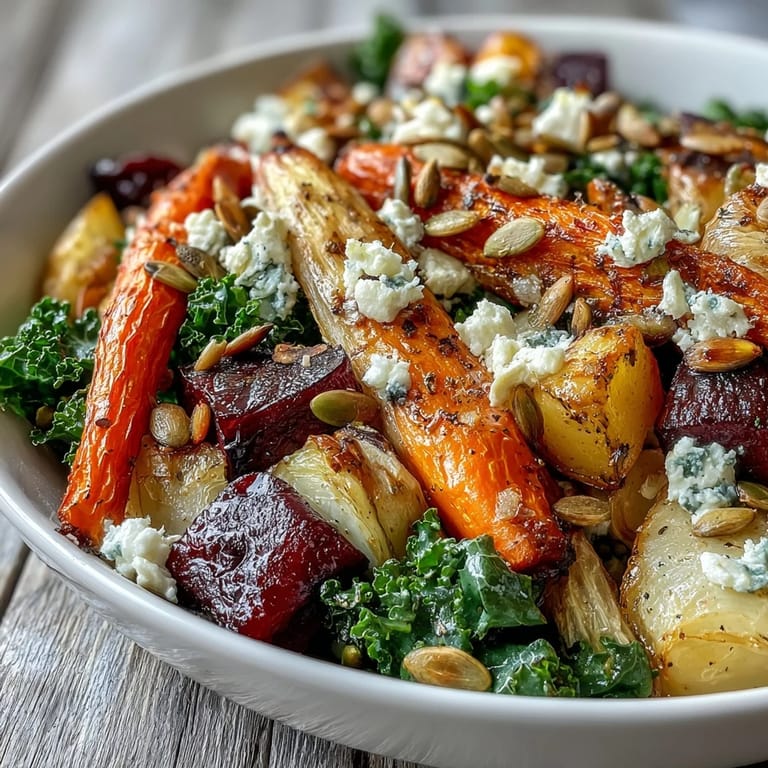
- Divide your massaged kale among four bowls, creating a bed for everything else. Top each bowl with the warm roasted vegetables, arranging them so you get a little of everything in each bite.
- Finish and serve immediately:
- Drizzle the warm dressing over each bowl while it's still hot—this is when the magic happens, as the heat wilts the kale just a bit more and the dressing clings to everything. Top with your toasted pumpkin seeds and crumbled feta, then serve right away while the dressing is still warm and the vegetables are still steaming.
 Save to Pinterest
 One evening, I made this bowl for a friend who'd been going through a rough time, nothing dramatic on the surface, just the kind of tired that doesn't have a name. She ate the whole thing slowly and methodically, and halfway through looked up and said something like "thank you for feeding me something that tastes like care." That's when I understood this wasn't really about the vegetables at all—it was about making someone feel held by what's on their plate.
Why the Components Matter
Each element in this bowl has a specific job, and they all work together like a conversation rather than just ingredients piled together. The roasted vegetables provide sweetness and texture, the kale grounds everything with its slight bitterness and minerals, the warm dressing acts as the bridge that ties everything together, and the toppings add crunch and salt at the very end. When you understand how these layers interact, you start to see why the order of assembly matters and why everything should come together at the last possible moment.
Roasting Vegetables Like You Mean It
There's a technique to roasting that goes beyond just throwing things in an oven and hoping for the best. The high heat matters because it creates what's called the Maillard reaction—essentially, it's the chemical process that makes vegetables taste deeper, sweeter, almost caramelized rather than just cooked. The stirring halfway through ensures everything browns on multiple sides, and the single-layer spread prevents steaming, which is the enemy of that golden exterior you're aiming for. Once you understand this, roasted vegetables stop feeling like a healthy obligation and start feeling like a delicious technique.
The Art of the Warm Dressing
A warm dressing is underrated, honestly, because most people default to cold vinaigrettes without realizing that heat changes everything about how flavors interact and how they coat the food. When you gently warm olive oil with shallots, the shallots become sweeter and more mellow, and when you add acid to warm oil, the emulsion holds better and clings to greens and vegetables more effectively. The mustard acts as an emulsifier, which means it helps the oil and vinegar actually stay together rather than separating, creating a silkier texture that feels more substantial than a typical cold dressing. Temperature also matters because warm food tastes richer and more satisfying than cold food, a fact that has nothing to do with nutrition and everything to do with how our brains perceive flavor and comfort.
- Taste the dressing before you pour it—salt levels matter more when dressing is warm because heat can sometimes mask saltiness slightly.
- Keep the dressing warm but not hot, as you want it to soften the kale gently, not wilt it into submission.
- Make the dressing fresh each time rather than trying to reheat it, as it separates and loses its silky texture after sitting.
 Save to Pinterest
 This bowl has become my answer to the question of what to eat when the world feels too heavy or the weather feels too cold. It reminds me that nourishment doesn't have to be complicated, and that sometimes the most generous thing you can do for yourself is roast some vegetables and eat them slowly.
Frequently Asked Questions
- → Can I prepare the vegetables ahead of time?
Yes, you can peel and cut the root vegetables up to 2 days in advance. Store them in an airtight container with cold water to prevent browning. Drain and pat dry before roasting.
- → What other greens work well in this bowl?
Baby spinach, Swiss chard, or sturdy winter greens like collard greens make excellent substitutes. Adjust the massage time accordingly—tender greens need less handling than kale.
- → How do I store leftovers?
Keep components separate in airtight containers for up to 4 days. Reheat vegetables in a 350°F oven for 10 minutes, then assemble fresh. The dressing can be stored separately and gently reheated.
- → Can I use different root vegetables?
Absolutely. Turnips, rutabaga, celery root, or butternut squash all work beautifully. Aim for 6-8 cups total cut vegetables, keeping pieces similar in size for even roasting.
- → What makes the kale taste better?
Massaging kale with olive oil and salt breaks down tough fibers, making it tender and removing bitterness. This simple step transforms raw kale into a silky, flavorful base.