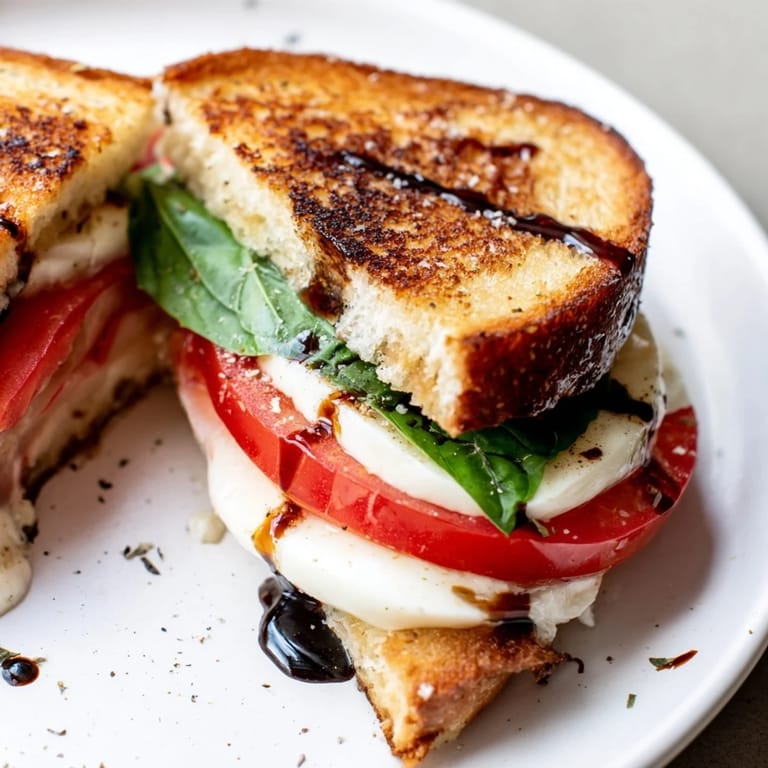
 Save to Pinterest
 There's something about the way basil smells when you tear it by hand that makes you feel like you're doing something right in the kitchen. My neighbor handed me a handful of her homegrown basil one summer afternoon, and I stood there holding it like treasure, wondering what deserved such fresh leaves. That's when I thought: why not take the grilled cheese I'd been making since childhood and actually treat it like something special? This Caprese grilled cheese was born from that moment—the kind of sandwich that tastes like afternoon light and tastes even better when you're not expecting it.
I made this for my friend Marco one Wednesday when we were both working from home and needed a proper lunch break. He took one bite and went quiet—the good kind of quiet—then asked if I'd always been this talented in the kitchen. I hadn't, of course, but something about combining the things you love on good bread just works.
Ingredients
- Sourdough or Italian bread: The crust matters here; it's what keeps everything together while letting the cheese get properly golden and the butter do its thing.
- Fresh mozzarella cheese, sliced: Don't grab the pre-shredded stuff—fresh mozzarella melts like a dream and actually tastes like something.
- Unsalted butter, softened: Softened butter spreads like butter should, giving you an even coat without tearing the bread.
- Ripe tomato, thinly sliced: One truly ripe tomato is worth more than three mediocre ones; slice it thin so it doesn't make your sandwich soggy.
- Fresh basil leaves: Tear them by hand right before assembly if you can—it releases the oils and the whole sandwich tastes brighter for it.
- Balsamic glaze: A little goes a long way; the tanginess cuts through the richness of the cheese perfectly.
- Salt and freshly ground black pepper: These two carry more weight than you'd think, especially against something this creamy.
Tired of Takeout? 🥡
Get 10 meals you can make faster than delivery arrives. Seriously.
One email. No spam. Unsubscribe anytime.
Instructions
- Butter your bread:
- Lay out all four slices and spread softened butter evenly on one side of each. You want a thin, complete coat—no bare patches or thick dollops.
- Build your sandwich:
- Place two slices butter-side down, then layer mozzarella, tomato, and basil leaves. A whisper of salt and pepper on the tomato makes it taste like itself.
- Add the balsamic:
- Drizzle just a small amount over the tomato and basil. You can always add more later, but you can't take it back.
- Close the sandwich:
- Top with the remaining bread slices, butter-side up. Press gently to hold everything together.
- Heat your pan:
- Get your nonstick skillet or grill pan going over medium heat. Medium is key—too hot and the bread burns before the cheese melts.
- Cook with care:
- Place the sandwiches in the pan and cook for three to four minutes per side, pressing gently with your spatula until the bread turns golden and the cheese softens. Listen for that gentle sizzle; that's how you know it's working.
- Rest and serve:
- Let it sit for a minute after you pull it from the heat—this keeps everything from tumbling apart when you slice it. Slice in half, drizzle with extra balsamic if the moment feels right, and serve while it's still warm.
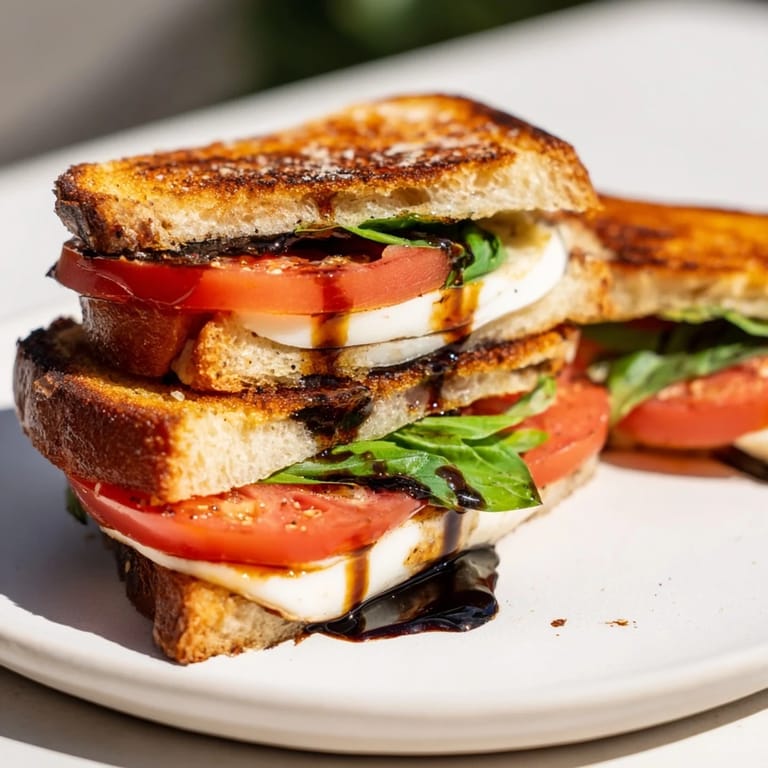 Save to Pinterest
 My partner walked into the kitchen as I was plating one of these, and the first thing she said was, 'That smells like summer.' That's when I knew I'd made something worth making again.
Why This Sandwich Works
There's a magic in pairing something warm and melty with something bright and fresh. The cheese softens everything, the basil wakes it all up, and the balsamic ties it together with a note of sweetness that you don't expect. It's the kind of sandwich that proves comfort food doesn't have to be heavy or forgettable.
Making It Your Own
The base is strong enough to play with. A thin spread of pesto under the mozzarella brings an herbal depth that feels almost decadent. Some days I use ciabatta for a different texture, or a sturdy whole-grain bread if I want something more substantial. Even a simple change like this reminds you that cooking is permission to tinker.
The Details That Matter
The difference between a good grilled cheese and a great one often lives in the small things: butter temperature, bread choice, and how long you let it cook. Heat also matters more than people think—medium heat means your bread has time to turn golden while the inside actually melts, not just the edges crisping up while the cheese stays cold. This sandwich deserves that attention.
- Choose bread with enough structure to hold weight without falling apart the moment it hits the pan.
- Keep your pan temperature at medium to let everything cook through evenly without rushing.
- Use your spatula to press gently, not aggressively—you're coaxing the cheese to melt, not squashing your sandwich into submission.
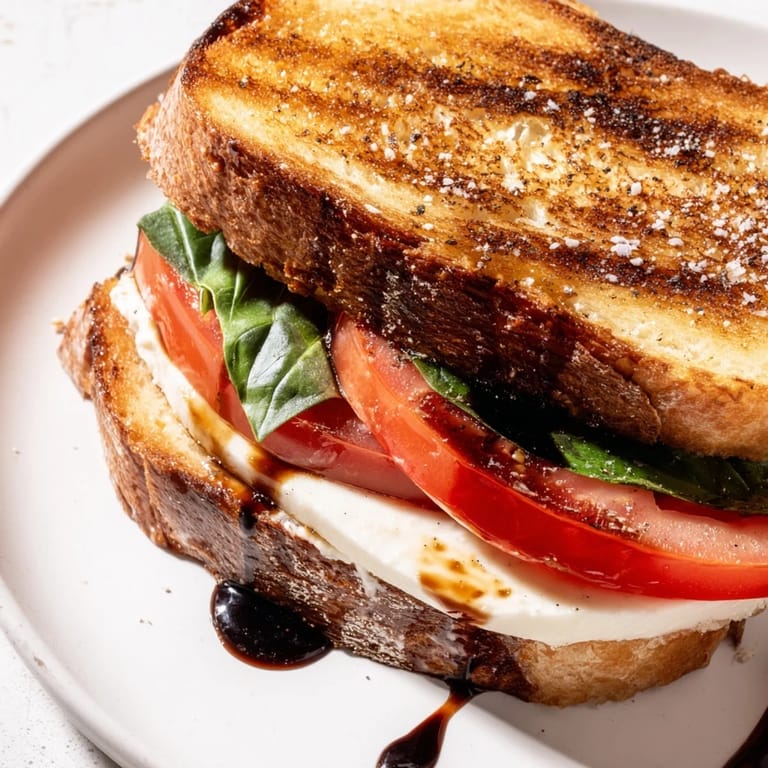 Save to Pinterest
 This sandwich is proof that the best meals don't need to be complicated or take hours. Sometimes all you need is good bread, fresh ingredients, and the willingness to pay attention to what you're doing.
Frequently Asked Questions
- → What type of bread works best?
Sourdough or Italian bread provides the perfect balance of texture and flavor, but ciabatta or whole grain can also add variety.
- → Can I substitute the mozzarella?
Fresh mozzarella is ideal for melting, but plant-based alternatives can be used to suit dietary preferences.
- → How do I prevent soggy bread?
Spreading butter evenly and cooking over medium heat until the bread is golden helps keep it crisp while melting the cheese inside.
- → What’s a good way to enhance flavor?
Adding a layer of pesto inside the sandwich adds a fragrant and savory touch complementing the basil and tomato.
- → Is the balsamic glaze essential?
The balsamic glaze provides a tangy contrast that lifts the sandwich’s flavor, but it can be adjusted or omitted according to taste.