 Save to Pinterest
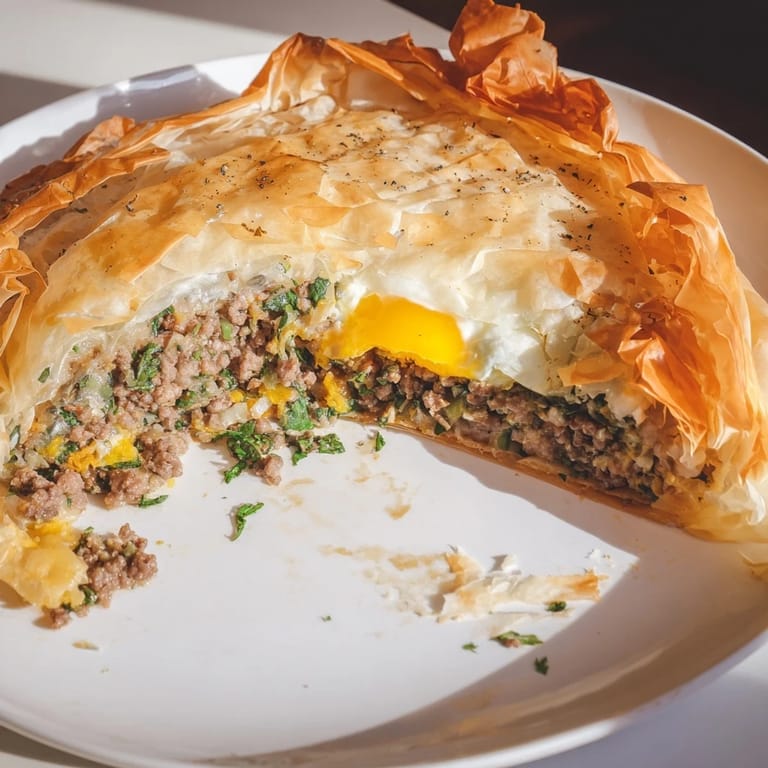
 The first time I bit into a brik, I was standing at a street cart in Tunis, the pastry so hot it burned my fingers slightly as golden oil dripped onto the paper wrapper. The crispy phyllo shattered between my teeth, giving way to a warm, runny egg yolk that mingled with spiced meat—a combination so perfect it felt like someone had finally answered a question I didn't know I'd been asking. Years later, I found myself attempting to recreate that moment in my own kitchen, and what started as a nervous experiment became a dish I now make whenever I want to transport myself back to that dusty, vibrant street and the woman who wrapped it up for me with a knowing smile.
I made these for a dinner party once, and my usually quiet neighbor who lives upstairs actually came down to ask what smelled so incredible—he ended up staying for three and told me they rivaled anything he'd had on his own trips to North Africa. There's something about the smell of phyllo frying in hot oil that seems to transcend apartment walls.
Ingredients
- Ground beef or lamb: Use whichever you have or prefer, though lamb carries more of that authentic Tunisian depth if you want to go traditional.
- Onion: Finely chop it so it softens into the meat and disappears into background flavor rather than announcing itself.
- Fresh parsley: This is your brightness—don't skip it or substitute with dried, as it adds a green, fresh note that balances the richness.
- Ground cumin and coriander: These two are the soul of the filling, giving it that warm, earthy North African character.
- Phyllo pastry sheets: Handle them like they're precious because they are; they dry out fast, so keep unused sheets covered with a damp towel.
- Eggs: Room temperature works better because they'll cook more gently and stay creamy rather than rubbery.
- Gruyère or mozzarella cheese: Optional but traditional in some versions; it adds a salty, melting counterpoint to the egg.
- Oil for frying: Use a neutral oil with a high smoke point—sunflower, vegetable, or even peanut oil all work beautifully.
Tired of Takeout? 🥡
Get 10 meals you can make faster than delivery arrives. Seriously.
One email. No spam. Unsubscribe anytime.
Instructions
- Brown the filling with warmth and spice:
- Sauté your finely chopped onion in a little oil over medium heat until it softens and turns translucent, then add the ground meat along with cumin, coriander, salt, and pepper. Cook, stirring occasionally, until the meat is fully browned and cooked through—you'll know it's ready when there's no pink left and the spices have toasted into the meat, releasing their fragrance. Stir in the parsley at the end and let everything cool slightly so you don't scramble the egg when it hits the filling.
- Lay your phyllo canvas:
- Place a phyllo sheet on a clean, dry surface and, if the sheets are particularly thin and delicate, layer two of them together for extra sturdiness. The goal is crispy but not so fragile it tears before you even get it to the pan.
- Build the pocket:
- Spoon about 2 to 3 tablespoons of the cooled meat mixture into the center of your phyllo sheet, leaving enough room around the edges to fold. Create a small well in the center of the meat mound—this is where your egg is going to nestle—and crack one egg directly into it, letting the yolk sit in the middle so it stays runny. Add a tablespoon of grated cheese if you're using it, nestling it into the warm filling.
- Seal the pastry:
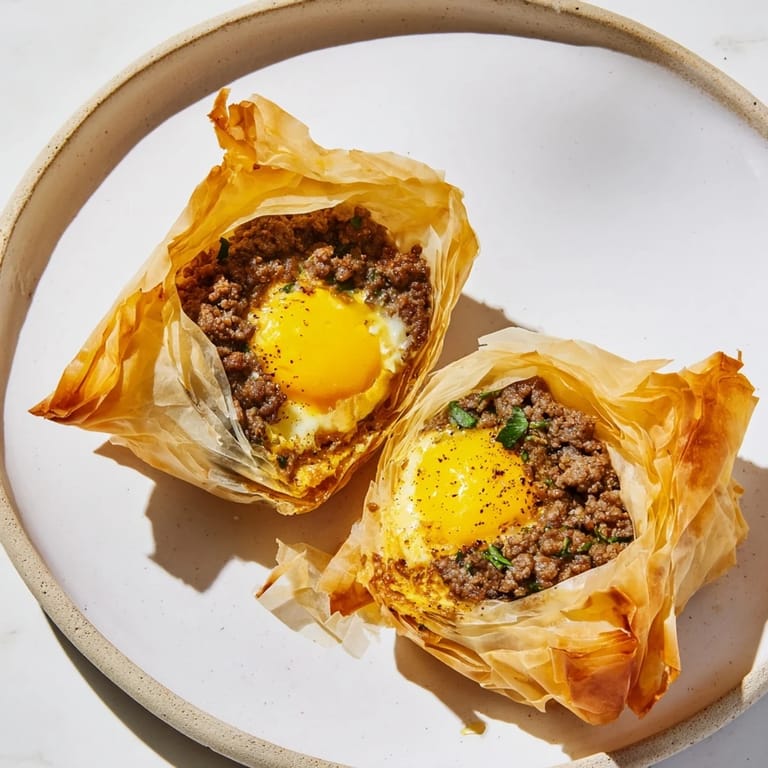
- Fold the phyllo up and over the filling in whatever shape feels natural—a triangle, a rectangle, even a loose envelope works. Use a little water brushed on your fingers or a small brush to seal the edges so they stick together and don't spring open in the oil.
- Fry until golden:
- Heat 3 to 4 centimeters of oil in a large frying pan over medium-high heat until it shimmers and a tiny piece of phyllo sizzles immediately when it touches the surface. Carefully slide your pastry into the hot oil and let it fry undisturbed for 2 to 3 minutes until the bottom is deep golden brown, then flip it gently and fry the other side until it matches. The whole process should take no more than 5 or 6 minutes total, and you want that beautiful crackling sound as your cue that things are crisping up properly.
- Drain and serve immediately:
- Use a slotted spoon to lift the brik from the oil and transfer it to paper towels to drain any excess oil. Serve it hot and crispy while it's still at its best—the pastry starts to soften the moment it cools.
 Save to Pinterest
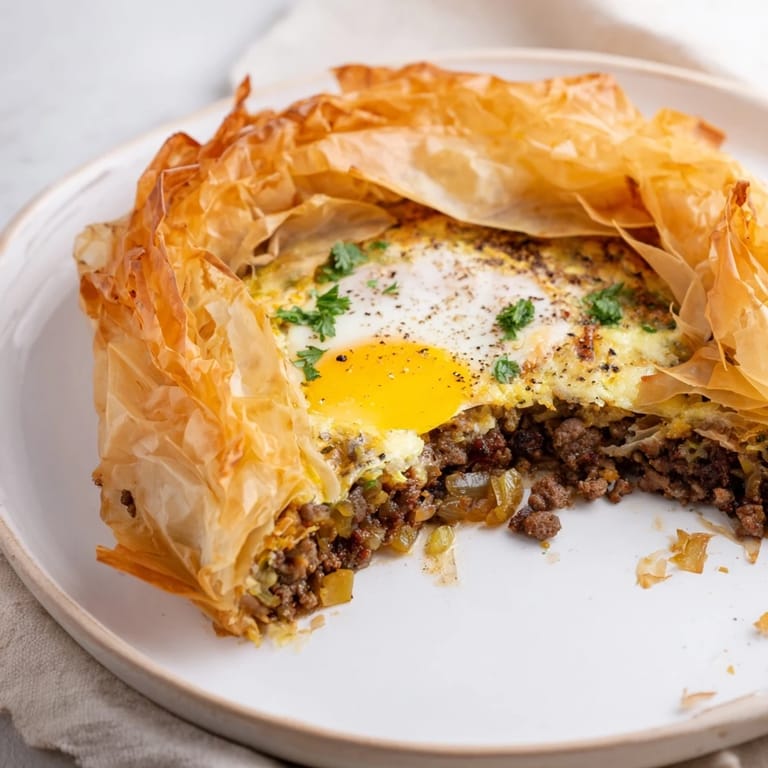
 There's a specific moment when you bite into a fresh brik where the shell gives way and the yolk breaks and suddenly you understand why someone invented this thing centuries ago—it's not just food, it's a small, deliberate pleasure wrapped in crispy leaves.
The Art of the Phyllo Fold
Different people fold their bricks differently, and there's no wrong way as long as the filling stays enclosed and the egg doesn't leak everywhere during frying. Some people make neat triangles like they're folding napkins, while others just bring the sides up and over in whatever way seems to work, sealing with water as they go. I've found that a loose triangle is actually easier than trying to make a perfect rectangle because there's less phyllo to keep track of, less chance of tearing, and the fold naturally creates pockets of crispiness that make each bite interesting.
Oil Temperature Is Everything
I learned this the hard way after producing a few sad, soggy bricks that absorbed more oil than a sponge, and it was a humbling moment. The oil needs to be hot enough that the pastry fries and crisps rather than soaks, but not so violent that the outside burns before the inside cooks. Medium-high heat and that visual sizzle test—where a tiny piece of phyllo immediately makes an angry sound—is your guide. If you have a thermometer, aim for around 175–180°C (350–360°F), though honestly, the sizzle test works just as well and feels more like cooking than watching numbers.
Variations and Extensions
Once you understand the basic structure, briks become a blank canvas. The meat filling can be swapped for spiced tuna mixed with capers and a squeeze of lemon, or potatoes and onions if you want a vegetarian version. Some people add a tiny bit of harissa to the meat mixture for extra heat, while others keep it mild. The egg is almost always there because it's really the magic element, but I've seen versions with just cheese and herbs. The beauty is that the technique stays the same no matter what's inside, so once you've nailed one, you can improvise endlessly.
- Try a pinch of harissa or chili flakes in the meat filling if you want heat and complexity.
- Tuna, capers, and a squeeze of fresh lemon make a completely different but equally delicious filling.
- Keep the filling relatively dry so the pastry stays crispy and the egg is the only source of moisture.
 Save to Pinterest
 These are best made fresh and served immediately, preferably eaten with your hands while standing at a counter or sitting in a place where a little oil on your fingers doesn't matter. Pair them with lemon wedges to cut the richness and a simple green salad if you want something fresh alongside.
Frequently Asked Questions
- → What type of meat works best for filling?
Ground beef or lamb can be used, both offering a rich and hearty flavor that complements the spices well.
- → Can I substitute phyllo sheets if not available?
Phyllo provides the signature crispiness, but thin spring roll wrappers can serve as a close alternative in a pinch.
- → How do I prevent phyllo from tearing during assembly?
Handle phyllo gently and keep sheets covered with a damp cloth to maintain moisture, making them easier to fold without tearing.
- → Is there a way to make the filling spicier?
Adding harissa or chili flakes to the meat mixture enhances heat and deepens the flavors in the filling.
- → What is the best oil for frying?
Use sunflower or vegetable oil to achieve a crispy, golden crust without overpowering the delicate flavors.
- → Can I add cheese to the filling?
Yes, grated Gruyère or mozzarella can be added for a creamy texture common in some traditional variations.