 Save to Pinterest
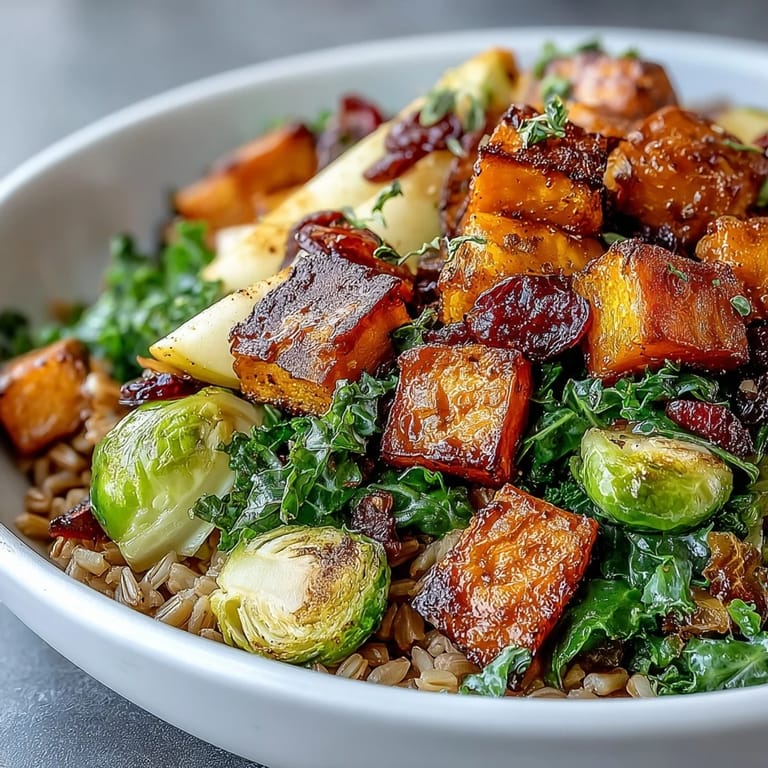
 There's something about early October when the farmers market suddenly explodes with butternut squash and I find myself loading my basket without much of a plan. That's when this bowl came together one Sunday afternoon, a happy accident of whatever looked good piled onto grains, roasted until the kitchen smelled like cinnamon and caramelized edges. My roommate walked in mid-cooking and asked what smelled so good, and I realized I'd stumbled onto something that felt both nourishing and celebratory at once.
I made this for a dinner party last November when a friend mentioned she'd been eating sad desk lunches all week. Watching everyone reach for seconds and actually compliment the flavors rather than just the healthiness felt like the real victory that night. It became her go-to recipe, and now whenever I make it, I think of her texting me photos of her own versions.
Ingredients
- Butternut squash, peeled and cubed (2 cups): The sweetness is crucial here, and yes, peeling it raw takes a bit of arm strength but saves you from burning your hands later.
- Brussels sprouts, trimmed and halved (2 cups): Don't skip halving them face-down on the pan, because that's where the crispy, caramelized magic happens.
- Kale, stems removed and chopped (2 cups): Lacinato kale is less bitter than curly if you're sensitive to that, though honestly the brief wilt makes it mellow either way.
- Apple, cored and sliced (1 large): Honeycrisp or Granny Smith work best; avoid mealy varieties that fall apart during roasting.
- Farro (1 cup): It has a chewy texture that holds up beautifully, but quinoa or brown rice swap in seamlessly if you need gluten-free.
- Vegetable broth or water (2 cups): Broth adds flavor without much extra effort, but water works if that's what you have.
- Olive oil (3 tbsp): Don't cheap out here; good olive oil tastes noticeably better on roasted vegetables.
- Sea salt (1 tsp): Coarse salt lets you feel the grain and distribute it more evenly.
- Black pepper (1/2 tsp): Fresh ground makes a difference in how it blooms across the vegetables.
- Smoked paprika (1/2 tsp): This is the secret that makes everything taste a little deeper and a little warmer.
- Ground cinnamon (1/2 tsp): Just enough to hint at sweetness without making it taste like dessert.
- Toasted pumpkin seeds, optional (1/4 cup): Toast them yourself if you can; the crunch and nuttiness elevate the entire bowl.
- Dried cranberries, optional (2 tbsp): Their tartness cuts through the richness beautifully.
- Feta or vegan cheese, optional (2 tbsp): A scattered crumble adds creaminess and salt without overwhelming the other flavors.
Tired of Takeout? 🥡
Get 10 meals you can make faster than delivery arrives. Seriously.
One email. No spam. Unsubscribe anytime.
Instructions
- Heat your oven and prep your sheets:
- Set the oven to 425°F and line two baking sheets with parchment paper so cleanup becomes almost effortless later. This temperature is hot enough to caramelize without scorching, which is the sweet spot for vegetables.
- Season and spread the golden vegetables:
- Toss the squash and Brussels sprouts with 2 tablespoons of olive oil, salt, pepper, and smoked paprika in a bowl until every piece is coated, then spread them in a single layer cut-side down on one sheet. The paprika turns almost magical when it hits the heat, giving everything a deeper, smokier note.
- Give the apples their own moment:
- Arrange apple slices on the second baking sheet, drizzle with the remaining tablespoon of oil, and dust with cinnamon so they caramelize into something between fruit and candy. This separate sheet means they won't dry out while the harder vegetables finish.
- Roast until golden and tender:
- Put both sheets in the oven for the squash and Brussels sprouts to roast 25 to 30 minutes, stirring them halfway through when you smell them and know it's time, while the apples go for just 15 minutes. You'll know it's done when the squash edges turn almost translucent and the Brussels sprouts get crispy outside and creamy inside.
- Cook your grains while vegetables roast:
- Rinse the farro under cold water, then bring the vegetable broth to a boil and add the grains, reducing heat to low, covering, and simmering for 20 to 25 minutes until tender. The grains will smell nutty and feel plump when they're ready, and any excess liquid should evaporate on its own.
- Wilt the kale gently:
- Heat a skillet over medium heat, add the chopped kale with just a splash of water, and stir for 2 to 3 minutes until it softens and turns a deeper green. It should still have some body to it, not fall apart into mush.
- Assemble your bowls with intention:
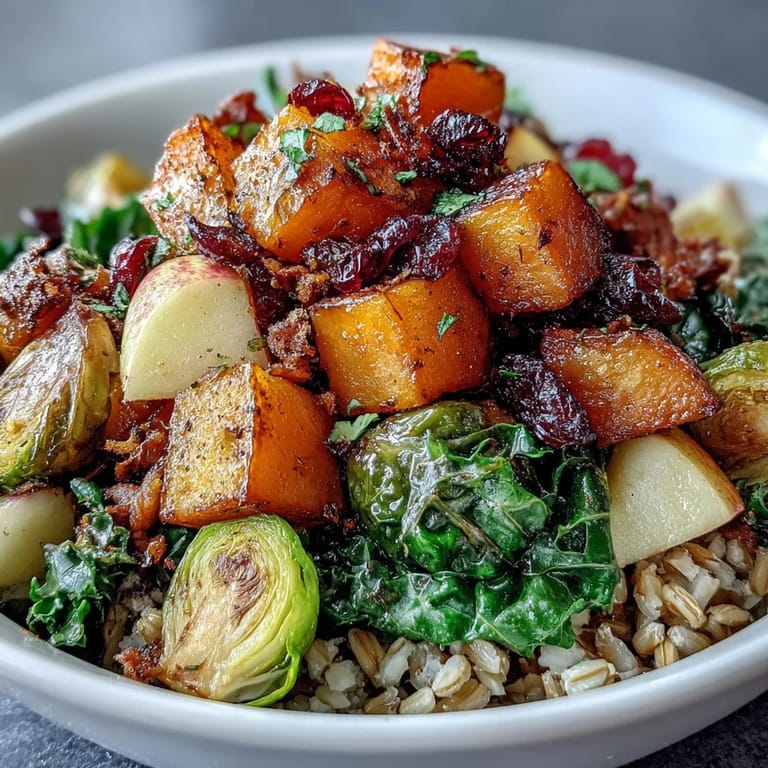
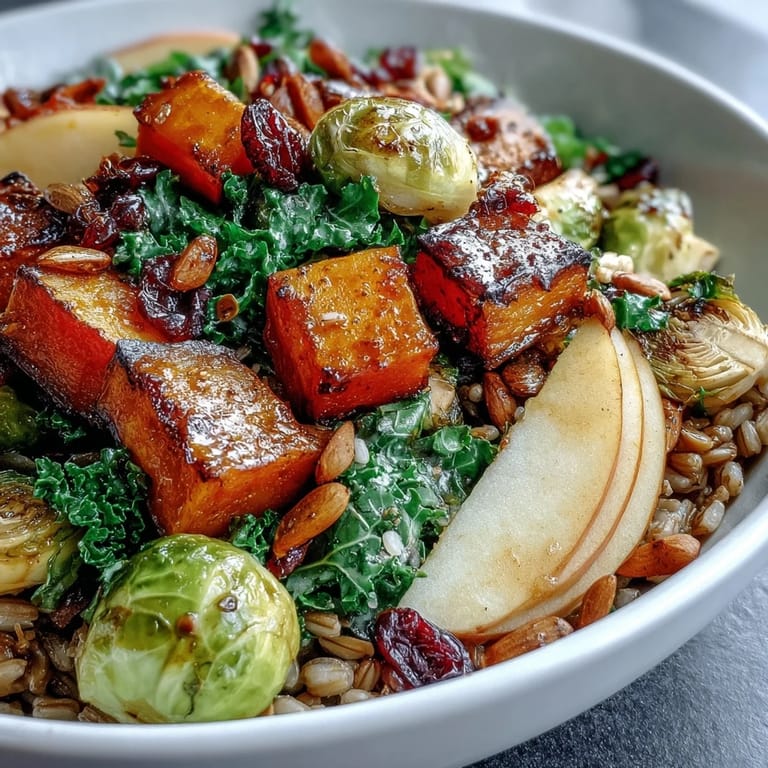
- Divide the warm grains among four bowls as your base, then arrange the roasted vegetables, wilted kale, and caramelized apples on top in a way that looks good to you. The colors alone make it feel special.
- Finish with the touches that matter:
- Scatter pumpkin seeds and dried cranberries over each bowl, add a crumble of feta or vegan cheese if you're using it, and serve while everything is still warm enough to let flavors blend together. The warm grains will soften the cranberries slightly and warm any cheese you add.
 Save to Pinterest
 My partner tried this once when I was meal prepping on a quiet Tuesday and asked if I'd made it special or if it was just how I always cook now. That question stuck with me because it meant the bowl had stopped feeling like a project and started feeling like something natural, the kind of food you return to without thinking twice.
Why This Works as a Meal
The genius of this bowl is that it doesn't ask you to choose between something delicious and something nourishing. The roasting process concentrates sweetness and creates caramelized edges that taste indulgent, while the grains and vegetables add substance that actually keeps you full. It's the kind of meal that feels satisfying enough for dinner but light enough that you don't feel weighed down afterward.
Making It Your Own
This is the kind of recipe that invites customization without losing its identity. I've swapped brown rice for farro when I was out, added roasted chickpeas for protein on days I felt hungrier, and once tried pears instead of apples because that's what I had. Every version felt right and tasted delicious, which is how you know you've found a reliable base to build from.
Storing and Reheating
This bowl holds up beautifully in the refrigerator for up to four days, making it one of my favorite candidates for meal prep on Sunday afternoons. The grains and roasted vegetables actually taste better the next day as flavors meld, though I add the pumpkin seeds fresh just before eating to keep them crispy.
- Store each component separately if possible so the kale doesn't wilt the grains and the apples stay distinct.
- Reheat gently in a skillet over medium heat or in the microwave with just a splash of water if things seem dry.
- Skip the cranberries and seeds until the moment you eat so they maintain their texture and don't absorb moisture.
 Save to Pinterest
 This fall bowl has become the meal I make when I want to feel nourished without fussing, and it's somehow become something people ask me for. That feels like the highest compliment a recipe can receive.
Frequently Asked Questions
- → Can I make this bowl gluten-free?
Absolutely. Simply substitute farro with quinoa or brown rice. Both cook similarly and provide excellent texture while keeping the dish gluten-free.
- → How long will leftovers keep?
Stored in airtight containers, leftovers stay fresh for 4-5 days. Reheat gently or enjoy at room temperature. The grains and vegetables maintain their texture well.
- → What protein options work well?
Roasted chickpeas, crispy tofu, or tempeh add plant-based protein beautifully. For non-vegetarian versions, grilled chicken or roasted salmon pairs wonderfully.
- → Can I prep components ahead?
Yes. Roast vegetables and cook grains up to 3 days in advance. Store separately and assemble when ready to serve. Fresh kale wilts quickly, so sauté just before eating.
- → What other grains can I use?
Brown rice, wild rice, quinoa, wheat berries, or barley all work beautifully. Adjust cooking times accordingly and consider texture preferences when choosing.
- → Can I use different seasonal vegetables?
Sweet potatoes, parsnips, carrots, or beets substitute well for squash. Swiss chard or spinach can replace kale. Feel free to adapt based on availability and preference.