 Save to Pinterest
 I discovered this recipe on a peculiar evening when I was rummaging through my pantry, half-heartedly looking for something to satisfy a chocolate craving, and instead found myself staring at a tin of oil-cured black olives I'd bought months earlier on impulse. My first thought was ridiculous—why not add them to chocolate?—but something about the sheer audacity of it appealed to me. By the time I'd assembled the figs, hazelnuts, and cocoa nibs from various corners of my kitchen, I realized I was creating something far more interesting than a simple chocolate bark. The Midnight Mosaic was born from that moment of culinary recklessness, and it's become the dessert I make when I want to surprise people.
I served this to my book club last spring, and the conversation absolutely stopped when people took their first bites. Someone actually said, "Wait, there are olives in this?" and the whole table erupted into questions about whether I'd lost my mind. But then everyone went quiet again, just experiencing this strange, sophisticated dance of dark chocolate, salty olives, and sweet figs. That reaction—the initial skepticism followed by genuine delight—is exactly why I keep making it.
Ingredients
- Dark chocolate (70% cocoa), 200 g chopped: This percentage hits the sweet spot between bitterness and richness; anything darker gets austere, anything lighter tastes like candy.
- Unsalted butter, 60 g cubed: Keeps the chocolate glossy and prevents it from becoming grainy as it sets.
- Honey, 1 tbsp: Adds subtle warmth and helps the chocolate stay slightly fudgy rather than brittle.
- Sea salt, pinch: Amplifies everything, making the chocolate deeper and the olives more themselves.
- Dried figs, 120 g finely sliced: Buy the soft ones if you can; they'll soften even more when they press into warm chocolate.
- Pitted black olives (oil-cured), 80 g thinly sliced: Oil-cured olives have funky, briny intensity that wine-cured ones simply don't deliver.
- Roasted hazelnuts, 50 g chopped: Roasting them first gives you that toasted flavor without extra effort.
- Cocoa nibs, 30 g: These give texture and remind people they're eating something made of real cacao.
Tired of Takeout? 🥡
Get 10 meals you can make faster than delivery arrives. Seriously.
One email. No spam. Unsubscribe anytime.
Instructions
- Prepare Your Canvas:
- Line a 20x20 cm square tin with parchment paper, letting it overhang the edges like a safety net. This step takes thirty seconds but saves you from chocolate-covered fingertips later.
- Melt with Intention:
- Set a heatproof bowl over barely simmering water—the bowl should never touch the water or the chocolate will seize and become grainy. Stir constantly until the chocolate and butter meld into glossy smoothness, then remove from heat and stir in honey and salt.
- Spread and Smooth:
- Pour the chocolate into your lined tin and use a spatula to spread it evenly, right to the corners. You want a layer about the thickness of a finger.
- Build Your Mosaic:
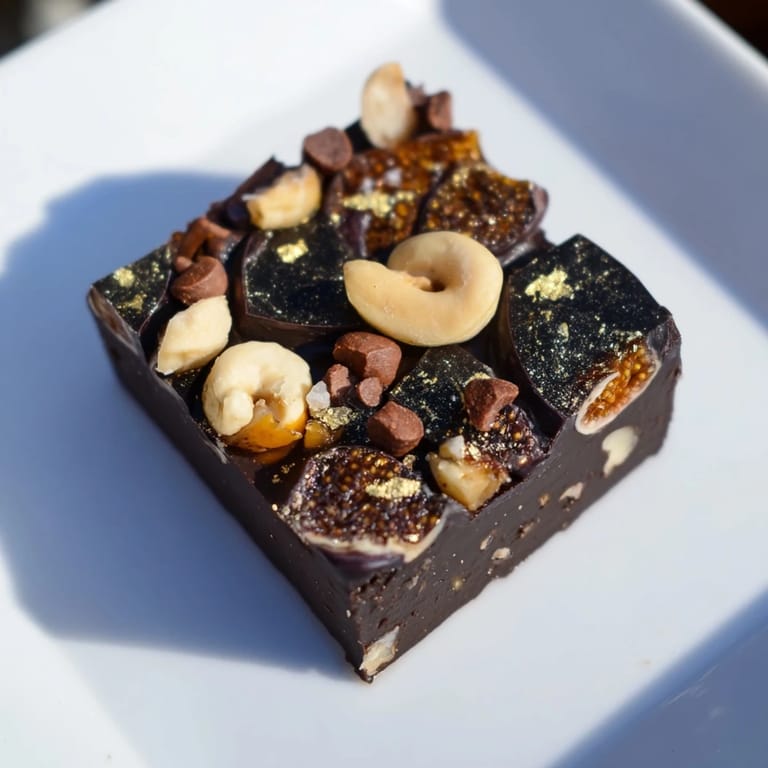
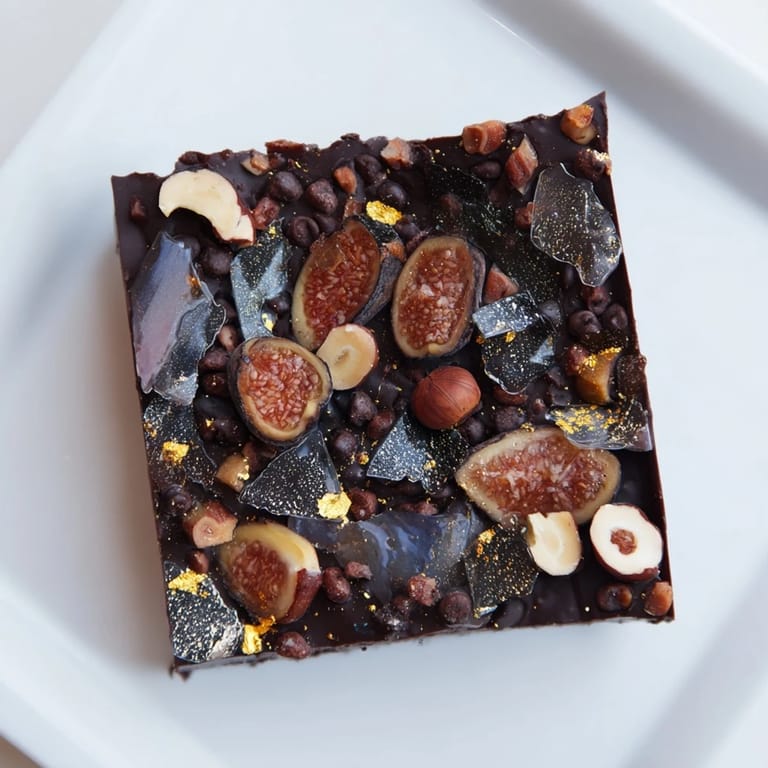
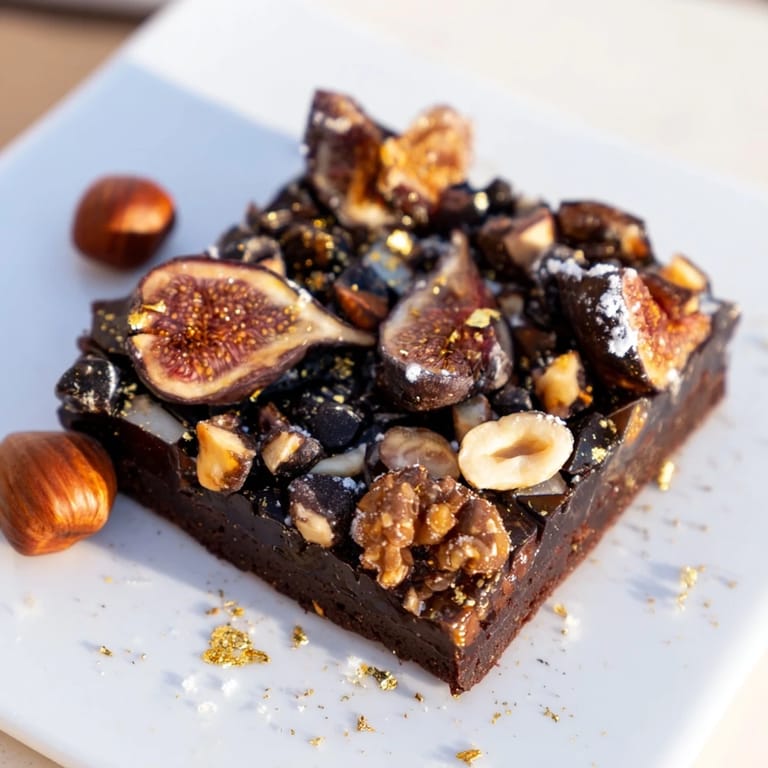
- Scatter the figs, olives, hazelnuts, and cocoa nibs across the warm chocolate surface, then gently press them down so they nestle into the chocolate with no gaps. Think of it as creating a jeweled surface, where every piece locks into place.
- Final Flourish:
- Sprinkle flaky sea salt across the top, and if you want that extra touch, add edible gold leaf or dried rose petals before the chocolate sets completely.
- Patience Pays:
- Refrigerate for at least 2 hours until the whole thing is completely firm. Yes, it's hard to wait.
- Slice and Serve:
- Lift the whole slab out using the parchment handles, place it on a cutting board, and cut into small squares with a sharp knife that you've dipped in warm water between cuts to prevent dragging.
 Save to Pinterest
 My aunt bit into a piece of this and closed her eyes for what felt like an hour. When she opened them, she said it tasted like "walking through an ancient spice market in the dark." I've never made a dessert that inspired that kind of poetic reaction, and I think about that moment every time I make it now.
The Strange Beauty of Unexpected Combinations
There's something deeply satisfying about ignoring recipe conventions and finding that olives and chocolate actually were meant to coexist. Every ingredient here plays against type—olives are savory, figs are sweet, chocolate is bitter, and together they create something that feels both deeply familiar and strangely foreign. This is the kind of dessert that teaches you to trust your instincts in the kitchen, even when they sound completely absurd.
Pairing and Presentation
Serve these squares chilled if you want that snappy chocolate bite, or let them sit at room temperature for a few minutes if you prefer them slightly fudgy and forgiving. A glass of vintage port alongside is not excessive—it's essential. Dark espresso works beautifully too, cutting through the richness and echoing the cocoa nibs.
Variations and Substitutions
The beauty of this mosaic is that you can shift the colors and flavors without losing the essential character. Swap hazelnuts for almonds or pistachios, trade dried figs for apricots if you want brightness, or use Castelvetrano olives if you want something greener and softer. Just keep the ratios roughly the same and trust that good ingredients will find their way.
- For a vegan version, use plant-based butter and maple syrup instead of honey, and the result is honestly just as glossy and rich.
- Make this ahead—it actually tastes better after a day or two when the flavors have settled into each other.
- Cut the squares smaller than you think you need to; this is a dessert for savoring in bites, not consuming in wedges.
 Save to Pinterest
 Make this when you're feeling confident enough to trust your taste buds over conventional wisdom. Every time someone tries it, you'll see that moment of delicious confusion on their face before delight takes over.
Frequently Asked Questions
- → Can black olives be substituted in this dish?
Yes, you can try oil-cured green olives or omit them for a sweeter variation, though the briny contrast is key to the flavor balance.
- → What is the best way to melt the chocolate and butter?
Use a heatproof bowl over barely simmering water to melt gently, ensuring smooth texture without overheating the chocolate.
- → How long should the mosaic chill before serving?
Chill for at least 2 hours to allow the mixture to fully set and develop a firm texture suitable for slicing.
- → Are there nut alternatives for the hazelnut topping?
Almonds or pistachios can replace hazelnuts, providing a different crunch and flavor profile while maintaining the nutty element.
- → Is this suitable for a vegan diet?
Use plant-based butter and replace honey with maple syrup to adapt this mosaic for vegan preferences.
- → What beverage pairs well with this dessert?
A glass of vintage port or a dark-roast espresso complements the rich, bittersweet and briny flavor notes excellently.