 Save to Pinterest
 I'll never forget the evening I first attempted a Nutcracker Suite board—a friend was hosting a December holiday gathering, and instead of bringing the usual platter of appetizers, I decided to create something theatrical and memorable. I spent hours arranging jewel-toned cheeses, glistening fruits, and chocolates on tiered stands, watching the board transform into something that looked like it belonged on a ballet stage. The moment guests arrived and saw it, their faces lit up with the same wonder you feel watching The Nutcracker unfold. That night, I realized that food could be art, and a grazing board could be a story told in color and flavor.
What strikes me most about this board is how it transformed a casual dinner into something my friends still talk about. Someone actually took a photo to send to another friend because they couldn't believe something so beautiful was edible. That's when I knew this wasn't just food—it was an experience, a memory made tangible through color and thoughtful arrangement.
Ingredients
- Brie (150 g, white block): The creamy anchor of your board—its softness and mild richness balance the more assertive flavors around it, and its pale color creates that first visual impact
- Aged cheddar (150 g, yellow block): Sharp and nutty, this cheese demands respect and space on the board; it's your golden treasure, literally and figuratively
- Blue cheese (150 g, blue block): Bold and beautiful, just a thin wedge goes far—it's the dramatic character that makes everyone take notice
- Gouda (150 g, orange block): Smooth and slightly sweet, this bridges the gap between mild and intense, and its warm color is essential to your palette
- Cranberry goat cheese (100 g, red/pink block): Tangy with a hint of sweetness, this cheese sings next to darker elements and adds that crucial ruby tone
- Prosciutto (100 g, pink/rose block): Paper-thin and silky, fold it loosely for height and drama—it catches light beautifully and adds salty elegance
- Salami (100 g, red block): Slice thick enough to show off its marbling; this is your crimson jewel in the charcuterie section
- Soppressata (100 g, deep red block): Deep and complex, its color is almost burgundy—essential for depth in your red and pink zones
- Red grapes (1 cup): They catch light like tiny rubies and their firmness means they stay beautiful throughout serving
- Green grapes (1 cup): Fresh and crisp, they're your bright accent and taste like the memory of summer
- Blueberries (1 cup): Dark and jewel-like, cluster them for impact—they're surprisingly elegant despite their humble appearance
- Strawberries (1 cup): Slice some lengthwise to show off their interior; they add both color and freshness
- Dried apricots (1 cup): Chewy and golden, they bridge the gap between fresh fruit and sweets while adding texture
- Pomegranate seeds (1 cup, ruby block): This is your most luxurious touch—each seed catches light like a tiny lantern, and their tart-sweet flavor is unforgettable
- Marcona almonds (1/2 cup): Buttery and pale, these are superior to regular almonds—worth the splurge for their richness
- Pistachios (1/2 cup): Vibrant green inside, they add color surprise when people crack them open
- Candied pecans (1/2 cup): Sweet and crunchy, they're your bridge between savory and dessert sections
- Mixed olives (1/2 cup): Briny and beautiful in their varied dark tones; they anchor the savory experience
- Assorted crackers (1/2 cup): Choose a mix of shapes and neutral tones—they're the foundation that lets everything else shine
- Baguette, sliced (1/2): Toast the slices lightly to prevent sogginess and add a subtle textural contrast
- White chocolate bark (150 g): Break into uneven pieces for an artisanal look; its sweetness is pure comfort
- Dark chocolate (150 g): Your most sophisticated element—choose quality dark chocolate that feels grown-up and rich
- Colorful macarons (12 pieces): These are your show-stoppers, each one a tiny work of art that adds elegance and whimsy
- Petit fours (12 pieces): Delicate and pastel, they're the final note of indulgence on your board
- Fresh rosemary sprigs: More than garnish, these fragrant branches add dimension and the scent of evergreen celebration
- Edible flowers: A few scattered blooms elevate everything to gallery-worthy presentation
Tired of Takeout? 🥡
Get 10 meals you can make faster than delivery arrives. Seriously.
One email. No spam. Unsubscribe anytime.
Instructions
- Assemble your stage:
- Gather your large board or platters and any risers you're using—cake stands, pedestals, or even overturned bowls. Arrange them to create height variation, imagining the architecture of a ballet set. Test stability with your hands before you begin filling, because there's nothing worse than a collapse mid-party.
- Build the foundation:
- Start with your neutral base layer—arrange crackers, baguette slices, and nuts in the most accessible tier. These aren't decoration; they're the supporting cast that lets the starring ingredients shine. Think of this layer as the stage floor.
- Organize by color story:
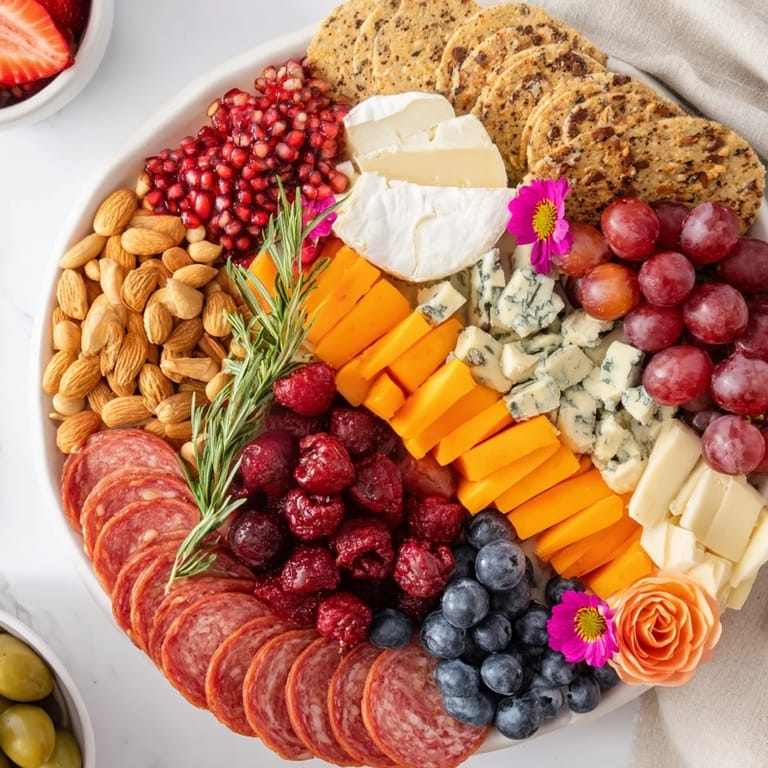
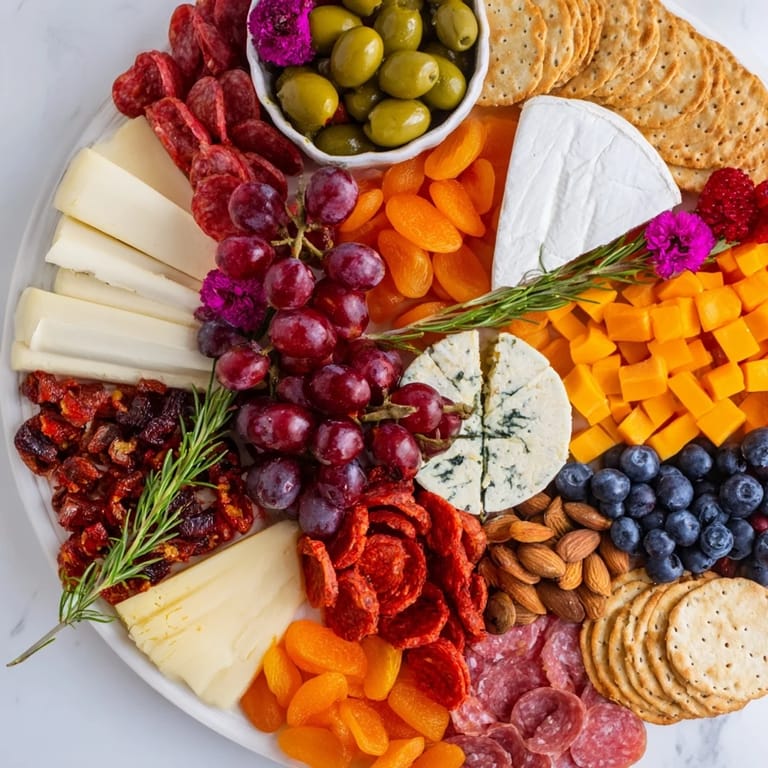
- Now comes the choreography. Decide your color sections before you place anything—perhaps white on one side, warm oranges and golds in the center, deep reds and burgundy on another. This intentional blocking creates visual drama that feels inevitable, like the color story was always meant to be.
- Arrange cheese with intention:
- Place your cheese blocks as focal points. Cut the cheddar into a few wedges to show off its golden interior. Slice the brie at an angle. Let the blue cheese have its own proud wedge. These aren't just food items; they're architectural elements in your edible sculpture.
- Drape the charcuterie:
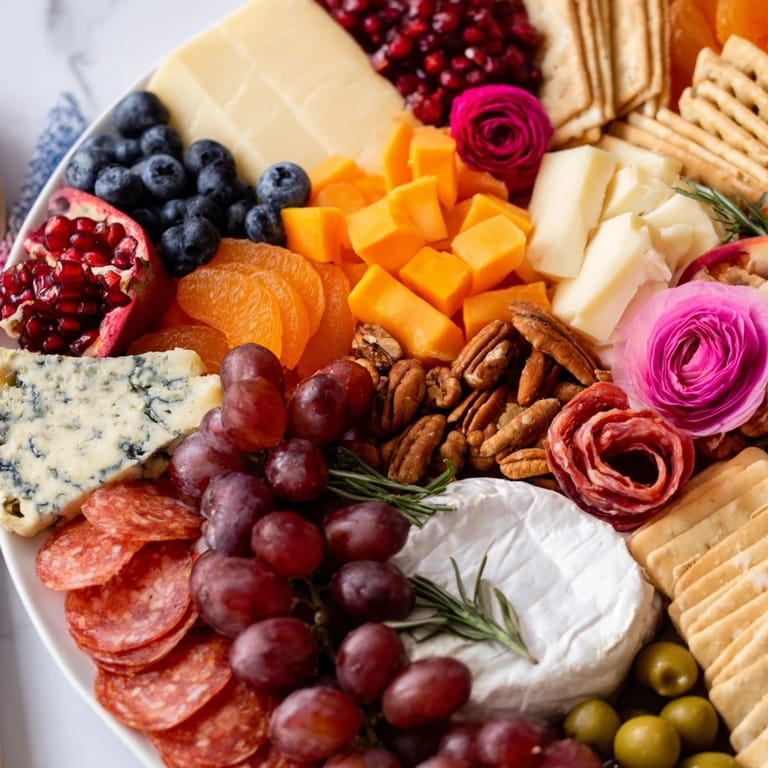
- Fold and layer your meats with loose, generous folds—imagine fabric draping on a costume. Prosciutto should billow softly; salami slices should fan out. This isn't neat; it's theatrical. The shadows created by these folds add depth and elegance.
- Fill the spaces with fruit:
- Cluster fruits by color, creating abundance and flow. Lay grapes in curves, scatter berries in groups of three or five, arrange strawberry slices to show their beautiful interior. Let some fruits nestle against cheese, creating color conversation between elements.
- Layer in the small treasures:
- Distribute nuts, olives, and dried fruit in complementary sections. Small bowls can hold these if you want to make them feel special and prevent them from rolling away. Group them strategically—pistachios near green elements, candied pecans near warm tones.
- Crown with sweets:
- Arrange your chocolate and macarons in their own mini-sections, perhaps elevated slightly if you have room. These are the finale, the bow on the present. Scatter petit fours like precious ornaments.
- Garnish with drama:
- Tuck rosemary sprigs throughout, letting them branch out naturally. Scatter edible flowers in pockets of space—not too many, just enough to make people gasp slightly. Step back and look at your creation like you're seeing it from the audience.
- Serve with presence:
- Check one more time that every tier is stable and that nothing is blocked by other elements. You've created a board meant to be experienced, explored, and savored. Bring it to the table with pride.
 Save to Pinterest
 I remember standing in my kitchen at midnight the night before a party, second-guessing my entire vision for this board, wondering if it was too ambitious, too theatrical. Then I arranged the first few elements by lamplight, and suddenly I could see the whole picture—the color blocking, the drama, the story. By the time I finished, I was so excited I had to call my friend and describe it like I was revealing the final act of a play. When she walked in the next day and saw it in person, we both just stood there for a moment, appreciating that we'd made something beautiful together.
Creating Your Color Story
The magic of this board lives in its deliberate color palette. Think of each color zone as a scene in a performance—whites and pale elements create the gentle opening, golds and oranges bring warmth and celebration, deep reds and burgundies add mystery and sophistication. The key is creating contrast and flow simultaneously; your eye should travel around the board discovering new combinations, but it should always feel cohesive and intentional. This isn't random; it's the choreography of visual harmony. Stand back occasionally as you build to see the overall composition. If something feels visually heavy, lighten it with fresh fruit or pale nuts. If an area feels sparse, add a cluster of something jewel-like to catch the light.
The Art of Height and Drama
What elevates this board from lovely to unforgettable is its three-dimensionality. The tiers and risers aren't just practical; they're essential to the theatrical presence. Cake stands, pedestals, and even overturned bowls topped with small platters create a landscape that's interesting from every angle. When guests approach, they see different elements at different heights, making the journey around the board feel like exploration rather than simply looking at a platter. The higher elements—your macarons, your chocolate, your most dramatic cheeses—command attention and break up sightlines in delightful ways. This vertical approach also means more surface area without taking up more table space, which is genius when you're feeding a crowd.
Making It Personal
The beauty of a Nutcracker-inspired board is how deeply personal it can become. Match the color blocks to specific characters from the ballet—gold and red for the Nutcracker himself, pale pastels for the Sugar Plum Fairy, deep jewel tones for the Rat King. Or tie it to your own memories, your favorite colors, the story of your own holiday traditions. Every element you choose tells a story about what you love and what matters to you. That personal touch is what makes guests feel seen and celebrated at your table, because you didn't just serve them food—you shared a vision, a memory, an aesthetic.
- Consider your guests' preferences when choosing cheeses—is there someone who loves funk and intensity, or someone who prefers mild and creamy?
- Don't feel locked into the exact ingredients I've suggested; substitute berries based on what's fresh and beautiful at your market
- Remember that this board tells a story through color and presentation, so choose elements that genuinely excite you to look at
 Save to Pinterest
 This board is more than appetizers; it's an invitation to slow down and savor, to experience food as art and occasion as theater. When you build it with intention and joy, everyone who experiences it will feel that care reflected back in every beautiful bite.
Frequently Asked Questions
- → How do I create distinct color blocks on the board?
Group ingredients by color such as white cheeses, red charcuterie, and colorful fruits in separate sections to achieve striking color contrast.
- → What type of board or containers work best for layering?
Use large wooden boards along with cake stands, pedestals, or platters to build multi-tiered layers and add height.
- → Can vegetarians enjoy this board?
Yes, simply omit charcuterie and replace with extra cheeses, marinated vegetables, or roasted nuts for a satisfying vegetarian option.
- → How should I arrange garnishes for best effect?
Place fresh rosemary sprigs and edible flowers strategically around the board to add pops of green and color for festive presentation.
- → What are ideal beverage pairings for this board?
Sparkling wine, light red wine, or herbal teas complement the variety of flavors and textures beautifully.