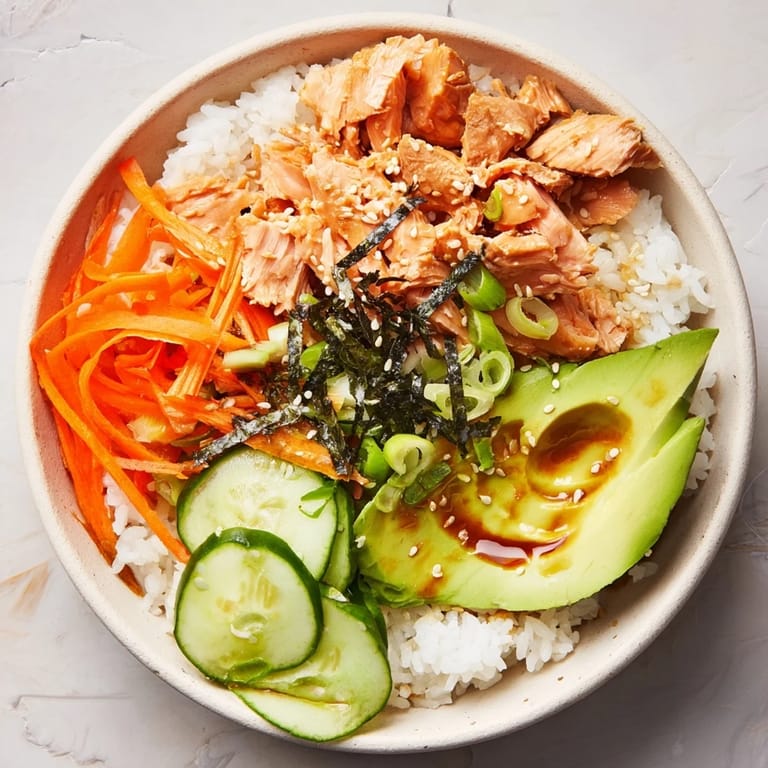
 Save to Pinterest
 I discovered this bowl during a particularly hectic week when I needed something that felt both comforting and light, the kind of meal that comes together without fuss but tastes like you actually tried. My friend mentioned her secret to perfectly reheated rice—an ice cube tucked into the center—and suddenly the entire bowl clicked into place. The salmon and chicken cook side by side in the same pan, their marinades infusing them with that unmistakable Japanese umami depth, while fresh vegetables provide a crisp counterpoint. It became my go-to dinner when I wanted something restaurant-quality without the restaurant stress.
I made this for my partner on a Tuesday night after they'd had one of those days, and watching their face brighten when they saw the bowl assembled—each ingredient glistening and arranged with care—reminded me that food isn't just fuel. The way the salmon flaked apart with a fork, the slight resistance of the marinated chicken, the cool creaminess of avocado against the warm rice—it felt like something we should have been paying thirty dollars for at a restaurant counter.
Ingredients
- Skinless salmon fillets (about 300 g): Salmon carries that rich omega-3 fat and cooks so quickly you have to stay present, which actually keeps everything from overcooking; I learned to pat it dry before the skillet so it gets a gentle golden surface.
- Boneless, skinless chicken thighs (about 250 g): Thighs stay juicier than breasts and have a deeper flavor that takes the marinade beautifully; they're more forgiving if you accidentally cook them a minute longer.
- Soy sauce, mirin, sake, sesame oil, honey: This marinade is the backbone—mirin brings subtle sweetness, sake adds depth, and sesame oil gives you that toasted nutty note that makes people ask what makes it taste so good.
- Japanese short-grain rice (2 cups): Short-grain rice has more starch and clings together naturally, creating that ideal texture; rinsing it until the water runs clear removes excess starch and helps each grain stay distinct.
- Avocado, cucumber, carrot, scallions: These vegetables create textural contrast and visual drama; slice them just before assembly so avocado doesn't brown and cucumber stays crisp.
- Soy sauce, rice vinegar, sesame oil, sugar sauce: This finishing sauce bridges all the flavors; the rice vinegar adds brightness that prevents the bowl from feeling heavy.
- Sesame seeds and nori: Toasted sesame seeds provide nutty crunch and nori adds that umami whisper that feels like a professional touch.
- Ice cubes: The secret weapon for reheating—place one in the center and the steam gently revives yesterday's rice without drying it out.
Tired of Takeout? 🥡
Get 10 meals you can make faster than delivery arrives. Seriously.
One email. No spam. Unsubscribe anytime.
Instructions
- Prepare the rice foundation:
- Rinse your rice under cold running water, stirring gently with your fingers, until the water runs almost clear—this removes the starch coating and prevents gluey rice. Cook it in a rice cooker or covered saucepan with the water, then let it steam undisturbed for a few minutes before fluffing with a fork so each grain stays separate.
- Marinate both proteins:
- Whisk together soy sauce, mirin, sake, sesame oil, and honey in a bowl—you'll smell the aroma immediately, that toasted-sweet depth that signals the marinade is working. Divide it between two dishes, add salmon to one and chicken to the other, and let them sit for at least ten minutes; this isn't long enough to make a huge difference but just enough to deepen the flavor.
- Cook the chicken first:
- Heat your skillet over medium heat until it's hot enough that a drop of water sizzles away instantly, then add the chicken thighs. They'll sizzle immediately—that sound means you've got the right temperature; cook them four to five minutes per side until golden with no pink inside. Let them rest for a minute before slicing so they don't lose all their juices.
- Cook the salmon in the same pan:
- The pan is already seasoned with chicken flavor, which is exactly what you want; add the salmon fillets and give them two to three minutes per side depending on thickness, watching for that moment when the flesh turns from translucent to opaque. Flake it gently with a fork—it should break apart into tender pieces with barely any pressure.
- Prepare all your vegetables:
- While the proteins rest, slice the avocado into thin pieces, run the cucumber blade-thin, julienne the carrot into matchsticks, and slice the scallions on the bias; having everything ready before assembly means the bowl comes together quickly while everything is still at the right temperature.
- Make the finishing sauce:
- Whisk together soy sauce, rice vinegar, sesame oil, and sugar in a small bowl, stirring until the sugar dissolves completely—taste it and adjust to your preference, knowing it's meant to be bright and slightly salty, not overpowering.
- Assemble your bowl:
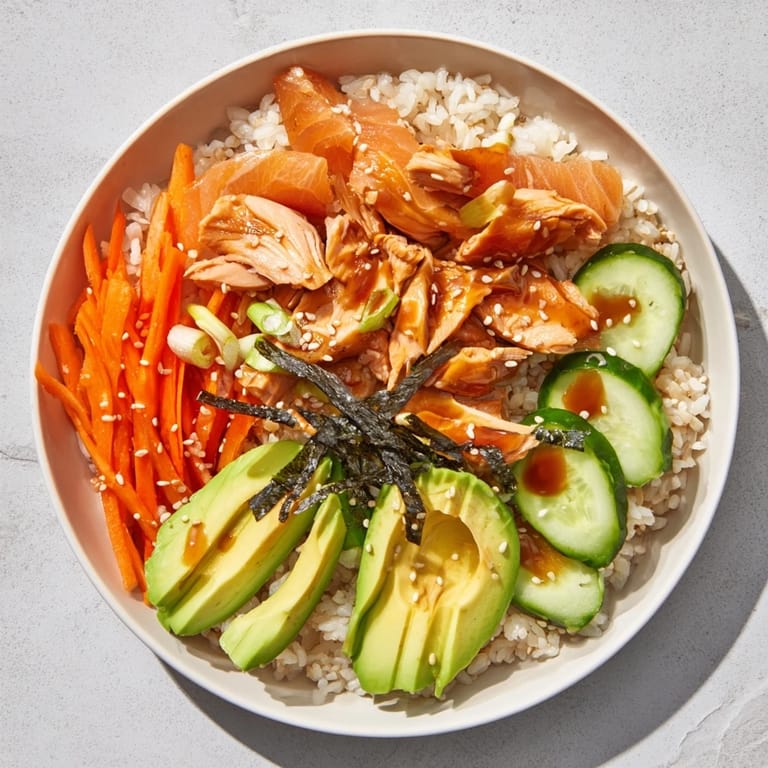
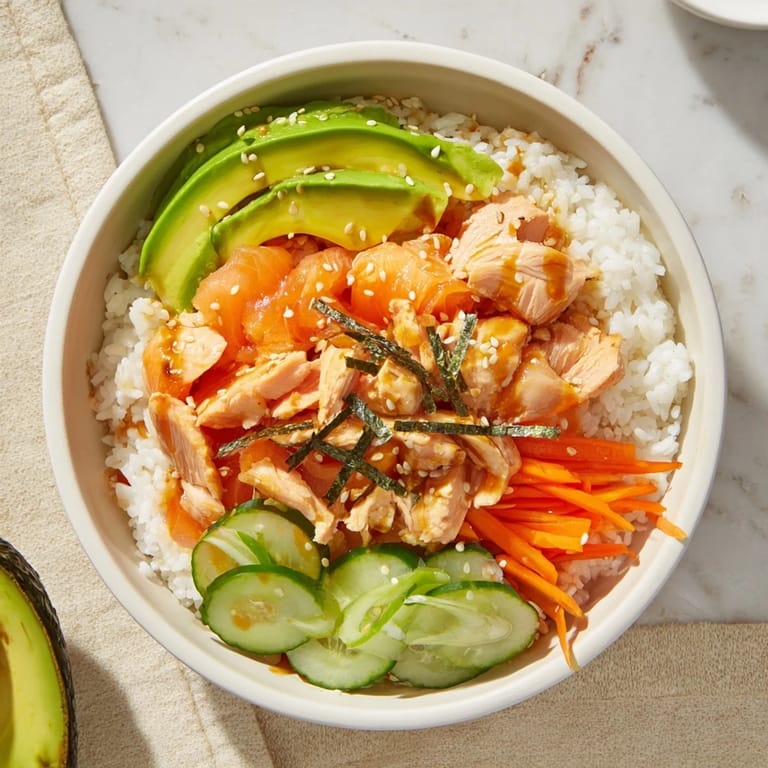
- Divide the warm rice among four bowls, then arrange the chicken and salmon on top, followed by avocado, cucumber, carrot, and scallions in whatever pattern feels right to you—aesthetics matter because you eat with your eyes first. Drizzle the sauce over everything, then finish with toasted sesame seeds and nori strips for that final flourish.
- The ice cube hack for leftovers:
- If you're reheating a pre-assembled bowl the next day, place an ice cube right in the center of the rice, cover it loosely with a microwave-safe lid or plastic wrap, and microwave on high for one to two minutes; the ice melts slowly and steams the rice gently from the inside out, keeping it moist and fluffy instead of hard.
 Save to Pinterest
 There's a quiet joy in a bowl like this—the way it arrives at the table looking like something from a magazine but tasting like love and care. It reminds me that Japanese cooking is about simplicity elevated, letting each ingredient speak instead of drowning everything in sauce.
Why This Bowl Changed My Weeknight Dinner Routine
Before discovering this bowl, I'd cycle through the same three or four dinners out of sheer dinner fatigue, defaulting to pasta or scrambled eggs. What shifted everything was realizing I could cook two proteins simultaneously, prep vegetables while waiting, and have something restaurant-quality on the table before I'd normally be deciding what to eat. The bowl format itself is satisfying—everything contained, nothing requiring balance on a plate, and leftovers that actually reheat beautifully. It became my default weeknight dinner, the one I'd make when I needed something that felt special without requiring special effort.
Making This Bowl Ahead (It Actually Works)
I was skeptical about meal prep bowls until I learned the ice cube trick, which genuinely changed my relationship with leftovers. Assemble everything the night before, store it covered in the refrigerator, and when you're ready to eat the next day, that single ice cube creates steam that revives the rice without heating the toppings to an unpleasant warmth. The vegetables stay reasonably crisp, the proteins maintain their texture, and it tastes far better than I expected a day-old rice bowl could possibly taste.
Variations and Personal Touches
This bowl is adaptable enough to work with whatever you have on hand or whatever you're craving. I've swapped the avocado for shredded cucumber dressed lightly in rice vinegar, replaced chicken with crispy tofu that's been marinated in the same sauce, and added pickled ginger and sriracha when I wanted heat. The structure stays the same—a protein, some vegetables, the sauce—but you get to make it your own.
- Try substituting edamame or steamed broccoli for avocado if you want something sturdier and more green.
- A vegetarian version works perfectly with marinated tofu in place of both the chicken and salmon, keeping all the umami depth.
- Pickled ginger and sriracha on the side let people customize their heat level without overwhelming the delicate salmon flavor.
 Save to Pinterest
 This bowl is the kind of meal that makes you feel cared for, whether you're cooking it for others or for yourself on an ordinary Tuesday. Once you get the rhythm down, it becomes automatic, and that's when dinner transforms from a chore into something you actually look forward to.
Frequently Asked Questions
- → What type of rice is best for this bowl?
Japanese short-grain rice is ideal due to its sticky texture and ability to hold flavors well.
- → How does the ice cube hack work for reheating rice?
Placing an ice cube in the rice before microwaving creates steam as it melts, keeping the rice moist and preventing dryness.
- → Can I substitute the proteins in this bowl?
Yes, tofu works well for a plant-based option, or you can swap salmon or chicken with other preferred proteins.
- → What is the role of mirin and sake in the marinade?
Mirin adds subtle sweetness and sake provides depth, helping to tenderize and flavor the salmon and chicken.
- → Are there suggested vegetable swaps?
Edamame or steamed broccoli can replace avocado for variety, maintaining the bowl’s vibrant texture and nutrients.