 Save to Pinterest
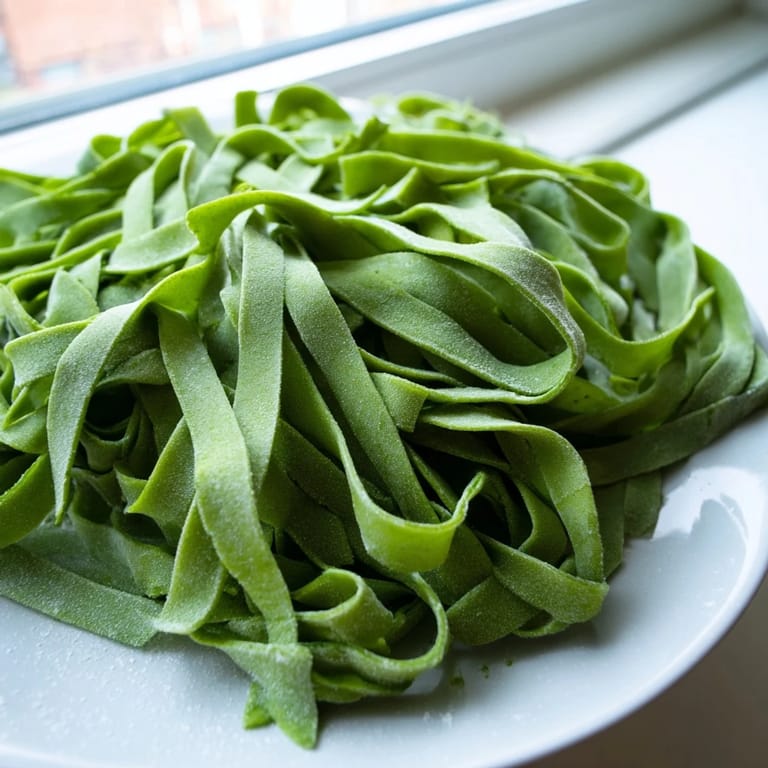
 The kitchen windows were streaked with condensation as I stood at the counter, arms dusted with flour, working emerald-flecked pasta dough beneath my palms. My first attempt at spinach pasta came after finding bundles of vibrant greens at the farmers market that were simply too beautiful to resist. The transformation from bright leaves to silky green dough felt like kitchen alchemy – not just adding color, but infusing the pasta with something fresh and vital.
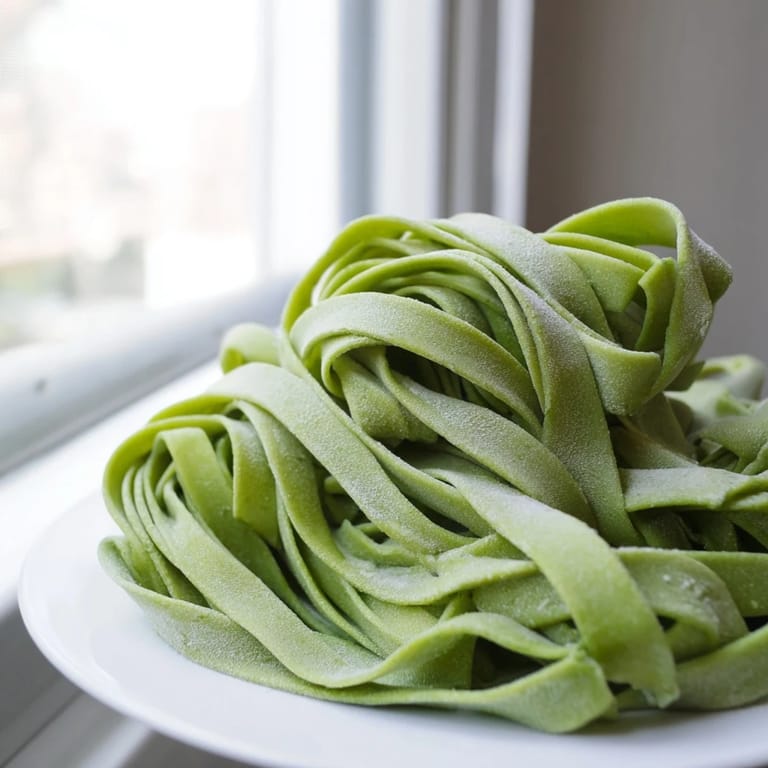
Last spring, I made this spinach pasta for my sister who swore she didnt care for homemade pasta, claiming it was too much fuss. As I draped the freshly cut fettuccine over a wooden spoon to dry, she snagged a raw strand, took a nibble, and raised her eyebrows in surprise. By the time we sat down to eat, she was already planning which pasta shapes to try with the leftover dough. Sometimes the simplest ingredients create the most profound conversions.
Ingredients
- 100g fresh baby spinach: The younger leaves give a sweeter flavor and brighter color – I learned the hard way that mature spinach can turn the pasta slightly bitter.
- 200g Italian 00 flour: This superfine flour creates the silkiest texture – regular all-purpose works in a pinch, but the difference in tenderness is noticeable.
- 50g semolina flour: This gives your pasta that authentic restaurant bite and helps it hold sauces better – I sometimes run my fingers through it just for that satisfying gritty texture.
- 2 large eggs: Farm-fresh eggs with bright orange yolks will give your pasta an even more vibrant color and richness that supermarket eggs cant match.
- ½ tsp fine sea salt: Dont skip this – it wakes up the subtle flavor of the spinach and makes the dough taste properly seasoned rather than flat.
Tired of Takeout? 🥡
Get 10 meals you can make faster than delivery arrives. Seriously.
One email. No spam. Unsubscribe anytime.
Instructions
- Prepare the spinach:
- Bring water to a rolling boil and drop in your spinach just until it surrenders into bright green wilted leaves – about 30 seconds is all it takes. Immediately plunge it into cold water to preserve that color, then squeeze it between your palms until no more water drips out.
- Create the emerald puree:
- Chop the spinach finely or blitz it in your food processor until it becomes a smooth, intense green paste. This even distribution will give your pasta that beautiful marbled appearance throughout.
- Form your well:
- On a clean countertop, create a mountain of your flour mixture with salt, then form a crater in the center large enough to hold your eggs and spinach. This volcano method feels dramatic but keeps everything contained as you begin mixing.
- Begin the incorporation:
- Crack eggs into the well along with your spinach puree, and use a fork to slowly incorporate the flour from the inner walls of your well. Work patiently – rushing this step can lead to a flour avalanche and escaped eggs.
- Develop the dough:
- Once a shaggy mass forms, dive in with your hands and knead with the heels of your palms for a full 8-10 minutes until the dough transforms from rough to silky smooth. The dough should feel alive under your hands, springing back when pressed.
- Rest period:
- Wrap your dough ball tightly in plastic – I find pressing it into a disc shape rather than a ball helps it rest more efficiently. Let it sit at room temperature for 30 minutes while the gluten relaxes and the flour fully hydrates.
- Roll with patience:
- Whether using a machine or rolling pin, work with small portions of dough at a time, keeping the rest covered to prevent drying. Roll to your desired thickness – I prefer mine on the thinner side for more delicate pasta shapes.
- Cook briefly:
- Fresh pasta needs just a minute or two in rapidly boiling salted water. Watch carefully – the moment it floats to the surface and gains that tender-but-chewy texture, its ready.
 Save to Pinterest
 During a small dinner gathering last winter, I brought out a platter of spinach fettuccine tossed simply with brown butter and sage. The table fell momentarily silent as everyone twirled those verdant strands around their forks. My neighbor, usually quick with conversation, paused mid-bite and simply said, This tastes like the color green. Sometimes food transcends mere sustenance and becomes a shared moment of sensory delight.
Storage and Make-Ahead Tips
The first time I made this dough in advance for a dinner party, I discovered it developed even deeper flavor overnight in the refrigerator. Now I intentionally make it a day ahead when possible, keeping it tightly wrapped in plastic to prevent drying. For longer storage, you can freeze the dough in portion-sized discs or even freeze the cut pasta on a flour-dusted tray before transferring to containers – it cooks beautifully straight from frozen in just an extra minute or two.
Perfect Pairings for Spinach Pasta
Through much delicious experimentation, Ive found that spinach pasta pairs beautifully with sauces that complement rather than overwhelm its subtle flavor. A classic brown butter and sage sauce lets the pasta itself be the star. Cream-based sauces with mushrooms create an earthy harmony, while simple olive oil, garlic, and a shower of freshly grated Parmesan allow the spinach flavor to shine through. For something unexpected, a light lemony ricotta sauce creates a bright contrast to the verdant noodles.
Troubleshooting Your Dough
The first few times making pasta can feel like a science experiment gone wonderfully right – or occasionally wrong. If your dough feels too dry and crumbly, resist adding too much water at once – just dampen your hands slightly and continue kneading. For dough thats too sticky, dust your work surface with additional flour a little at a time. The perfect dough should feel smooth and slightly tacky but not actually stick to your fingers or the counter.
- If your pasta tears while rolling, the dough likely needs more kneading to develop the gluten structure, or it may have dried out during resting.
- For pasta that clings together after cutting, dust it more generously with flour and gently separate the strands before cooking.
- When the edges of your pasta sheets look ragged or uneven, fold and re-roll that section to create a cleaner edge before cutting.
 Save to Pinterest
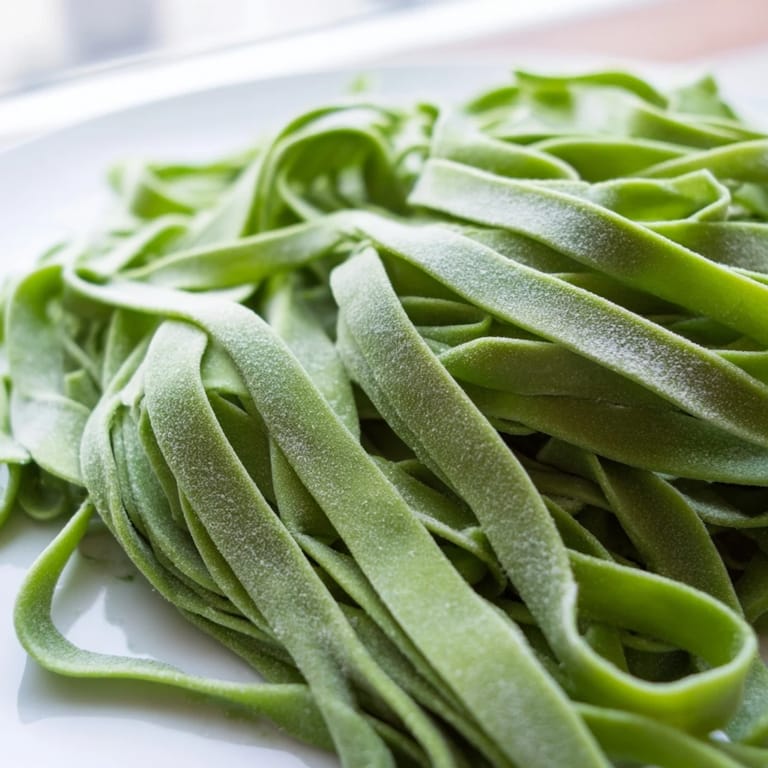
 Theres something deeply satisfying about transforming simple ingredients into something as beautiful and nourishing as this spinach pasta. Each time I make it, I feel connected to generations of Italian nonnas who perfected this craft long before pasta machines and food processors made it easier for the rest of us.
Frequently Asked Questions
- → How do I remove excess moisture from the spinach?
After blanching and rinsing the spinach under cold water, squeeze it firmly in your hands multiple times to remove as much moisture as possible. You can also wrap it in a clean kitchen towel and press gently. This prevents the dough from becoming too wet.
- → Can I make the dough ahead of time?
Yes, the dough can be made up to 24 hours in advance. Wrap it tightly in plastic wrap and store it in the refrigerator. Allow it to come to room temperature for about 15 minutes before rolling and shaping.
- → What's the difference between Italian 00 flour and semolina?
Italian 00 flour is finely milled and creates silky, tender pasta with excellent texture. Semolina flour is coarser and adds grip and structure, preventing stickiness. Using both creates the ideal balance, though 00 flour alone works well.
- → How long does fresh spinach pasta cook?
Fresh pasta cooks quickly, typically in 1-2 minutes in boiling salted water. Test for doneness by tasting—it should be tender but still firm to the bite, or al dente. Fresh pasta cooks much faster than dried pasta.
- → Can I substitute spinach with other greens?
Absolutely. You can use blanched kale, chard, nettles, or other leafy greens. Ensure they're well-squeezed and finely blended. Adjust the quantity if using heartier greens, as they may be more intense in flavor.
- → What should the dough consistency feel like?
Properly kneaded dough should be smooth, elastic, and slightly firm to the touch. It shouldn't stick to your hands, but a light dusting of flour is normal. If it feels sticky, add a little flour; if too dry, add water one drop at a time.