 Save to Pinterest
 My neighbor Marco showed up at my door one evening with a jar of San Marzano tomatoes and a grin, insisting I needed to stop making arrabbiata on the stovetop like I was afraid of commitment. He marched into my kitchen, commandeered my best baking dish, and within an hour, the whole building smelled like burning garlic and possibility. That night taught me that sometimes the best cooking happens when someone confident enough to break your routine walks in uninvited.
I made this for my sister's book club three months ago, and I'm still getting texts asking for the recipe—not the fancy version they expected, just this one, the baked one, because apparently it's what people actually want to eat when they're laughing with friends and not worrying about perfect plating. Watching them scrape the last bits of melted cheese from the sides of the dish told me everything I needed to know about whether this counted as a success.
Ingredients
- Penne pasta (350 g): The tubes catch sauce beautifully in the oven, better than long pasta would; buy the box that cooks in 10-12 minutes, not the fancy artisanal kind that tastes like cardboard.
- Olive oil (2 tbsp): Medium quality is fine—save the expensive bottles for drizzling, use something honest and straightforward that can handle heat.
- Garlic (4 cloves, finely chopped): Fresh matters here; jarred garlic tastes tinny and bitter once baked, and you'll regret it.
- Crushed red pepper flakes (1–2 tsp): Start with one teaspoon unless you like your food fighting back; you can always add fire later, but you can't remove it.
- Canned crushed tomatoes (800 g): San Marzano if you can find them, but any good quality crushed tomato works—avoid sauce labeled as "pasta sauce" because it's already seasoned for someone else's taste.
- Sugar (1 tsp): A small spoonful mellows the acidity of tomatoes and makes the whole dish taste rounder, less sharp.
- Dried oregano (1 tsp): Not fresh here; dried oregano holds its flavor through baking while fresh basil would turn bitter.
- Salt and pepper (½ tsp salt, ¼ tsp black pepper): Season as you go, not all at the end—taste the sauce before it hits the pasta.
- Fresh basil (1 small bunch): Tear it by hand instead of cutting; chopping releases oils and makes it taste metallic.
- Parmesan cheese (80 g, grated): Buy a wedge and grate it yourself if you have fifteen seconds; pre-grated tastes waxy and won't melt as smooth.
- Mozzarella cheese (150 g, shredded): Low-moisture mozzarella browns better than fresh; high-moisture releases water and your sauce gets soupy.
Tired of Takeout? 🥡
Get 10 meals you can make faster than delivery arrives. Seriously.
One email. No spam. Unsubscribe anytime.
Instructions
- Set your oven to welcome the dish:
- Preheat to 200°C (400°F) and grease your baking dish with a light hand—you want protection from sticking, not a pool of oil.
- Get the pasta almost there:
- Boil salted water like you're making pasta normally, but pull the penne out two minutes early, when it still has a tiny resistance in the center. It's going to finish cooking in the oven surrounded by hot sauce and melting cheese, so underdone now means perfect later.
- Build your spicy base:
- Heat olive oil over medium warmth and listen for it to shimmer. Add garlic and pepper flakes together, let them sizzle for just a minute or two until the smell hits you like a small Italian slap—the second it smells alive instead of raw, move forward.
- Let the tomatoes become something better:
- Dump in your crushed tomatoes along with sugar, oregano, salt, and pepper. Keep the heat medium and let it bubble gently for 10–12 minutes, stirring when you think about it. The sauce will darken slightly and lose that tinny canned taste.
- Finish with fresh green life:
- Pull off the heat and stir in your torn basil, holding back a small handful for garnish.
- Marry pasta and sauce:
- Toss your drained penne with the sauce until every piece is coated and happy. If it looks a little wet, that's correct; the pasta will absorb some liquid in the oven.
- Build the layers:
- Spread half your saucy pasta into the prepared baking dish. Sprinkle half the Parmesan and mozzarella over top like you're tucking them in. Add the remaining pasta as your second layer, then crown it with the final cheeses.
- Let the oven do the transforming:
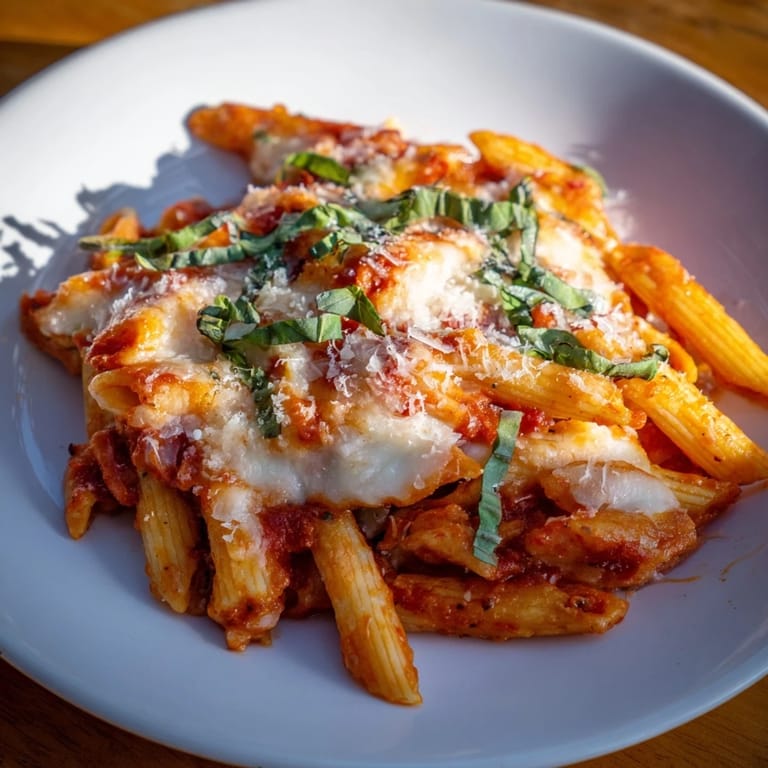
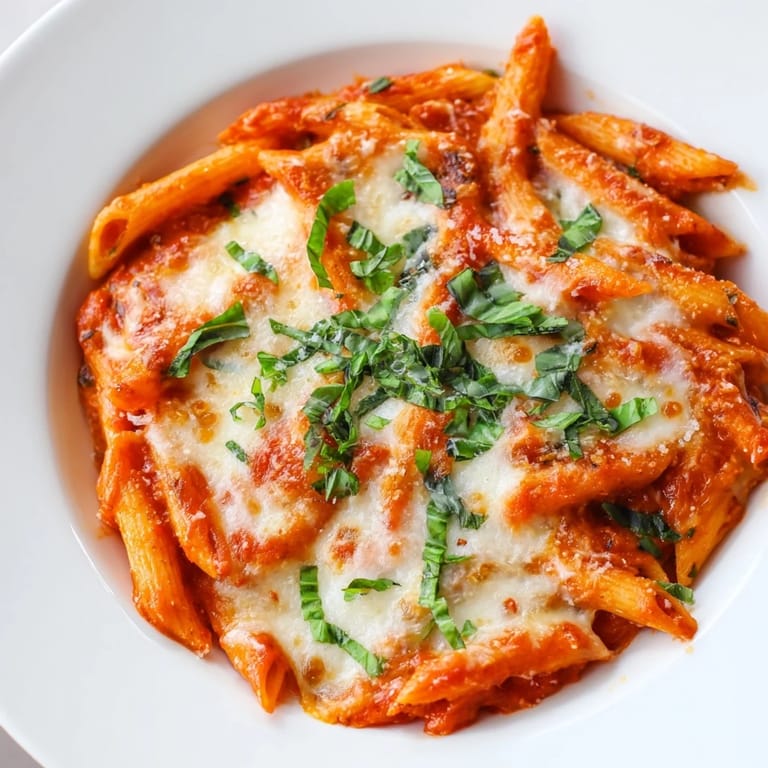
- Bake for 18–20 minutes until the cheese is melted, bubbling at the edges, and golden brown on top. The exact time depends on your oven's temperament, so start checking at 16 minutes.
- Rest and serve with ceremony:
- Let it sit for five minutes so it firms up just enough to scoop without collapsing. Scatter your reserved basil on top, breathe in the moment, and serve it hot straight from the dish.
 Save to Pinterest
 The first time someone told me they'd made this dish five times in three weeks, I understood that we weren't just talking about pasta anymore—we were talking about something reliable enough to make on a Tuesday, impressive enough to serve on a Friday, and comforting enough to want when everything else feels uncertain.
The Art of Balancing Heat and Comfort
Arrabbiata means angry in Italian, but this baked version isn't actually angry—it's warm and generous and only as fiery as you want it to be. The red pepper flakes announce themselves in the first bite, but the cheese and tomato sauce wrap around that heat like a soft blanket, making the whole thing feel less like a challenge and more like a friend who's spirited but kind. If you like your food bold, start with two teaspoons of flakes; if you're cautious, one teaspoon is enough to be interesting without being aggressive.
Why Baking Changes Everything
Cooking pasta in sauce on the stove is wonderful, but baking it in a dish with cheese on top brings something different—the pasta softens gradually while the cheese edges crisp and brown, the sauce concentrates and darkens slightly, and the whole thing becomes more unified, more intentional. It's the difference between cooking dinner and creating a moment, between something that happened and something you remember.
Making It Yours
This recipe is a foundation, not a prison. I've made it with roasted bell peppers stirred in, with fresh mushrooms sautéed alongside the garlic, with a handful of spinach folded into the finished sauce—each version taught me something different about what arrabbiata could become. The character of the dish never changes; only the details shift based on what's in your kitchen or what you're craving that week.
- Add sautéed mushrooms, roasted red peppers, or wilted spinach for vegetables that feel intentional, not tacked on.
- Substitute the mozzarella with provolone, fontina, or even a sharp cheddar if you want the cheese to announce itself rather than blend in.
- Make it spicier by adding a pinch of chili powder to the sauce or more red pepper flakes, then let everyone know what they're walking into.
 Save to Pinterest
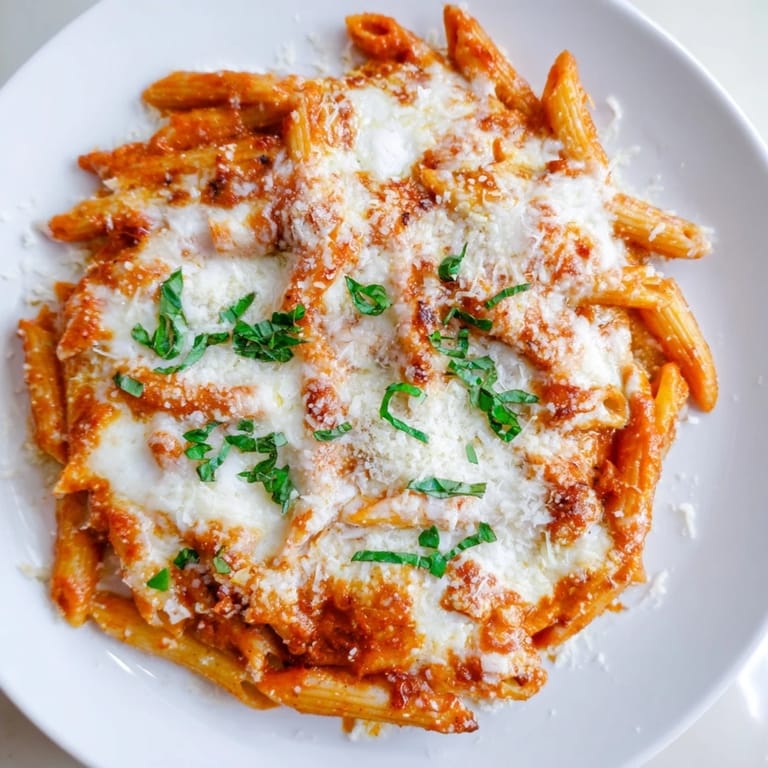
 This dish becomes more beautiful the more you make it, because you stop overthinking the steps and start tasting as you go, adjusting the heat and the salt and the basil until it becomes less like following instructions and more like having a conversation with someone who's been cooking this their whole life.