 Save to Pinterest
 The first time I held a sheep's stomach in my hands, I wasn't sure if I was brave or foolish. My Scottish grandmother stood beside me in her kitchen, matter-of-fact as always, explaining that haggis wasn't something to fear but to understand—a dish born from respect and resourcefulness, where nothing goes to waste. That day changed how I saw food entirely. Now, whenever I make haggis, I feel that same mix of reverence and curiosity, knowing I'm cooking something with centuries of stories built into every spoonful.
I'll never forget the Burns Supper when I served my homemade haggis to a table of skeptics. A woman across from me—someone who'd always wrinkled her nose at the very mention of it—took a second helping without a word. Afterward, she asked for the recipe with genuine curiosity instead of polite dismissal. That's when I realized haggis isn't really about the ingredients; it's about proving that tradition and flavor go hand in hand.
Ingredients
- Sheep's heart, liver, and lungs (500 g): The soul of authentic haggis—if you can't find these, quality lamb or beef mince works, though you'll lose some of that distinctive depth. Ask your butcher in advance; they often have it frozen.
- Beef or lamb suet (200 g, finely chopped): This fat is what makes haggis silky and rich. Don't skip it or substitute butter; the texture depends on suet's higher melting point.
- Optional lamb or beef mince (300 g): Adds body and makes the texture less dense if you're new to offal.
- Steel-cut oats, toasted (150 g): Toasting them first brings out a subtle nuttiness that transforms the whole dish. Don't use rolled oats—they'll turn to mush.
- Onions, finely chopped (2 medium): Cook them gently until soft before adding; raw onions can overpower the spices.
- Beef stock (250 ml): Use proper stock, not bouillon cubes, if you can. The depth matters here.
- Spices (black pepper, coriander, nutmeg, allspice): These proportions are traditional, but start conservative if you're hesitant—you can always taste and adjust as you go.
- Salt (1½ tsp): Trust this amount; it balances the richness and wakes up all the flavors.
- Sheep's stomach or sausage casing: A pudding basin works perfectly fine if casings intimidate you—the result is equally delicious.
- Potatoes and turnips (500 g each): Waxy potatoes hold their shape better than floury ones when mashing.
- Butter (50 g): Unsalted is best so you control the seasoning completely.
Tired of Takeout? 🥡
Get 10 meals you can make faster than delivery arrives. Seriously.
One email. No spam. Unsubscribe anytime.
Instructions
- Prepare the offal gently:
- Rinse everything thoroughly under cold running water—this removes any lingering bitterness. Pop it in a large pot, cover with cold water, and bring it to a boil, then turn it down to a gentle simmer for 1–2 hours until completely tender. The kitchen will smell earthy and iron-rich; that's exactly right. Reserve 250 ml of that cooking liquid if you want extra depth of flavor.
- Build the base:
- Once the offal has cooled enough to handle, mince it as finely as you can—a food processor makes this easier. In a large bowl, combine the minced offal, chopped suet, toasted oats, softened onions, and optional mince. Mix gently with your hands until everything is evenly distributed; you'll feel the texture transform as the suet starts to coat everything.
- Season with intention:
- Pour in your beef stock and reserved cooking liquid, then sprinkle in all the spices and salt. Mix thoroughly, tasting as you go—the mixture should taste bold and slightly salty, because the liquid will dilute it slightly during cooking. It should be moist and cohesive but not wet enough to slump off a spoon.
- Fill the casing:
- If using a sheep's stomach or sausage casing, rinse it well under cold water and fill it loosely with the mixture, leaving about an inch of space at the top for expansion. Tie the ends securely with kitchen twine, making sure it's snug but not so tight it'll burst. If using a pudding basin, simply spoon the mixture in and cover the top tightly with foil.
- Water-bath cooking:
- Place your filled casing or basin in a large pot and pour in enough boiling water to come halfway up the sides—it should never cover the top, or water will seep in. Simmer gently for exactly 2 hours, checking the water level every 30 minutes and topping it up if needed. The haggis will bob slightly as it cooks, releasing its rich aroma.
- Cook the sides:
- While the haggis simmers, boil your cubed potatoes and turnips in separate pots until completely tender, about 20–25 minutes. Drain them well, then mash each one separately with half the butter, seasoning generously. The potatoes should be creamy, the turnips should be smooth and slightly sweet.
- Rest and serve:
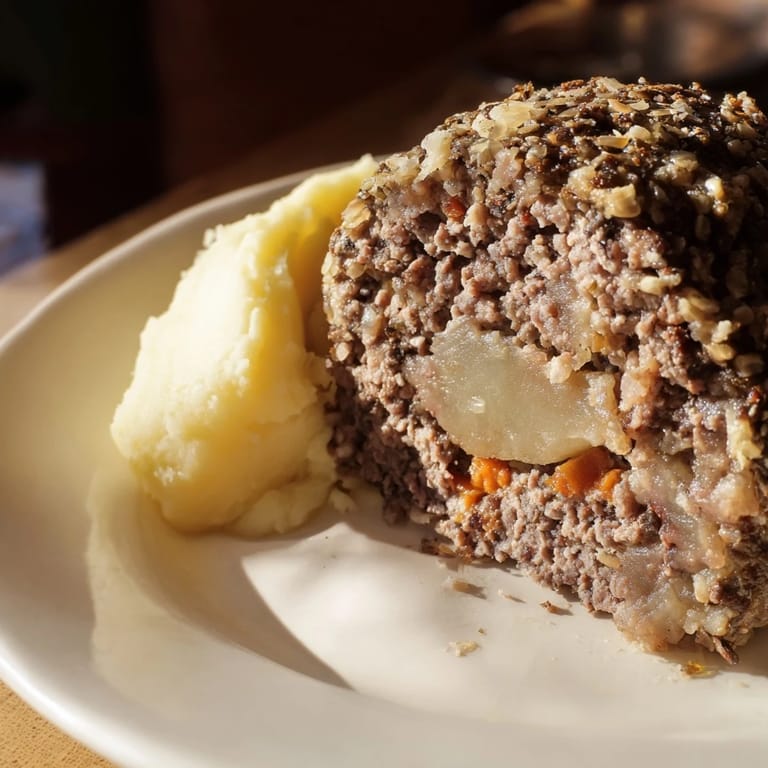
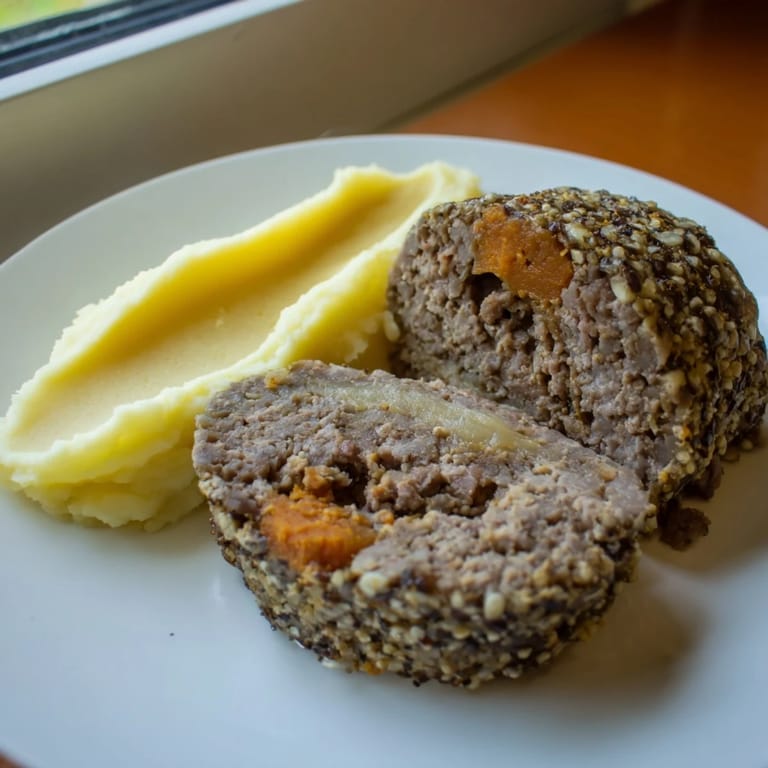
- Carefully lift the haggis from the water and let it rest for 5 minutes—this helps it hold its shape when you open it. Slice it open lengthwise or cut it into wedges, depending on your casing. Pile the neeps and tatties on warm plates alongside it, and serve immediately while everything is steaming.
 Save to Pinterest
 Years ago, my uncle bit into his portion of my homemade haggis and actually closed his eyes for a moment. When he opened them again, he said it tasted like his grandmother's—the one he hadn't eaten in thirty years. That's when I understood that cooking this dish wasn't just about following a recipe; it was about carrying forward something sacred.
The Story Behind Haggis
Haggis is one of those dishes that sounds wild until you understand its origins. In a time when nothing could be wasted, Scottish cooks took the parts of the animal that others discarded—the heart, liver, lungs—and turned them into something that tastes nothing like offal alone. The spices warm you from the inside, the oats give it a comforting texture, and the suet makes it feel almost luxurious. It's peasant food elevated by technique and respect for ingredients. Every culture has dishes like this—they're proof that the best cooking comes from necessity and creativity, not expensive ingredients.
Making It Your Own
You don't have to follow this recipe exactly, and honestly, the best cooks don't. If offal truly isn't your thing, a combination of quality lamb and beef mince works perfectly fine—it won't be traditional, but it'll be delicious. Some people add a splash of whisky to the mixture, others swear by a pinch of cayenne for warmth. I've seen versions with dried herbs, versions with extra suet for richness, versions where the onions are cooked until they're nearly caramelized. The skeleton of the recipe stays the same, but the soul of it is flexibility.
Serving and Pairings
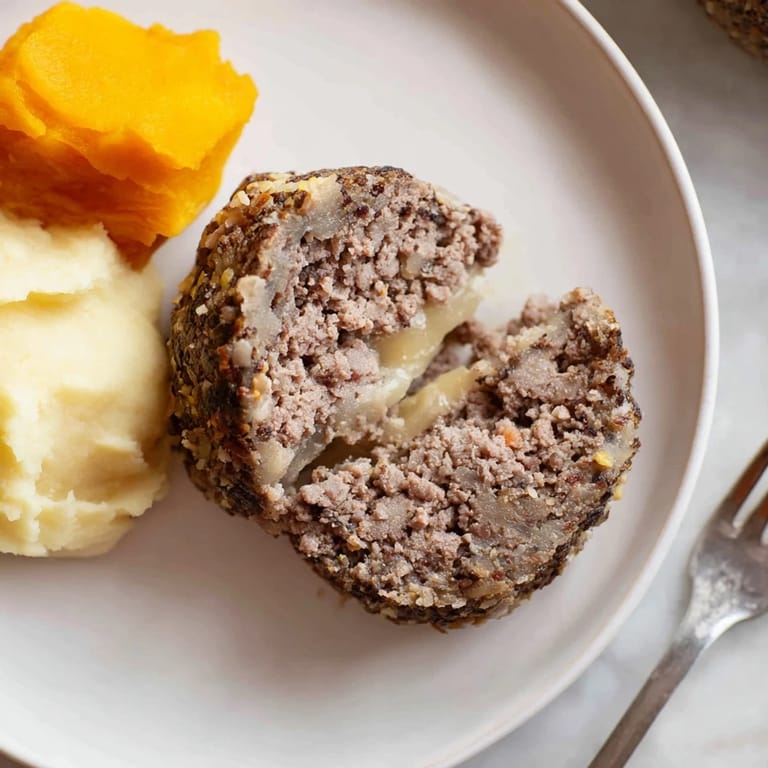
Haggis is best served hot with those perfectly buttered neeps and tatties—that's the traditional way, and there's a reason it never changes. Beyond that, a warm whisky cream sauce drizzled over the top is absolutely transformative if you're feeling fancy. The sauce is simple: just cream, a good splash of whisky, and a pinch of salt, warmed together until it's silky. Some people serve haggis with a dollop of mustard on the side, others with chutney. The point is to let the haggis be the star and let everything else complement it.
- Make extra neeps and tatties—people always want more than they expect to.
- Whisky cream sauce takes five minutes and elevates the whole meal instantly.
- Haggis reheats beautifully the next day, sliced and warmed gently in a pan with a little butter.
 Save to Pinterest
 Every time I make haggis, I think of all the hands that came before me who made this dish without questioning it, who understood that eating well means respecting every part of what we cook. That's what stays with me about this recipe.
Frequently Asked Questions
- → What cuts of meat are traditionally used in this dish?
Traditional offal includes sheep's heart, liver, and lungs, though substitutes like lamb or beef mince can be used for texture.
- → How do I prepare the casing for cooking?
Rinse the sheeps stomach or sausage casing thoroughly, then fill loosely with the mixture to allow for expansion during simmering.
- → What side dishes accompany this preparation?
Classic accompaniments are mashed neeps (turnips) and tatties (potatoes), seasoned with butter, salt, and pepper.
- → Can I make a vegetarian version?
Yes, substitute meats with pulses, mushrooms, and vegetable suet to maintain texture and flavor balance.
- → How long should it simmer to develop flavor?
Simmer gently for about 2 hours, ensuring the water level is maintained to cook evenly and preserve moisture.
- → Is there a recommended sauce pairing?
Whisky cream sauce is a popular accompaniment that enhances the depth of flavors without overpowering the dish.