 Save to Pinterest
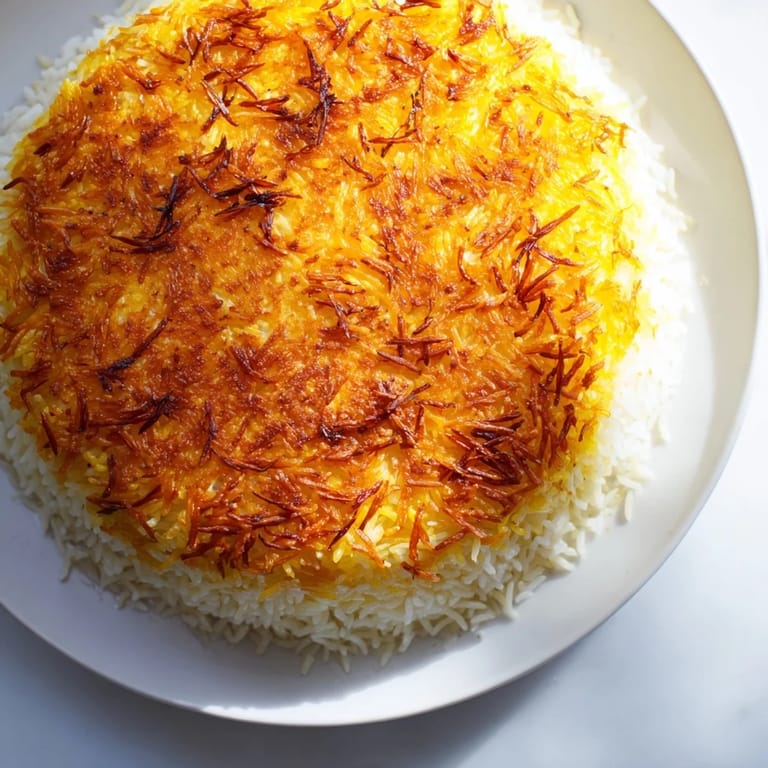
 The first time I watched tahdig being made, I was mesmerized by the sound—that gentle sizzle as the rice hit the hot oil, followed by the unmistakable crackling of the crust forming underneath. A friend's mother in Tehran had invited me into her kitchen, and she moved with such calm certainty, explaining that tahdig wasn't just a side dish, it was the treasure at the bottom of the pot, the reason people gathered around her table. Years later, I finally understood: that golden, crispy layer isn't an accident; it's the whole point.
I remember bringing tahdig to a potluck and watching people's faces light up as they bit through that crispy exterior into the fluffy rice below—one guest actually closed her eyes and asked what I'd done differently. I hadn't done anything fancy, just trusted the process and let the bottom of the pot work its magic. That's when I realized tahdig isn't complicated; it's just rice that knows how to make an entrance.
Ingredients
- Basmati rice, 2 cups: The long grains stay separate and won't get mushy; this matters more than you'd think because sticky rice won't form the crust you want.
- Salt, 1 tablespoon (for soaking): This seasons the rice evenly and helps each grain absorb water more consistently during the soak.
- Saffron threads, 1/4 teaspoon: They're expensive for a reason—steep them properly and they'll color and flavor the entire dish with just a whisper of themselves.
- Plain Greek yogurt, 4 tablespoons: The yogurt creates the tahdig base and browns beautifully; it's the secret ingredient that makes this crust so special.
- Vegetable oil, 2 tablespoons plus extra for pan: You need enough fat to get the heat high enough for that crust, but not so much that everything becomes greasy.
- Unsalted butter, 2 tablespoons melted: The combination of oil and butter is key—butter adds richness and flavor, oil provides the higher smoke point you need.
- Ground turmeric, 1/2 teaspoon (optional): If you add it, use a gentle hand; turmeric can overpower if you're heavy-handed.
- Black pepper, 1/2 teaspoon: A small amount adds depth without making the dish feel spiced.
Tired of Takeout? 🥡
Get 10 meals you can make faster than delivery arrives. Seriously.
One email. No spam. Unsubscribe anytime.
Instructions
- Rinse and soak the rice:
- Run cold water over the rice in a fine sieve until the water clears—you're washing away excess starch so each grain can stay distinct. Soak it for at least 30 minutes in salted water; this step makes a real difference in how fluffy the final rice becomes.
- Parboil until just tender:
- Boil the drained rice in fresh water for 5 to 6 minutes—you want it barely tender, still with a hint of resistance when you bite it. This takes practice; too long and you'll have mush, too short and it'll be crunchy when you invert the pot.
- Steep the saffron:
- Crush the threads gently between your fingers as you add them to hot water, then wait 10 minutes for the magic to happen. The water will turn golden and smell like warmth itself.
- Make the tahdig base:
- Mix yogurt with saffron water, turmeric if using, and about a cup of the parboiled rice—stir gently so you don't break the grains. This mixture will be your crispy crust, so think of it as a foundation you're laying carefully.
- Heat oil and butter together:
- Combine them in a heavy-bottomed pot over medium heat and let them warm until you can smell the butter beginning to brown slightly. You want the pan hot enough that the yogurt mixture will sizzle slightly when it hits.
- Spread the tahdig base:
- Pour the yogurt-rice mixture evenly across the bottom of the pot and let it sit undisturbed for a moment. This layer is going to be the star, so give it space to begin its transformation.
- Layer the remaining rice:
- Gently mound the rest of the rice over the yogurt layer, drizzle with remaining saffron water, and poke a few holes with a wooden spoon handle for steam to escape. The holes are crucial—they let moisture out without the rice drying completely.
- Cover and cook low and slow:
- Wrap the lid in a clean kitchen towel, set it on the pot tightly, and cook on medium for 10 minutes, then lower the heat to low for 35 to 40 minutes. The towel traps steam and helps the tahdig form without burning; you'll hear a gentle crackle near the end, which is exactly what you want.
- Rest and invert:
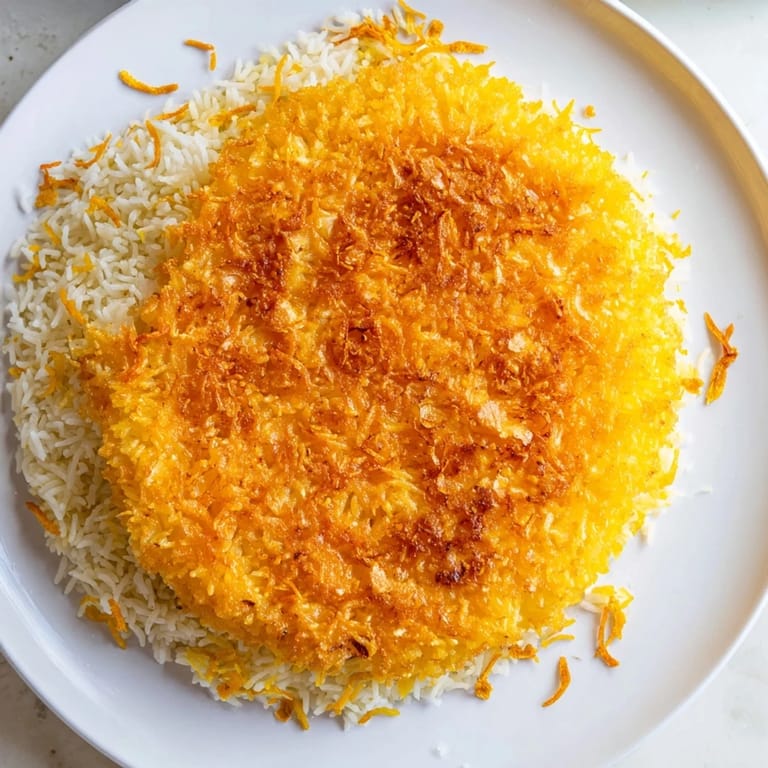
- Let the rice sit for 5 minutes off the heat, then place your serving platter over the pot and flip it carefully and confidently. That moment when the tahdig comes away from the pot intact is the payoff for all your patience.
 Save to Pinterest
 There's a moment, right after you invert the pot and the tahdig slides onto the platter whole and golden, when you feel like a magician. I've made this dozens of times now, and that feeling never gets old—that crispy layer catches the light, and suddenly dinner feels like a celebration.
Why Tahdig Matters in Persian Cooking
In Persian kitchens, tahdig isn't a mistake or something that happened by accident; it's the whole reason you're making rice at all. The technique is built on the idea that the best part of the rice should be browned and crispy, with a slightly caramelized, almost nutty flavor. This dish has been made the same way for centuries because it works—the combination of technique and patience creates something that's genuinely greater than the sum of its parts.
The Saffron Difference
Real saffron is expensive, and the first time I used it, I nearly fainted at the price. But one strand goes a long way, and when you steep it properly, it transforms from an ingredient into an experience—the color, the smell, the way it makes people slow down and actually taste what's in front of them. If you're going to splurge on one thing for this recipe, make it the saffron.
Variations and Serving Ideas
Once you master the basic tahdig, you can swap the yogurt layer for thinly sliced potatoes or even torn pieces of flatbread; each creates a slightly different texture and flavor. Some cooks add cinnamon or cardamom to the boiling water for extra aromatic depth, and others garnish the finished rice with barberries or fresh herbs like dill and parsley. The core technique stays the same, but these variations let you make the dish your own and keep it interesting across different meals and seasons.
- Try potato slices for an earthy variation that's especially good alongside stews and braises.
- A handful of fresh dill or parsley scattered on top adds brightness that contrasts beautifully with the richness of the tahdig.
- Barberries, if you can find them, add a tart punch that elevates the whole dish.
 Save to Pinterest
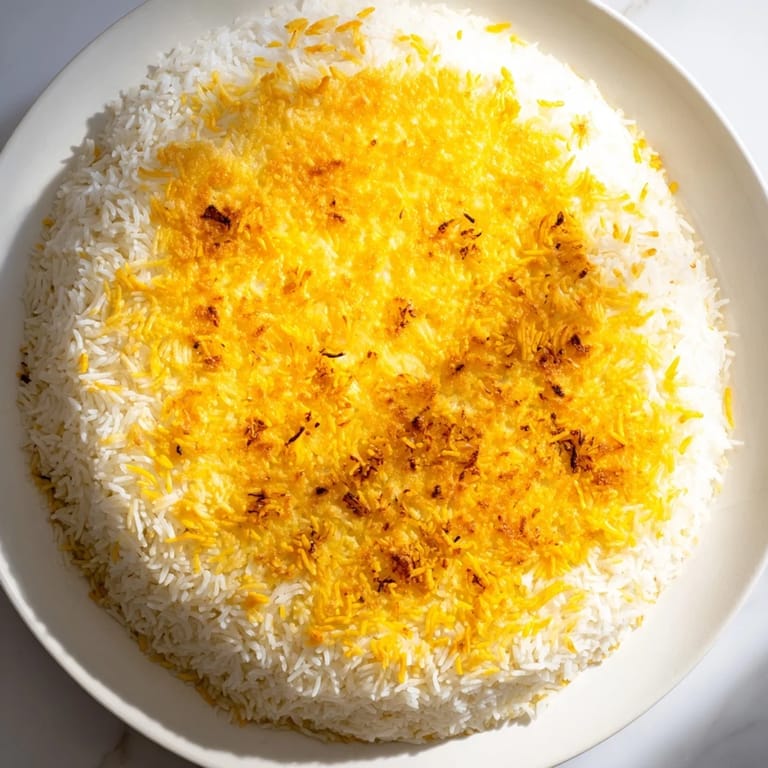
 Tahdig teaches you something important about cooking: sometimes the best things come from patience and a willingness to let heat and time do the work for you. Serve it warm, and watch your guests experience that same moment of magic I felt in that kitchen in Tehran.
Frequently Asked Questions
- → What creates the crispy crust in tahdig?
The crust forms by spreading a saffron-yogurt mixture at the pot’s bottom and cooking the rice over low heat, allowing caramelization.
- → Can I use other ingredients to make tahdig?
Yes, thinly sliced potatoes or flatbread can replace the yogurt-rice layer for varied textures and flavors.
- → How do I achieve fluffy rice above the crust?
Parboiling basmati rice until slightly firm and steam-cooking gently helps maintain a light, fluffy texture.
- → What role does saffron play in this dish?
Saffron adds a fragrant aroma, vibrant golden color, and subtle floral notes enhancing both crust and rice layers.
- → Can this dish accommodate dietary restrictions?
It is vegetarian and gluten-free but contains dairy from yogurt and butter; adjust accordingly if needed.