 Save to Pinterest
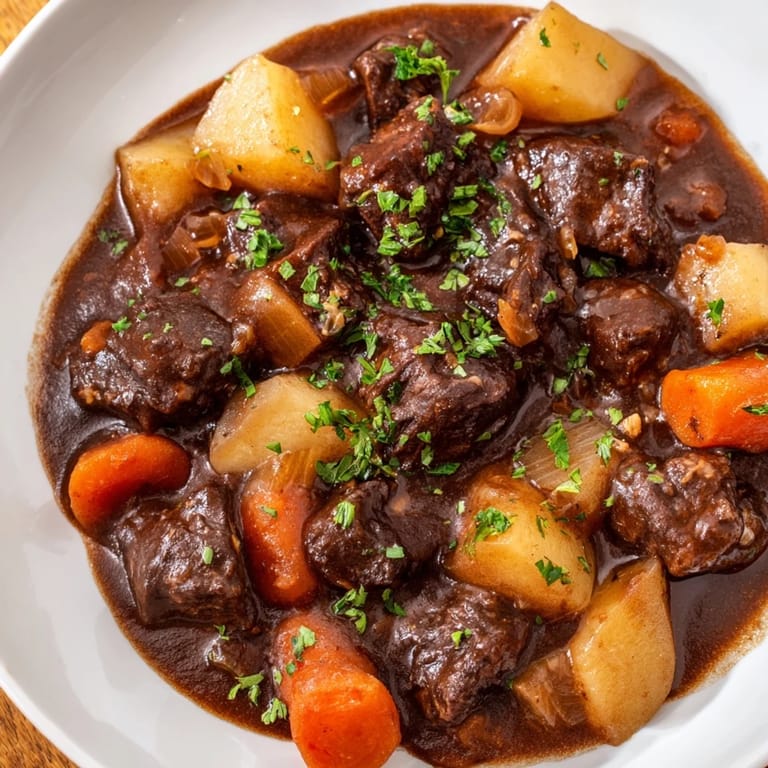
 There's something about Irish beef stew that stops time. I learned to make it on a grey afternoon when my neighbor threw open her kitchen door and gestured at a massive pot already bubbling away, inviting me to watch and learn. The smell that escaped—dark beef, sweet onions, and something earthy from the potatoes—was so welcoming that I stayed for three hours. By the end, I understood why this dish has fed families through Irish winters for generations.
I made this for my partner on the first truly cold evening of autumn, the kind where you can see your breath and suddenly hot soup doesn't seem excessive anymore. We sat at the kitchen table while it simmered, playing cards with the oven heating the whole house. When we finally ate, it was past 9 p.m., but neither of us wanted the meal to end.
Ingredients
- Beef chuck (1.5 kg / 3.3 lbs), cut into 2-inch cubes: This cut has just enough marbling and connective tissue that it becomes meltingly tender after slow cooking; avoid leaner cuts that dry out.
- Potatoes (4 large), peeled and cut into chunks: Waxy potatoes like Yukon Gold hold their shape better than floury ones, though a few floury ones stirred in at the end will thicken the broth naturally.
- Carrots (4 large), peeled and sliced: Cut them on a slight bias so they cook evenly and look a bit more inviting on the spoon.
- Onions (2 large), chopped: The longer they cook, the sweeter they become, adding depth without needing extra sugar.
- Celery stalks (2), sliced: This is the secret to a stew that tastes like it's been simmering all day, even if it hasn't.
- Garlic (3 cloves), minced: Add it after the onions have softened or it turns bitter and harsh.
- Beef stock (1.2 liters / 5 cups): Homemade is best, but good quality store-bought works; avoid anything labeled 'broth' as it's usually thinner and less flavorful.
- Guinness stout or dark beer (330 ml / 1 bottle, optional): It adds a slight bitterness and depth that makes people ask what your secret ingredient is; if you skip it, add an extra splash of Worcestershire instead.
- Tomato paste (2 tbsp): Cooking it for a minute in the pot deepens its flavor before you add liquid.
- Worcestershire sauce (2 tbsp): This is what separates a decent stew from one people remember; don't skip it.
- Bay leaves (2): Remember to fish them out before serving or your guests will find one in their spoon.
- Dried thyme (1 tsp): Fresh thyme wilts and disappears; dried holds up to the long cooking time.
- Dried rosemary (1 tsp): This herb can easily overpower if you're heavy-handed, so measure carefully.
- Salt and freshly ground black pepper: Taste as you go near the end because the stew concentrates as it simmers.
- Vegetable oil (3 tbsp): You need a high smoke point so the beef actually browns instead of steaming.
- Fresh parsley (2 tbsp), chopped: Stir some into the pot at the very end for brightness, and use the rest for garnish.
Tired of Takeout? 🥡
Get 10 meals you can make faster than delivery arrives. Seriously.
One email. No spam. Unsubscribe anytime.
Instructions
- Dry and season the beef:
- Pat your beef cubes very dry with paper towels—this is the one step that makes the difference between a stew with deep mahogany color and one that looks pale and poached. Season generously with salt and pepper.
- Sear the beef in batches:
- Get your oil hot enough that it shimmers, then let each piece sit undisturbed for a minute or two before stirring; you want a crust, not gray cubes. Do this in batches so you don't crowd the pot.
- Build your aromatic base:
- Cook the onions and celery until they're soft and the onions turn translucent at the edges, then add the garlic and let it wake up for just a minute. This whole process should smell so good you'll want to inhale directly from the pot.
- Bloom the tomato paste:
- Stir it into the hot pan and let it toast for a minute; this removes the raw, tinny taste and makes it taste intentional.
- Deglaze with beer if using:
- Pour in the Guinness and scrape the bottom of the pot with your wooden spoon, getting all those caramelized bits that taste like pure beef. The liquid will hiss and bubble—that's exactly what you want.
- Combine everything and simmer:
- Return the beef to the pot, add the potatoes, carrots, herbs, stock, and Worcestershire sauce, then bring everything to a gentle boil before turning the heat down. You want a slow, quiet simmer that barely moves the surface, not an aggressive rolling boil that will toughen the meat.
- Cook until the beef is fork-tender:
- This takes 2 to 2.5 hours; resist the urge to rush it by cranking the heat. Stir occasionally and taste a carrot piece around the 2-hour mark—when the vegetables are so soft they almost dissolve, you're done.
- Finish and serve:
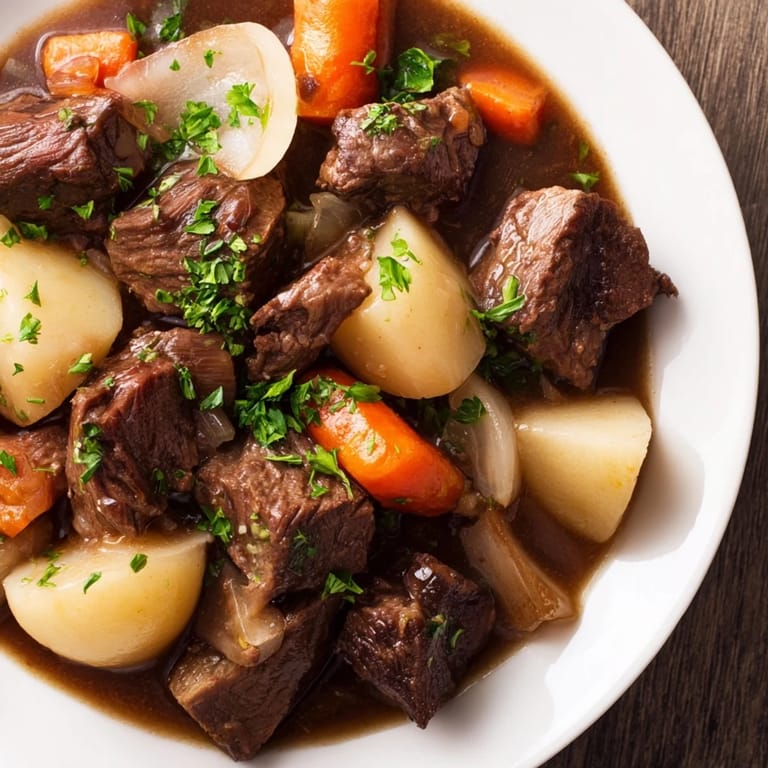
- Fish out the bay leaves, taste one more time and adjust salt and pepper, then ladle into bowls and scatter fresh parsley across the top.
 Save to Pinterest
 My grandmother used to make this stew every Sunday in winter, and the house would smell like it from morning until we sat down to eat at 6 p.m. I realized years later that she wasn't making it because it was special—she was making it because it asked almost nothing of her while she lived her day, and it gave everything back at dinner.
The Guinness Question
The first time I made this stew, I skipped the beer thinking it was optional in the traditional sense—like an extra garnish. The stew was good but it felt flat, like something was missing. The second time, I used the full bottle of Guinness, and the difference was profound: a subtle bitterness that makes your tongue want to come back for another spoonful. If you don't drink alcohol or need it gluten-free, add another tablespoon of Worcestershire sauce and a splash of red wine vinegar instead; it's not the same but it works.
Thickening Without Fuss
Some people make a beurre manié or slurry to thicken stew, but I've never needed to. If your broth seems too thin after cooking, take a few cooked potato pieces and press them against the side of the pot with your spoon, breaking them into the liquid. The starch thickens everything naturally and adds a subtle creaminess without feeling heavy. This is also why you should cut your potatoes into fairly large chunks—small ones disappear entirely into the broth.
Serving and Storing
Serve this stew in wide, shallow bowls with crusty bread for soaking or over creamy mashed potatoes. It reheats beautifully on the stovetop with a splash of water if it's thickened too much in the fridge, and it freezes well for up to three months. I've found that having containers of this in the freezer is like having a permission slip to take an evening off from cooking.
- Leftovers taste even better, so make extra without apology.
- If you want to switch it up, use lamb instead of beef for a traditional Irish lamb stew with a slightly different character.
- This stew feeds six generously, but the recipe doubles easily if you're feeding a crowd.
 Save to Pinterest
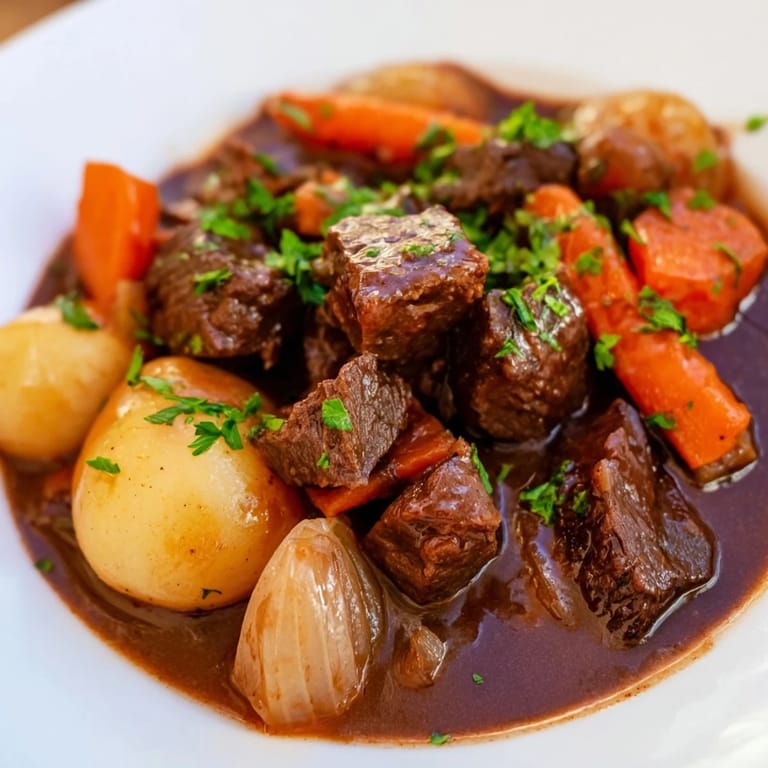
 Irish beef stew is proof that the simplest dishes often carry the most meaning. It asks only for time and good ingredients, and it repays you with warmth, full bellies, and the kind of satisfied quiet that happens when people are too busy eating to talk.
Frequently Asked Questions
- → What cut of beef works best?
Use beef chuck cut into 2-inch cubes for optimal tenderness after slow cooking.
- → Can I make this gluten-free?
Yes, omit the Guinness stout and ensure all stocks and sauces are gluten-free.
- → How do I thicken the stew broth?
Mash a few potato chunks against the pot’s side and stir them in to naturally thicken the broth.
- → What herbs enhance the flavor?
Bay leaves, thyme, and rosemary infuse earthy, aromatic notes throughout the cooking process.
- → Is it possible to substitute the meat?
Lamb can be used as an alternative for a traditional Irish variation with similar cooking times.