 Save to Pinterest
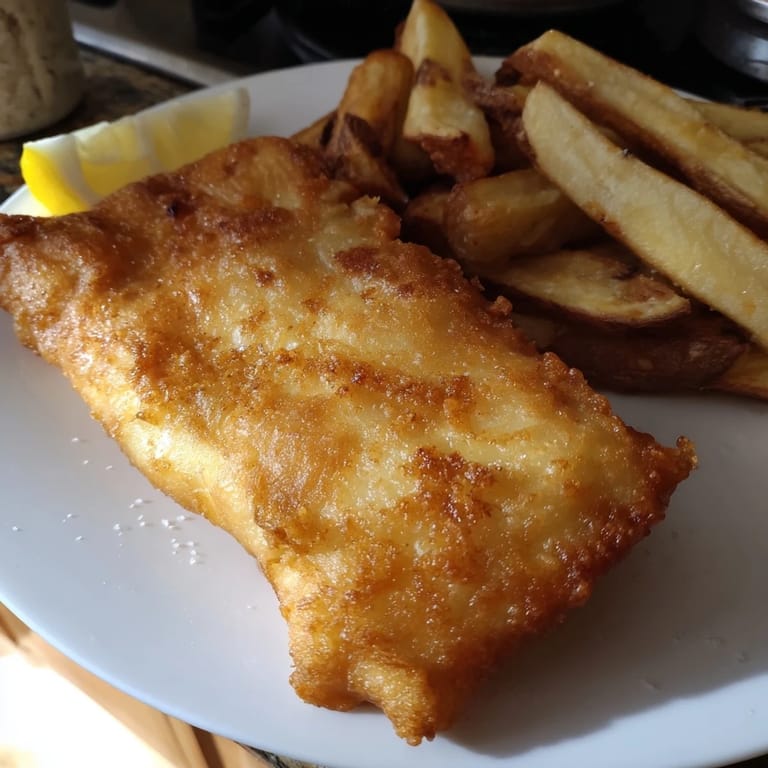
 There's something about the smell of fish frying in hot oil that instantly transports me to a seaside town I visited years ago, where an elderly woman in a paper hat handed me a cone of crispy fish and chips wrapped in newspaper still warm from the fryer. I've chased that memory ever since, and after countless attempts in my own kitchen, I've finally cracked the secret: the batter has to be ice-cold, the oil perfectly hot, and the chips need that magical double-fry technique. This is pub food at its most honest, the kind of dish that tastes even better when shared with people you actually want to eat with.
I made this for my dad last winter when he was convinced no one could match the fish and chips from the chip shop down the road, and watching him take that first bite—eyes widening slightly before he started eating faster—told me everything I needed to know about whether I'd finally gotten it right.
Ingredients
- White fish fillets (cod or haddock): These sturdy fish hold up beautifully to the batter and hot oil without falling apart; their mild flavor lets the crispy exterior shine.
- All-purpose flour and cornstarch blend: The cornstarch is the secret weapon for extra crispness—it absorbs less moisture than flour alone.
- Baking powder: This creates the tiny bubbles that make the batter light and airy instead of dense and heavy.
- Cold sparkling water: Ice-cold liquid is essential; the temperature shock creates lift in the batter as it hits the oil, and the carbonation adds extra texture.
- Russet or Maris Piper potatoes: Starchy varieties break down slightly during cooking, creating crispy exteriors and creamy centers.
- Sea salt: Applied while the chips are still steaming helps it stick, making every bite seasoned rather than just tasted.
- Sunflower or vegetable oil: High smoke point oils are non-negotiable for deep frying; they won't break down or impart strange flavors.
Tired of Takeout? 🥡
Get 10 meals you can make faster than delivery arrives. Seriously.
One email. No spam. Unsubscribe anytime.
Instructions
- Soak and prepare your chips:
- Cut your potatoes into thick batons and soak them in cold water for 15–30 minutes to remove excess starch, which helps them fry crisper. Pat them completely dry before you even think about touching hot oil—any moisture will cause splattering.
- First fry at lower heat:
- Heat your oil to 150°C (300°F) and fry the chips for 4–5 minutes until they're tender inside but still pale. This initial fry cooks them through without browning; remove them to paper towels and let them rest.
- Build your batter while chips rest:
- Whisk together flour, cornstarch, baking powder, salt, and pepper, then slowly add your cold sparkling water (or beer) until you get a smooth batter thick enough to coat a spoon with a thin veil. This should feel luxurious and silky, never lumpy.
- Second fry for the perfect chip:
- Crank your oil temperature up to 190°C (375°F) and fry the chips again in batches for 2–3 minutes until they're golden and impossibly crispy. The contrast between the first and second fry is what creates that magical texture—don't skip it.
- Pat and dredge your fish:
- Dry your fish fillets thoroughly and dust lightly with flour to help the batter grip; this small step prevents soggy patches.
- Batter and fry with intention:
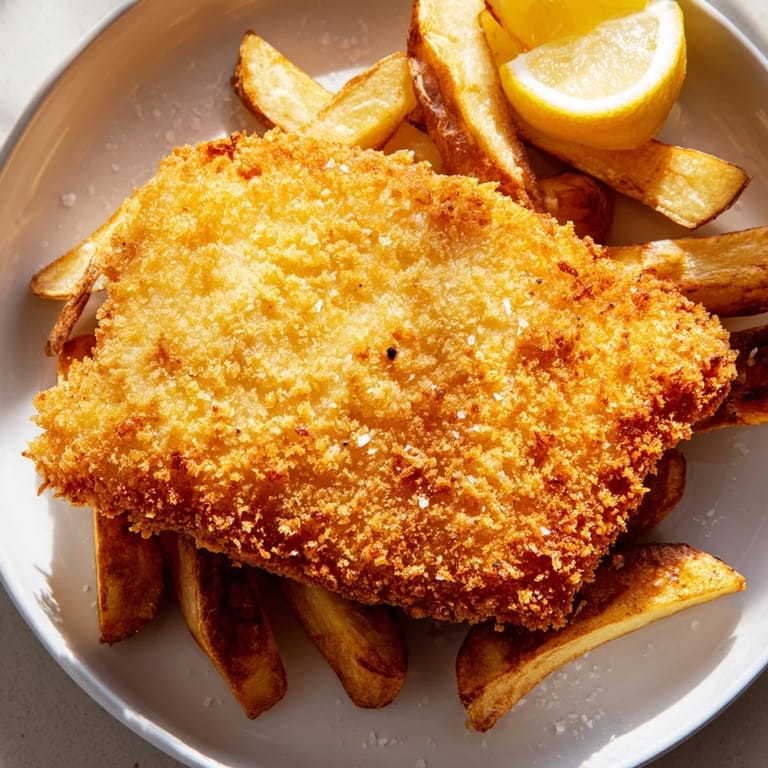
- Dip each floured fillet into your cold batter, let excess drip off, then lower it gently into the 190°C oil. The batter should sizzle immediately and puff up; fry for 5–7 minutes, turning once, until it's deep golden and crispy all over.
- Finish and serve hot:
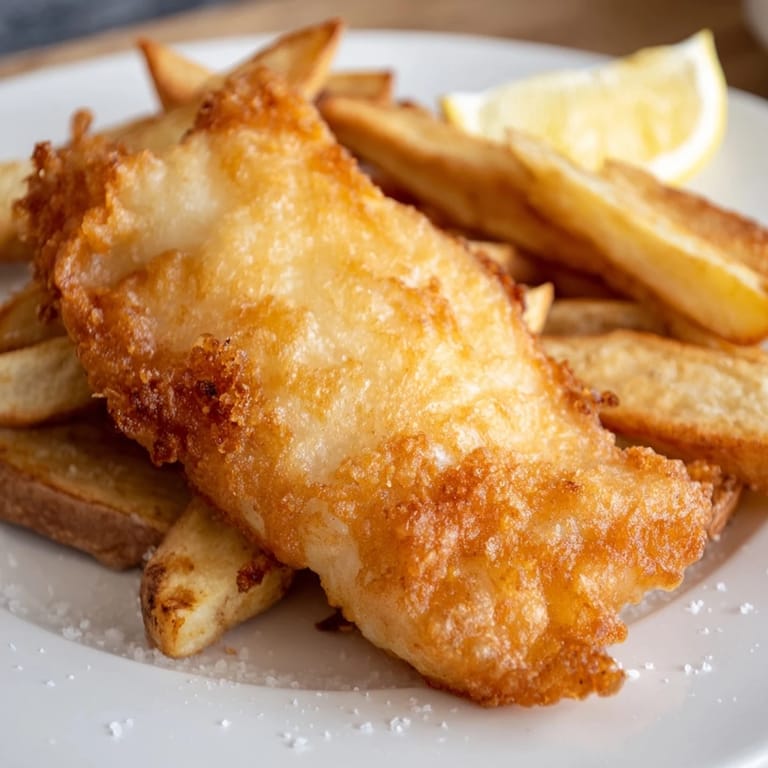
- Drain your fish and chips on a wire rack or clean paper towels, sprinkle with sea salt, and serve immediately with malt vinegar or fresh lemon wedges while everything is still steaming.
 Save to Pinterest
 My neighbor still asks me to make this for her family gatherings, and there's a particular joy in watching kids who normally don't eat fish eyes widen when they taste how tender it is beneath that shattering crust. That's when I realized this dish is less about technique and more about creating a moment where everyone forgets to be picky.
The Beer Batter Option
If you want to go truly traditional, substitute half the sparkling water with a cold lager or ale—the yeast adds extra lift to the batter, and the slight hoppy bitterness cuts through the richness beautifully. I learned this by accident when a friend showed up with beer just as I was about to start cooking, and I decided to wing it rather than send him home.
Getting the Timing Right
This is meal that demands you cook it in the moment; you can't fry the chips and let them sit for twenty minutes while you prep the fish because they'll lose their crispness and turn sad. Plan your timing so the second fry of chips happens just before you fry the fish, so everything hits the plate at the same time while it's all still steaming hot. If you're cooking for a crowd, enlist a friend to help with the frying while you keep things organized—it's honestly more fun that way.
Flavor Pairings and Sides
The tartness of malt vinegar or a squeeze of fresh lemon is non-negotiable; it brightens the richness of the fried fish and chips and feels authentically British. If you want to add another dimension, make or buy mushy peas on the side—their gentle earthiness and that lovely green color complete the plate in a way that feels both humble and somehow quite sophisticated.
- A dollop of homemade tartar sauce made with mayonnaise, capers, and fresh dill adds a creamy contrast that some people swear by.
- Chilled ale or crisp white wine pairs beautifully if you're in the mood for a drink.
- Save this meal for when you have time to enjoy it without rushing; the experience matters as much as the food.
 Save to Pinterest
 There's something timelessly satisfying about a meal this straightforward done well. Make it once and you'll understand why it's been beloved for generations.
Frequently Asked Questions
- → What type of fish works best for this dish?
White fish like cod or haddock is ideal because of its mild flavor and flaky texture that holds up well to frying.
- → Why is the batter made with sparkling water or beer?
Sparkling water or beer adds lightness and carbonation, creating a crispy, airy batter that clings well to the fish.
- → What’s the purpose of double-frying the chips?
Frying potatoes twice ensures a fluffy interior with a crispy exterior by cooking them gently first, then crisping them at a higher temperature.
- → How should the fish be prepared before frying?
Pat the fillets dry and lightly dust with flour to help the batter adhere and achieve an even, crunchy coating.
- → What accompaniments enhance this dish?
Malt vinegar or lemon wedges add brightness, while tartar sauce and mushy peas offer creamy and savory complements.