 Save to Pinterest
 My first encounter with koshari happened on a chaotic Cairo street corner, where a vendor moved with balletic precision through the assembly of rice, lentils, and pasta, crowned with sauce that smelled like cumin and possibility. I watched him layer each component with such care that it felt less like fast food and more like a small miracle happening in a paper cone. Years later, I realized this wasn't just street food—it was the kind of dish that makes sense of everything around it, humble and honest and absolutely perfect.
I made this for my roommate on a night when nothing else seemed right, and watching her face light up at that first bite reminded me why I love cooking—it's how we say things words can't quite reach. The kitchen smelled incredible, warm and spiced and alive, and we ate straight from the pot standing at the counter like we'd discovered something nobody else knew about.
Ingredients
- Medium-grain rice: Use jasmine or basmati if you prefer, but medium-grain holds its shape beautifully without becoming mushy, giving you that perfect tender bite.
- Brown or green lentils: These keep their structure through cooking, unlike red lentils which dissolve into mush—I learned that the hard way.
- Elbow macaroni or ditalini pasta: Small shapes work best because they nestle into every spoonful; larger pasta feels clunky in comparison.
- Crushed tomatoes: Canned tomatoes are your friend here—they're already broken down and deliver consistent flavor without extra work.
- Ground cumin and coriander: Toast them in the oil for thirty seconds before adding onions if you want the sauce to taste like it came from a spice market, not a jar.
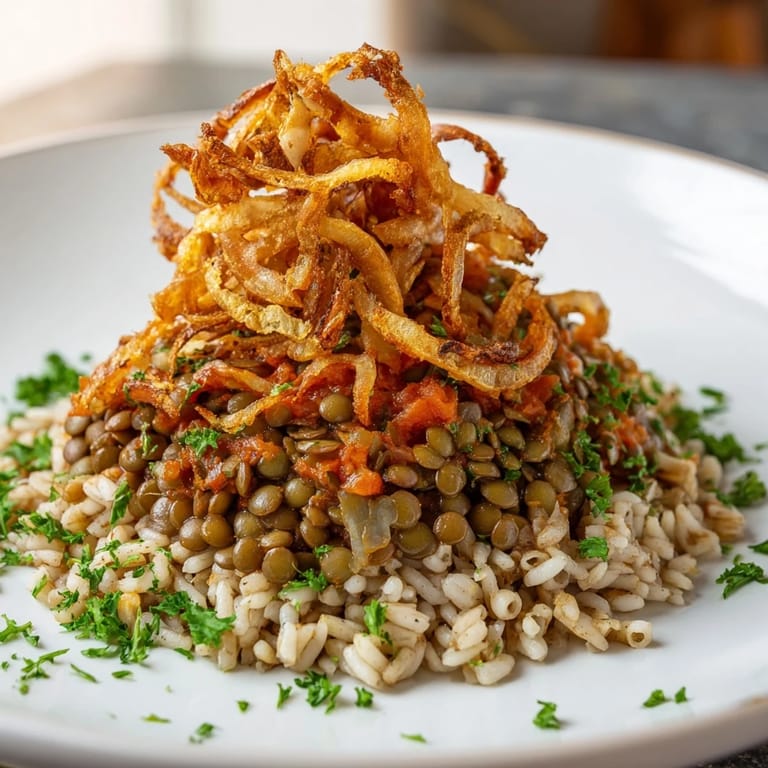
- Crispy onions: The flour coating creates that shattering texture that makes koshari sing—skip this step and you lose something essential.
- Garlic vinegar: This optional but revelatory element cuts through the richness with bright acidity that makes everything taste more alive.
Tired of Takeout? 🥡
Get 10 meals you can make faster than delivery arrives. Seriously.
One email. No spam. Unsubscribe anytime.
Instructions
- Start your lentils first:
- They're the slowest component, so cover them with water and let them simmer gently—you're looking for tender but still holding their shape, about twenty to twenty-five minutes. Drain them well so they don't water down your final dish.
- Cook rice the right way:
- Measure your water carefully (two cups to one cup rice is the magic ratio), and once it's covered and simmering, resist the urge to peek. Fifteen to eighteen minutes and you'll have fluffy, separate grains that sing.
- Get your pasta to al dente:
- It'll keep cooking slightly from residual heat, so pull it out of the water just before you think it's done, with a tiny bit of firmness still present.
- Build your sauce with patience:
- Sauté your onions until they turn translucent and sweet, then add garlic for just a minute before the tomatoes go in—this foundation makes everything taste richer. Let the whole thing bubble gently for fifteen to twenty minutes so the spices have time to wake up and the sauce thickens into something glossy and magnificent.
- Fry your onions in batches:
- They need room to crisp up properly, and crowding the pan steams them instead of crisping them. Golden brown and shatteringly crisp is what you're after—drain them on paper towels so they stay crunchy.
- Create your garlic vinegar moment:
- Mix your vinegar with minced garlic and chili flakes, then let it sit for ten minutes so the garlic flavor infuses into every drop. This transforms from a condiment into something with real personality.
- Layer and serve with intention:
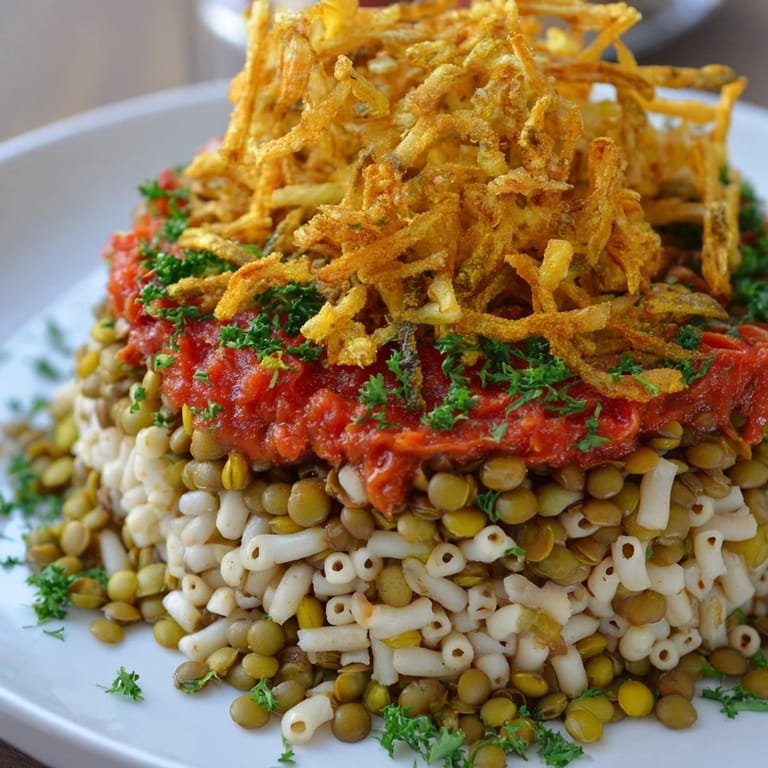
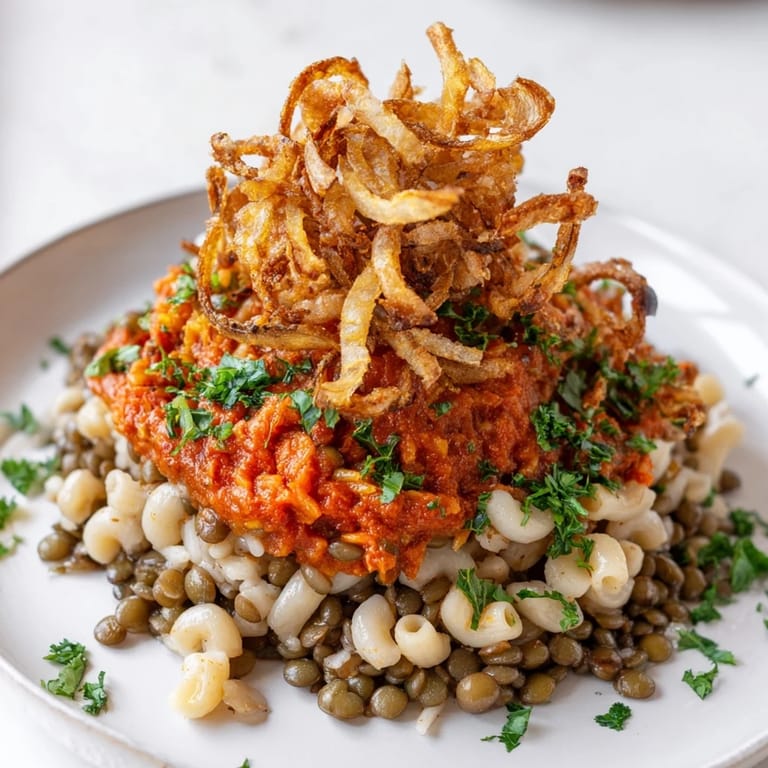
- Rice first, then lentils, then pasta—this order means you get something different in every spoonful. Top generously with sauce, scatter crispy onions like you mean it, and drizzle that garlic vinegar for the people who want the full experience.
 Save to Pinterest
 There's something about this dish that transcends its humble street-food origins; it teaches you that the most satisfying meals aren't about complexity but about understanding how each element plays its part. I think that's why people line up for it in Cairo—it's not just filling, it's honest.
The Story Behind the Layers
Koshari emerged in Egypt during the late 1800s, a clever collision of Indian rice dishes, Italian pasta, and Egyptian spice sensibilities that somehow created something entirely its own. The genius of it is how it respects each ingredient while making them greater together—rice brings earthiness, lentils add protein and nuttiness, pasta contributes chewiness, and that tomato sauce ties everything into one perfect sentence. I love that it started as street food because it was practical and affordable, yet it tastes like it took hours of love to create.
Making It Your Own
Once you make this once, you'll notice how naturally it bends to what you have on hand or what you're craving. Some days I add a pinch more cumin because I'm feeling that warmth, other times I go heavier on the chili flakes because I want heat to be the main character. The structure stays the same but your instincts take over, and that's when cooking stops being a recipe and becomes a conversation between you and the ingredients.
Timing and Company
The beautiful thing about koshari is that you can prepare each component ahead of time, then assemble everything last minute when people are ready to eat—it's a weeknight dinner that tastes like you've been cooking all day. I often make the sauce in the morning, fry the onions an hour before dinner, and have everything waiting to come together in five minutes of pure assembly theater.
- Vegetable broth instead of water deepens the flavor of both rice and lentils if you want extra richness.
- Vermicelli or orzo pasta creates a different texture than elbow macaroni, so experiment until you find your favorite combination.
- Leftovers actually taste better the next day because all those flavors have had time to get to know each other.
 Save to Pinterest
 Koshari is the kind of meal that reminds you why we gather around food—it's unpretentious, deeply satisfying, and brings out genuine joy. Make it once and you'll understand why people stand in lines at street vendors for this beautiful, humble invention.
Frequently Asked Questions
- → What grains are used in this dish?
Medium-grain rice, brown or green lentils, and small macaroni pasta are layered to create the base textures.
- → How is the tomato sauce prepared?
The sauce is made by sautéing onions and garlic, then simmering crushed tomatoes with tomato paste, cumin, coriander, chili flakes, and seasoning.
- → What makes the onions crispy?
Thinly sliced onions are coated with flour and salt before frying in hot oil until golden and crunchy.
- → Can the pasta be substituted?
Yes, orzo or vermicelli can be used instead of small elbow macaroni to vary the texture and appearance.
- → Is this dish suitable for vegan diets?
Absolutely, all ingredients are plant-based, making it a fulfilling vegan-friendly option.
- → What optional garnishes are recommended?
Garlic vinegar and fresh parsley add a touch of acidity and fresh herbaceousness to complement the richness.