 Save to Pinterest
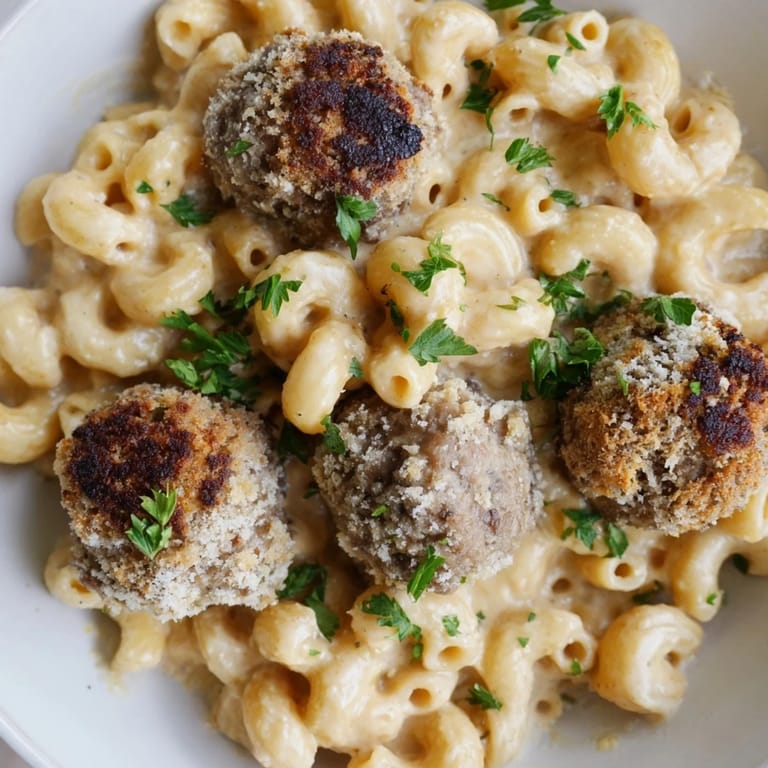
 There's something about the smell of meatballs browning in the oven that makes everyone suddenly appear in the kitchen, even the people who swore they weren't hungry. My version of mac and cheese meatball bake came together one weeknight when I had ground beef defrosting, half a block of sharp cheddar, and the kind of tired that only comfort food can fix. The first time I layered it all together—pasta, meatballs, that silky cheese sauce—I didn't expect how the flavors would meld as it baked, how the breadcrumb topping would turn golden and crispy while everything underneath stayed creamy. It's become the dish I make when I need to feed people without fussing, when I want something that tastes like it took effort but doesn't.
I learned to make this properly when my neighbor mentioned her kids would eat anything baked in that big dish, and I realized she wasn't exaggerating. The first time I brought it to a potluck, people kept coming back for seconds, and someone asked for the recipe before they'd even finished eating. That moment—watching a simple casserole disappear while conversations happened around the table—is when I knew this was worth perfecting and keeping in my regular rotation.
Ingredients
- Elbow macaroni or small pasta shells (340 g / 12 oz): Use a sturdy shape that holds the cheese sauce; al dente pasta prevents mushy texture after baking.
- Ground beef or pork (500 g / 1.1 lb): A blend of beef and pork adds depth; don't overwork the mixture or the meatballs become dense.
- Large egg (1): This binds everything while keeping meatballs tender; resist adding more or they'll be tough.
- Breadcrumbs (40 g / 1/2 cup): Plain breadcrumbs work fine; they keep meatballs moist and light.
- Milk (2 tablespoons): Soaked breadcrumbs and milk create a panade that makes meatballs incredibly tender.
- Grated Parmesan cheese (2 tablespoons for meatballs): Adds umami and helps bind the mixture without overpowering.
- Garlic powder, onion powder, dried oregano (1 teaspoon each): These three seasonings build a savory foundation; don't skip them.
- Salt and black pepper (1 teaspoon and 1/2 teaspoon): Season boldly; underseasoned meatballs get lost in the cheese sauce.
- Unsalted butter (50 g / 1/4 cup) for sauce: Butter is the base of a proper cheese sauce; salted butter makes the sauce too salty.
- All-purpose flour (30 g / 1/4 cup): Creates the roux that thickens the sauce; whisk it well to avoid lumps.
- Whole milk (720 ml / 3 cups): Whole milk creates a richer, creamier sauce than lower-fat versions.
- Sharp cheddar cheese (200 g / 2 cups): Sharp cheddar has more flavor than mild; don't use pre-shredded if you can avoid it, as it melts unevenly.
- Mozzarella cheese (80 g / 3/4 cup): Mozzarella adds stretch and creaminess without overwhelming the cheddar's flavor.
- Dijon mustard (1 teaspoon): A small amount deepens the cheese flavor and adds subtle tang.
- Ground nutmeg (1/4 teaspoon, optional): Nutmeg is classic in cheese sauce; it sounds strange but makes a real difference.
- Panko breadcrumbs (30 g / 1/4 cup) for topping: Panko gives a crispier, more textured finish than regular breadcrumbs.
- Parmesan cheese for topping (30 g / 1/4 cup): Adds a sharp, salty crunch to the golden top.
- Melted butter (1 tablespoon) for topping: Tossed with the breadcrumbs, it ensures an even, golden finish.
- Fresh parsley (1 tablespoon, optional): A final garnish that adds freshness and color after baking.
Tired of Takeout? 🥡
Get 10 meals you can make faster than delivery arrives. Seriously.
One email. No spam. Unsubscribe anytime.
Instructions
- Heat your oven and prep the baking dish:
- Set your oven to 200°C (400°F) and lightly grease a 23x33 cm (9x13-inch) baking dish. Having everything ready before you start cooking makes the process feel less chaotic.
- Cook the pasta until just al dente:
- Bring a large pot of salted water to a boil and cook your pasta about a minute under the package time. The pasta will soften more as the casserole bakes, so catching it at al dente keeps it from turning mushy.
- Mix and shape the meatballs:
- In a large bowl, combine the ground meat, egg, breadcrumbs, milk, Parmesan, garlic powder, onion powder, oregano, salt, and pepper. Stir just until the mixture comes together—overworking makes dense, tough meatballs. Roll into roughly 2.5 cm (1-inch) balls and arrange on a lined baking sheet; they'll brown more evenly with space between them.
- Bake the meatballs until cooked through:
- Slide the baking sheet into your preheated oven and bake for 12 to 15 minutes, until the meatballs are browned on the outside and cooked through. You don't need to turn them; they'll brown evenly from the heat underneath.
- Make the cheese sauce:
- Melt butter in a large saucepan over medium heat. Whisk in the flour and cook for about 1 minute, stirring constantly to create a smooth paste. Slowly pour in the milk while whisking, keeping the heat steady; this prevents lumps and creates a silky sauce. Let it bubble gently for about 5 minutes, stirring often, until it thickens enough to coat the back of a spoon.
- Add the cheeses and seasonings:
- Remove the saucepan from heat and stir in the shredded cheddar and mozzarella, Dijon mustard, salt, and nutmeg if using. Stir until everything is smooth and melted; the residual heat will finish melting the cheese without making it grainy.
- Combine everything in the baking dish:
- Pour the drained pasta into your prepared baking dish, add the cooked meatballs, and pour the cheese sauce over everything. Fold gently until the pasta and meatballs are coated; some of the sauce should pool at the bottom.
- Make and apply the topping:
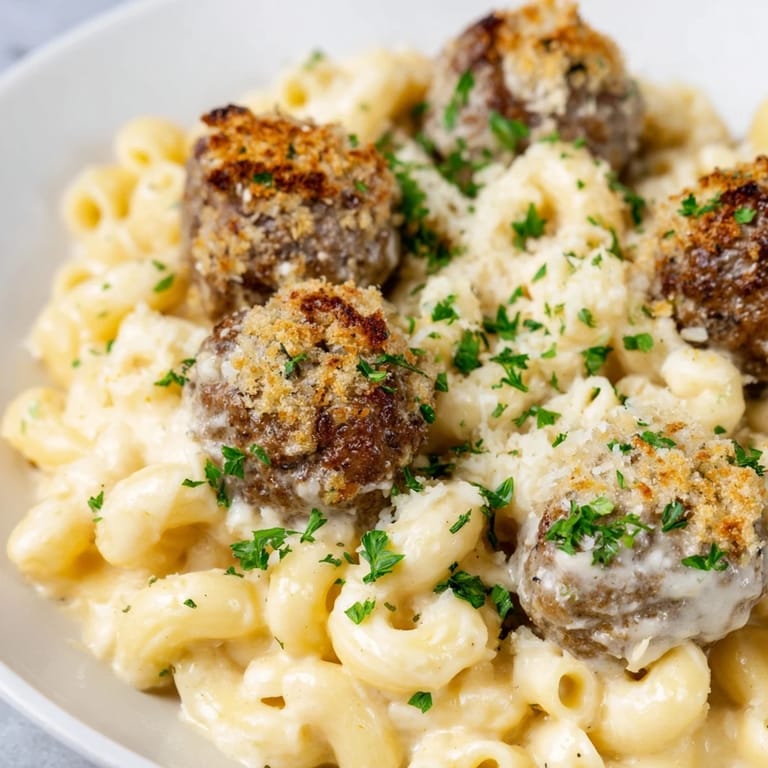
- Mix the panko breadcrumbs, Parmesan, and melted butter in a small bowl until the breadcrumbs are evenly coated. Sprinkle this mixture evenly over the casserole; it will catch the heat and turn golden and crispy.
- Bake until golden and bubbling:
- Bake the assembled casserole for 15 to 20 minutes, until the breadcrumb topping is deep golden brown and you can see the cheese sauce bubbling around the edges. The whole thing should smell incredible at this point.
- Rest before serving:
- Let the casserole sit for 5 minutes out of the oven; this lets everything set slightly so it holds together better when you serve it. Scatter fresh parsley over the top if you like, then serve straight from the baking dish.
 Save to Pinterest
 There was a Tuesday when I made this for my daughter's school event, and it came back empty except for a note from a parent asking if I'd be the official mac and cheese person from then on. I laughed, but honestly, that's when it hit me that comfort food isn't just about filling bellies—it's about showing up for people with something made with actual care.
Why Meatballs Matter Here
Regular baked mac and cheese is wonderful, but adding meatballs transforms it into something that feels more substantial and special. They cook in the oven at the same time as everything else, so you're not juggling multiple pans or timing issues. The meatballs also absorb some of the cheese sauce, becoming even more flavorful than if they stood alone, and they add a real protein element that makes this a complete meal without needing sides.
The Science Behind a Creamy Sauce
A proper cheese sauce starts with a roux—that's equal parts fat and flour cooked together—which creates the thickening agent that makes the sauce smooth instead of greasy or thin. The milk needs to go in gradually and get whisked constantly so the starch granules in the flour swell evenly, creating that silky texture. Once you add the cheese and remove it from heat, the residual warmth melts everything perfectly without making the dairy proteins clump, which is what causes broken or grainy sauces.
Make It Your Own
This recipe is a canvas, and I've learned that the best versions are the ones you adjust to what you love. Some people add a dash of hot sauce to the cheese sauce for warmth, while others stir in sautéed mushrooms or crispy bacon. I once made it with roasted garlic stirred into the sauce, and it stayed in my head for weeks. The beauty is that meatballs and cheese sauce and pasta are flexible enough to welcome whatever you want to add to them.
- Use frozen meatballs if you're short on time; they bake according to package directions and save you about 15 minutes of prep.
- Try ground turkey or chicken instead of beef for something lighter, though you might need to add a bit of olive oil to the mixture since poultry is leaner.
- Stir in frozen peas or spinach during the last 5 minutes of baking if you want vegetables mixed in without changing the texture.
 Save to Pinterest
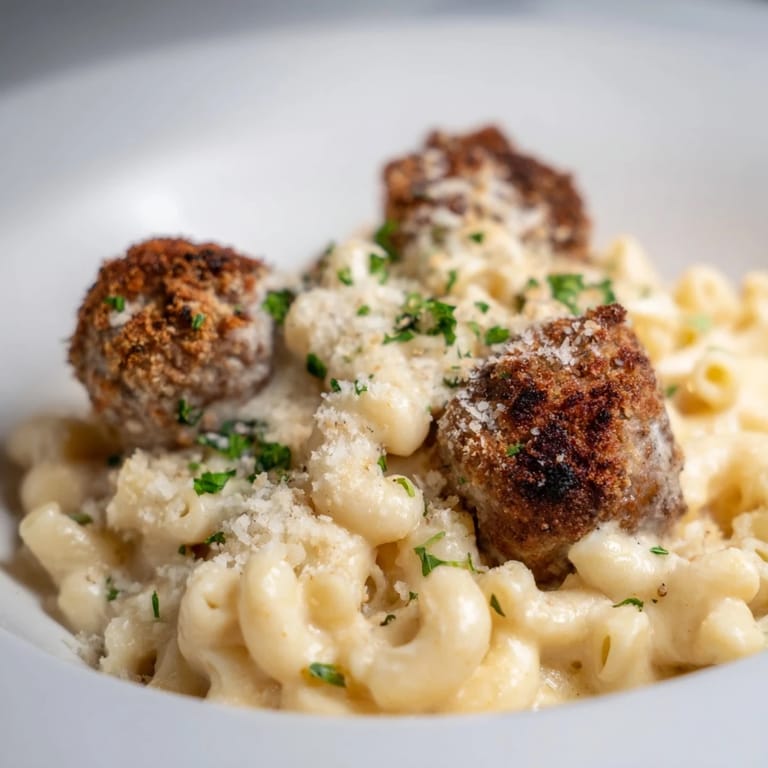
 This casserole has become my answer to most dinner questions—when I don't know what to cook, when I need to feed people without fussing, when I want leftovers that are just as good reheated. It's simple enough for a weeknight but feels generous enough for guests.
Frequently Asked Questions
- → What pasta works best for this bake?
Elbow macaroni or small pasta shells are preferred as they hold the sauce well and bake evenly within the dish.
- → Can I use different meats for the meatballs?
Yes, ground beef, pork, turkey, or chicken can be used to suit taste preferences or dietary needs.
- → How is the cheese sauce made creamy and smooth?
Butter and flour are cooked first to form a roux, then milk is gradually added and thickened. Sharp cheddar, mozzarella, and a touch of Dijon mustard finish the sauce.
- → What is the purpose of the breadcrumb topping?
The panko and Parmesan topping adds a crispy, golden crust that contrasts the creamy interior after baking.
- → Can I prepare the meatballs ahead of time?
Yes, meatballs can be made earlier and baked frozen or fresh before assembling the dish for convenience.