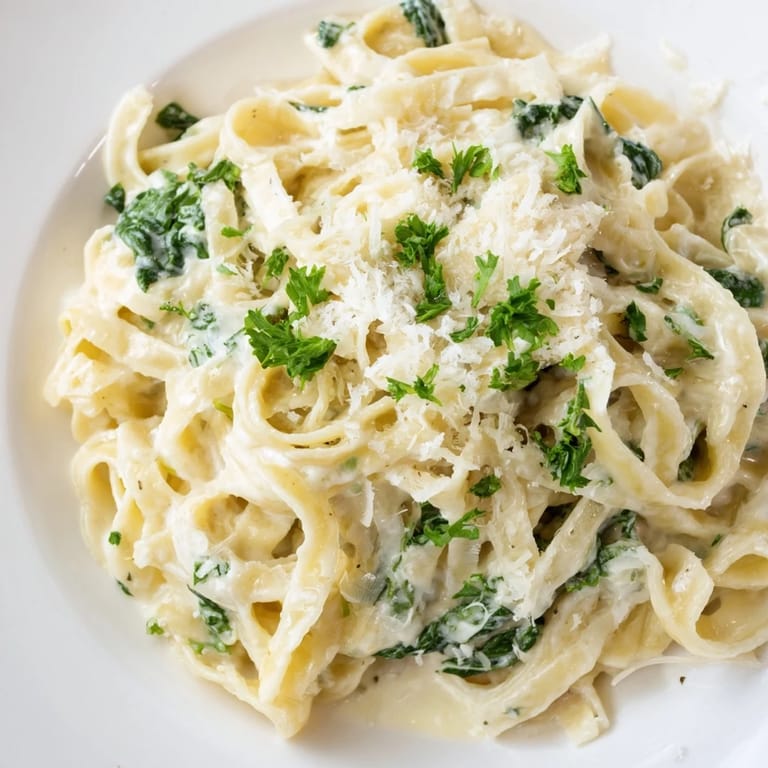
 Save to Pinterest
 There's something about the way cream and butter come together that still catches me off guard, even after making this dish a dozen times. I discovered this version of Alfredo on a Tuesday night when I had spinach that was about to turn and cream in the fridge that needed using. What started as improvisation became the pasta I now make whenever someone needs comfort without complication, because somehow a handful of green leaves stirred into buttery sauce transforms the whole thing into something that feels both indulgent and honest.
I made this for my partner on an evening when they'd had a rough day, and I watched their face shift the moment they took that first bite, the kind of quiet relief that only happens with really good, simple food. That's when I knew this recipe was worth keeping and sharing, because it has that rare quality of tasting restaurant-quality while feeling entirely achievable at home.
Ingredients
- Fettuccine (400 g): The flat ribbons catch and hold the sauce in a way that thin pasta just won't, so don't skip the specificity here and reach for spaghetti instead.
- Unsalted butter (60 g): This is your foundation, so use real butter and let it melt slowly without browning, because that nutty color means the magic is already starting to leave.
- Garlic (3 cloves, minced): Mince it fine and pay attention while it cooks, because garlic goes from fragrant to burnt in about 30 seconds flat, and burnt garlic tastes bitter and wrong.
- Heavy cream (250 ml): The full-fat version is non-negotiable here; lighter creams break and separate when heated, which I learned the hard way with disappointing results.
- Parmesan cheese (120 g, grated): Grate it fresh if you can, because the pre-shredded kind has anti-caking agents that make the sauce grainy and sad.
- Cream cheese (60 g, cubed): This is the secret ingredient that keeps the sauce silky and prevents it from breaking, so don't leave it out thinking regular cheese will do the same work.
- Black pepper (1/2 tsp, freshly ground): Fresh ground makes a real difference in both flavor and how the pepper actually disperses through the sauce instead of settling to the bottom.
- Ground nutmeg (pinch, optional): I skip it sometimes, but when I remember to add it, the sauce has this subtle complexity that makes people ask what the secret ingredient is.
- Fresh baby spinach (150 g): Use baby spinach because it wilts in seconds rather than minutes, and you won't overcook it into a sad, dark heap.
- Parmesan and fresh parsley for garnish: Don't skip this part; the fresh parsley adds brightness and a little visual contrast that makes the dish feel intentional rather than rushed.
Tired of Takeout? 🥡
Get 10 meals you can make faster than delivery arrives. Seriously.
One email. No spam. Unsubscribe anytime.
Instructions
- Get the pasta water going:
- Fill a large pot with salted water and let it come to a proper rolling boil, because that salt is the only seasoning the pasta itself will get and it matters more than you'd think. While you're waiting, get your spinach washed and dried and your cheese grated, so you're not scrambling later.
- Cook the fettuccine:
- Add the pasta when the water is truly boiling and stir it right away so it doesn't stick to itself. Keep it to al dente, that moment when it still has a slight resistance when you bite it, because overcooked pasta turns mushy and nobody wants that.
- Start the sauce gently:
- Melt the butter over medium heat and add your minced garlic, stirring for about a minute until the kitchen smells like garlic but before it starts to brown. Once you see any color starting, immediately turn the heat down because this is where things go wrong fast.
- Build the creamy base:
- Pour in the heavy cream and scatter the cream cheese cubes across the top, then lower the heat to low and whisk slowly until everything combines into something smooth and unified. This takes patience; rushing it by using high heat will cause the cream to break, so resist the urge to hurry.
- Melt in the Parmesan:
- Gradually stir in the Parmesan a handful at a time, whisking continuously so it melts evenly instead of clumping, then add the pepper and nutmeg if you're using it. Taste it and add salt, understanding that Parmesan is already salty so you won't need much.
- Wilt the spinach:
- Add the spinach to the warm sauce and stir gently for two to three minutes until it's soft and dark, and everything is woven together into one beautiful, green-flecked cream. The residual heat does most of the work here, so you don't need high heat anymore.
- Bring it all together:
- Add the drained fettuccine to the pan and toss gently with tongs, adding splashes of reserved pasta water as needed to loosen the sauce and coat every strand. The starch in that pasta water is what helps the sauce cling to the noodles and become silky, so don't skip saving it.
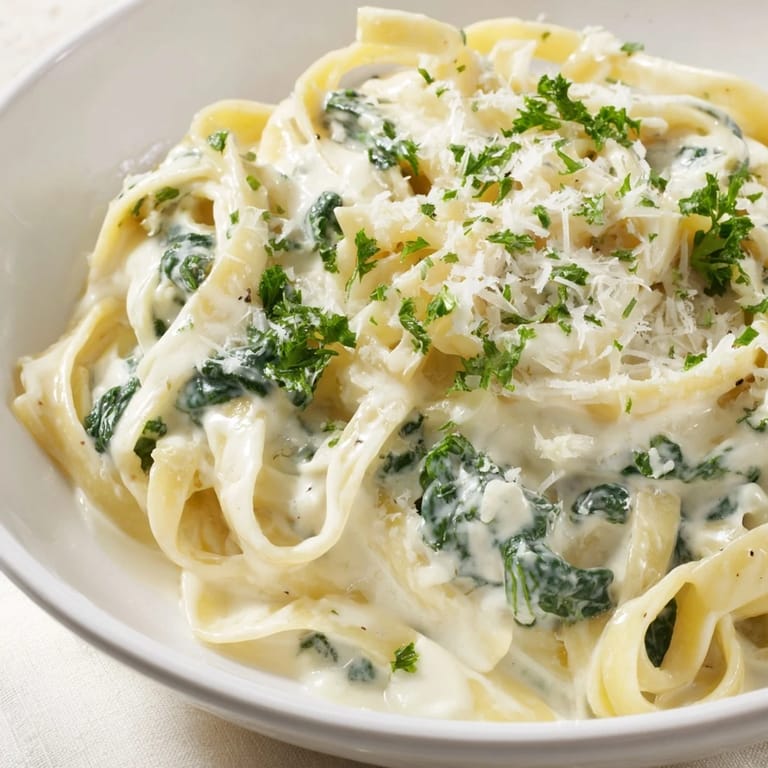 Save to Pinterest
 I had a moment last winter where my mom tasted this and got quiet in that specific way that means something unexpected happened, and then she asked me to write it down because she wanted to make it for my brother. That's when this dish stopped being just dinner and became something I share, a small thing that somehow carries more than just flavor.
The Magic of Cream Cheese
The cream cheese is what separates this from a sauce that looks pretty but breaks apart the moment it cools, and it's also why you can make this ahead, reheat it gently, and have it taste almost as good as fresh. I learned this when I tried to make a batch without it one night thinking it was unnecessary, and the sauce separated into an oily mess that taught me a hard lesson about respecting the recipe.
Timing and Temperature Control
The whole sauce comes together in about five minutes once the cream hits the pan, which is both the appeal and the trap, because you have to stay focused and not wander away checking your phone. Low heat and constant stirring are what turn separate ingredients into something unified and silky, and it's one of those cooking lessons that applies to so many other things if you pay attention.
Making It Your Own
The beauty of this dish is how it handles additions without losing its identity, whether that's crispy mushrooms, tender chicken, or even a handful of sun-dried tomatoes stirred in at the end. I sometimes add a touch of lemon zest right before serving, because the acidity cuts through the richness in a way that makes you want another forkful instead of feeling weighed down.
- Fresh lemon zest stirred in just before serving brightens the whole dish without needing actual lemon juice, which can make the sauce taste thin.
- If you add proteins like chicken or mushrooms, cook them separately and stir them in at the end so the spinach stays the focus.
- Taste as you go and remember that you can always add more salt but you can't take it out, so season gently and let people adjust at the table.
 Save to Pinterest
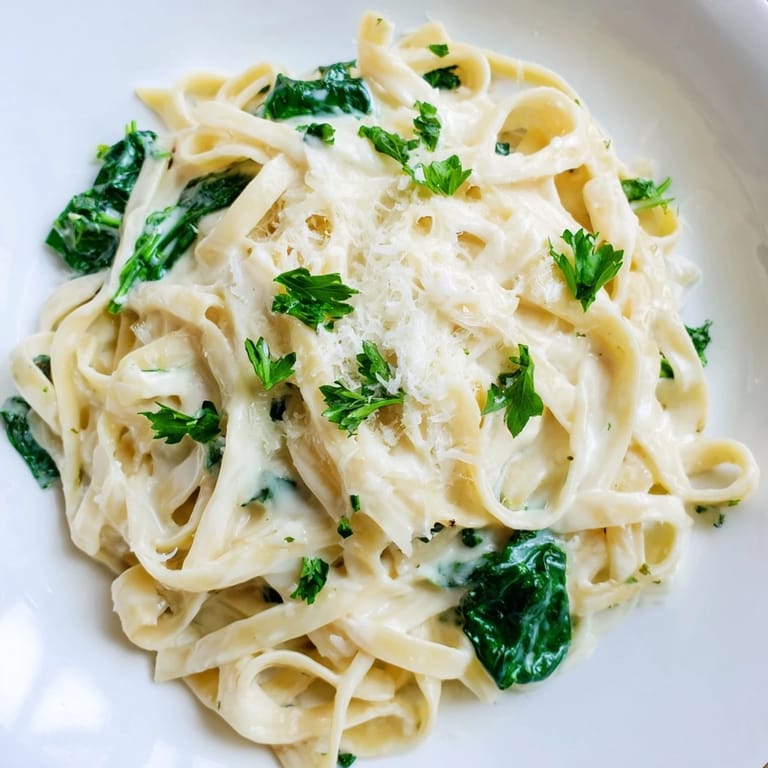
 This pasta reminds me that the most memorable meals are often the simplest ones, made with attention and genuine ingredients rather than complexity. Every time I make it, I'm grateful for how it brings people together without fuss.
Frequently Asked Questions
- → How can I make the sauce creamier?
Use fresh cream cheese and heavy cream, stirring gently until fully melted and combined for a velvety texture.
- → What is the best way to wilt the spinach?
Add fresh baby spinach to the warm sauce and cook for 2–3 minutes, stirring until just wilted to retain color and nutrients.
- → Can I adjust the sauce thickness?
Use reserved pasta water to loosen the sauce gradually, achieving desired consistency without losing creaminess.
- → Which pasta pairs well with this sauce?
Fettuccine is ideal as its wide surface allows the creamy sauce to coat evenly for rich flavor in every bite.
- → How to enhance the dish with added protein?
Incorporate cooked chicken or sautéed mushrooms for extra texture and protein complementing the creamy sauce.