 Save to Pinterest
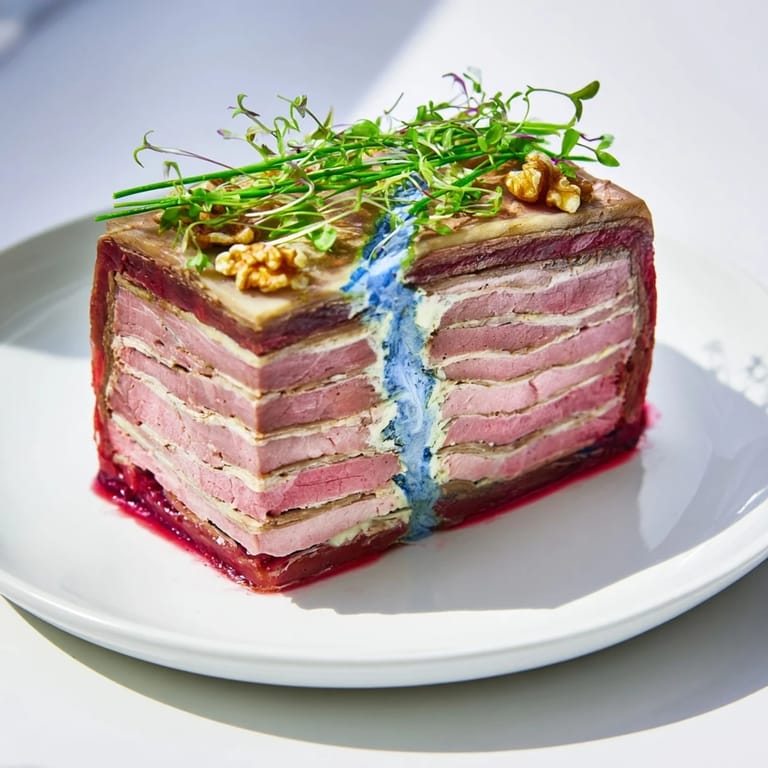
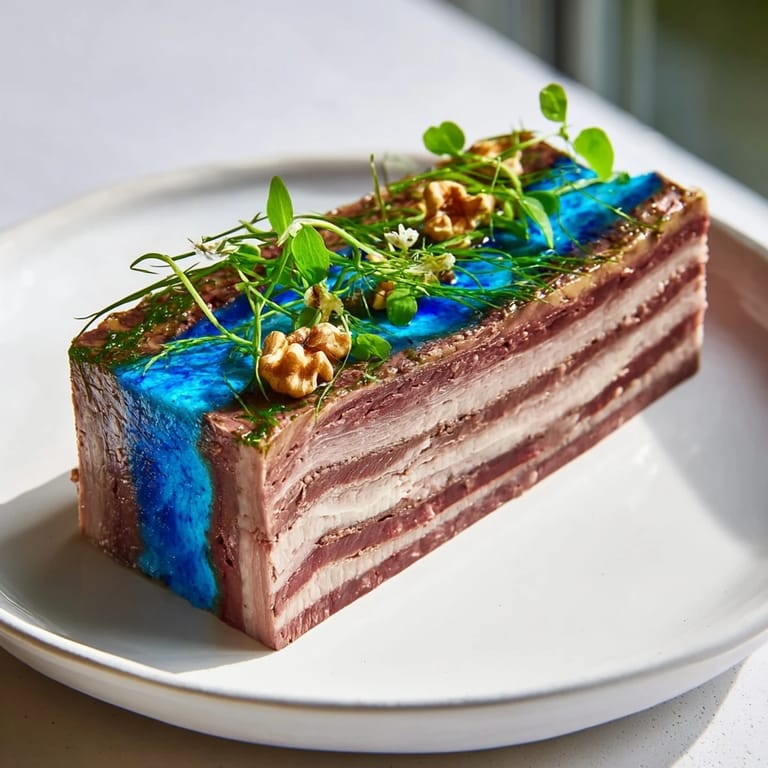
 The first time I attempted this dish, I was standing in my kitchen on a lazy Sunday afternoon, scrolling through travel photos from a trip to Arizona, when the idea struck me like lightning—what if I could capture the Grand Canyon's dramatic geology on a plate? I spent the next hour slicing meats with the precision of someone carving canyon walls, layering them with an almost obsessive attention to depth and slope. The blue cheese mixture, when I finally spread it down the center, looked exactly like the Colorado River cutting through those magnificent red cliffs, and I knew I'd stumbled onto something special.
I made this for my sister's dinner party last fall, and I'll never forget the quiet that fell over the table when I unmolded it—eight people just staring at this striped, sculptural thing sitting on white porcelain. Then someone cut into it, and the blue cheese streaked through like a dream, and the whole room exhaled. That's when I realized food doesn't always have to be complicated to move people; sometimes it just needs to be honest and beautiful.
Ingredients
- Beef sirloin, thinly sliced (300g): The foundation meat that holds its color and structure beautifully through cooking; ask your butcher to slice it thin and even so layers stack without gaps.
- Turkey breast, thinly sliced (250g): This adds a lighter note and creates visual contrast in the stripes; its delicate texture is why you don't want it thicker than the beef.
- Smoked ham, thinly sliced (200g): The smoky element that sneaks through everything; look for real smoked ham rather than the grocery store pre-packaged stuff if you want that authentic depth.
- Pork loin, thinly sliced (200g): Tender and subtle, it completes the meat palette without overpowering; slice it the same thickness as the others so everything bakes evenly.
- Blue cheese, crumbled (150g): This is the river's soul—choose a blue cheese that's pungent but not aggressively sharp, because it's the star player here.
- Cream cheese, softened (100g): Acts as the river's binder and smoothness, tempering the blue cheese just enough so it spreads without being too intense.
- Heavy cream (30ml plus 60ml): First measure silks the blue cheese mixture into something spreadable; the second goes into the binding layer to keep all those meat layers from drying out.
- Fresh chives and parsley, finely chopped (1 tbsp each): These herbs whisper green into your river; fresh herbs matter here more than anywhere else.
- Eggs (4 large): These are your binding glue, so use truly fresh ones and beat them well with the cream and milk.
- Salt and pepper: Season the binding layer generously because the eggs will otherwise taste flat after baking.
Tired of Takeout? 🥡
Get 10 meals you can make faster than delivery arrives. Seriously.
One email. No spam. Unsubscribe anytime.
Instructions
- Set your stage:
- Preheat your oven to 160°C and line a standard loaf pan with plastic wrap, leaving generous overhang on all sides so you can seal everything in later. This isn't laziness; this keeps moisture where you need it.
- Whisk your binders:
- Beat the eggs with milk, cream, salt, and pepper until the mixture feels almost silky and the color is pale and uniform. Don't skimp on the whisking; proper aeration helps the binding layer set cleanly.
- Create your river:
- Blend the blue cheese and cream cheese until completely smooth, then fold in the heavy cream gently so you don't deflate all your work. Stir in the chives and parsley last, and taste as you go—you might want more pepper.
- Layer like a canyon:
- Arrange your first layer of beef slices along the bottom of the pan, overlapping them slightly and letting some edges angle upward; this creates that cliff-face illusion. Brush lightly with the egg mixture, then add turkey, then ham, then pork, each time angling the layers to mimic how real canyon walls slope and break.
- Weave in the river:
- When you're halfway up the pan, spoon the blue cheese mixture down the center in a thick, deliberate line, like you're painting a river through red rock. Continue your meat layers around and over this central vein, maintaining your cliff-edge angles as you build upward.
- Seal and bake:
- Fold the plastic wrap over the top to seal everything in, then cover tightly with foil and place the whole loaf pan into a larger roasting dish. Pour hot water into the roasting dish until it reaches about halfway up the sides of the loaf pan—this water bath keeps the terrine creamy instead of rubbery.
- Bake with patience:
- Let it bake at 160°C for 1 hour 15 minutes; you're not looking for color, just gentle, even cooking. When it's done, the center should feel just barely firm to a light touch.
- Rest and chill:
- Cool the whole thing to room temperature, then refrigerate for at least 4 hours, preferably overnight—this gives everything time to set into clean, beautiful slices. Rushing this step means ragged, falling-apart pieces instead of the architectural integrity you're after.
- Unmold and reveal:
- Run a thin knife around the edges, then pull gently on the plastic wrap overhang to guide the terrine onto your serving platter in one confident motion. Let it sit for just a few minutes before slicing so the cold doesn't make it too brittle.
 Save to Pinterest
 What struck me most after making this was realizing that food is just architecture with flavor—every layer I placed mattered, every angle contributed to the whole picture. It taught me patience in a way that quick weeknight dinners never could.
The Color Story
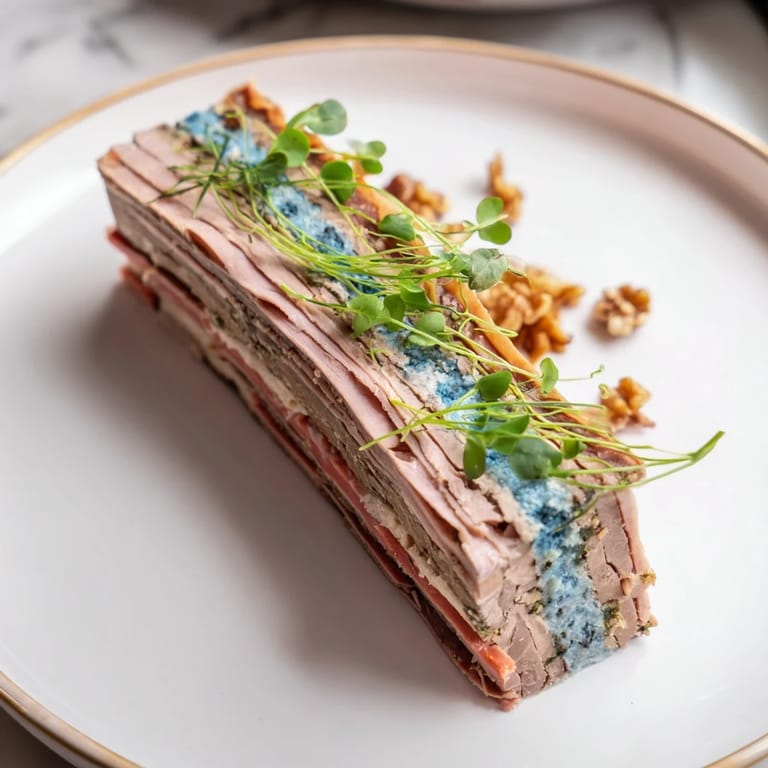
When you're building your layers, think of the colors as much as the flavors—the deep red of the beef, the pale cream of turkey, the rosy pink of ham, the darker rose of pork all create that visual canyon effect. The eye eats first, and when someone sees all those stripes and that bright blue river when you slice through, that's when the real eating begins. I learned to arrange the meat slices so each layer catches light differently, creating depth and shadow that makes the whole thing look almost three-dimensional.
Serving with Intention
This isn't a dish you slice casually and plate without thought; it deserves presentation that honors the effort. I like to serve it on white dishes with a thin smear of something green—maybe a creme fraiche with herbs, or a simple arugula salad alongside. The toasted brioche isn't just a vehicle for eating; it's there to catch the blue cheese and let people experience the terrine's flavors in different combinations, so let people find their own rhythm.
Wine and Pairing Magic
The salty, intense blue cheese wants something with acidity and brightness, so I reach for either a crisp white like Sauvignon Blanc or a light red like Pinot Noir—never anything heavy that would fight with what you've built. If you're not a wine person, a good sparkling water with fresh lemon cuts through the richness just as elegantly. The one pairing that surprised me was a very cold, dry amontillado sherry; something about those salted almond notes with the meats and blue cheese created this unexpectedly perfect conversation.
- Pair with a crisp Sauvignon Blanc or light Pinot Noir for maximum impact.
- The blue cheese absolutely demands acidity, so avoid oaky, heavy wines.
- Cold, good-quality sparkling water works beautifully if you're skipping alcohol.
 Save to Pinterest
 This dish asks you to slow down and think like an architect for a couple of hours, and that's exactly why it's worth making. When you slice into it and see that blue river cutting through all those meat stripes, you'll understand why someone looked at a canyon and thought, yes, I want to eat that.
Frequently Asked Questions
- → How do you create the layered cliff effect?
Thinly slice various meats and layer them in a loaf pan at a slight angle, alternating types to mimic natural canyon formations.
- → What is the purpose of the blue cheese mousse in the center?
The blue cheese mousse adds a vibrant color contrast and creamy tang, resembling a river running through the layered meats.
- → Why is the terrine baked in a bain-marie?
Baking in a bain-marie ensures gentle, even cooking to maintain the terrine’s delicate layers and creamy texture.
- → Can I substitute the meats used in the layers?
Yes, smoked duck or prosciutto can be introduced for additional smoky flavors and variety in texture.
- → What garnishes best complement this dish?
Microgreens, edible flowers, and toasted walnuts add freshness, color, and crunch to enhance presentation and taste.
- → How long should the terrine chill before serving?
Chill for at least 4 hours, preferably overnight, to allow the layers to set firmly before slicing.